


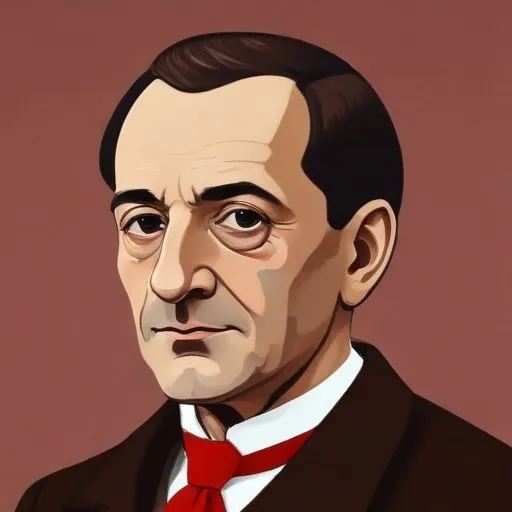
A pioneering art collector and historian, credited with discovering and promoting Cubism, supporting artists like Picasso and Braque, and shaping modern art history.
Daniel-Henry Kahnweiler was a German-born art collector and one of the most influential art dealers of the 20th century, renowned for his unwavering support of the Cubist movement and its pioneers, Pablo Picasso and Georges Braque. Through his Parisian art gallery, Kahnweiler championed innovative artists, shaping the course of modern art and earning a reputation as a discerning eye and shrewd businessman.
Born on June 25, 1884, in Mannheim, Baden, Kahnweiler hailed from a prosperous Jewish family. His upbringing in Stuttgart and education at a German Gymnasium instilled in him a strong foundation in finance and philosophy, which would later serve him well in his art dealership ventures.
In 1907, at the tender age of 23, Kahnweiler opened his first small art gallery in Paris, marking the beginning of his illustrious career as an art dealer. This modest 4-by-4-meter space on rue Vignon would soon become a hub for avant-garde art, attracting some of the most innovative minds of the time.
Kahnweiler's passion for Cubism led him to become one of the first and most ardent supporters of the movement. He was instrumental in promoting the works of Picasso, Braque, and other Cubist artists, often going to great lengths to acquire and showcase their pieces. Picasso, in particular, benefited from Kahnweiler's patronage, and the two developed a close relationship that spanned several decades.
Kahnweiler's astute business sense and ability to recognize artistic genius earned him a reputation as a respected authority in the art world. As Picasso once remarked, "What would have become of us if Kahnweiler hadn't had a business sense?"
Kahnweiler's philosophical inclinations extended beyond the realm of art. He was deeply fascinated by the intersection of art, psychology, and philosophy, often engaging in intellectual debates with his artist friends. This unique blend of artistic and philosophical insight enabled him to spot emerging talents and nurture their growth.
Kahnweiler's unwavering commitment to Cubism and his role in promoting its pioneers have had a profound impact on modern art and culture. His influence can be seen in the works of subsequent art movements, such as Surrealism and Abstract Expressionism, and continues to inspire contemporary artists, curators, and collectors.
Daniel-Henry Kahnweiler's remarkable life and career serve as a testament to the power of vision, perseverance, and collaboration. As a pioneering art dealer, he played a crucial role in shaping the course of modern art, and his legacy continues to inspire and influence generations of artists, art lovers, and entrepreneurs.
Born in 1881
A pioneering artist who transformed modern art with pioneering Cubist works, creating a new visual language that continues to inspire and influence art, design, and culture.
Born in 1869
A pioneering artist who revolutionized modern art with bold, expressive, and colorful works that blurred the lines between painting and sculpture, creating a new language of form and color.
Born in 1882
A pioneer of Cubism, creating fragmented forms and multiple perspectives in art, revolutionizing modern art movements.
Born in 1887
A pioneer of Cubism, creating innovative, geometrically fragmented artworks that blurred the lines between representation and abstraction. His unique style continues to inspire artists and art enthusiasts alike.
Born in 1881
A pioneer of Cubism, this artist's bold, geometric works blended modernity with ancient forms, influencing generations of artists and designers.
Born in 1880
A pioneer of Fauvism, a style characterized by vivid colors and energetic brushstrokes, creating a new language of art that paved the way for modernist movements.
Born in 1877
A Fauvist painter who captured the vibrant spirit of Parisian nightlife and high society with bold, expressive brushstrokes and vivid colors.
Born in 1901
A pioneer of modern art, creating elongated, abstract human figures that capture the essence of humanity, and exploring the relationship between sculpture and space.
