


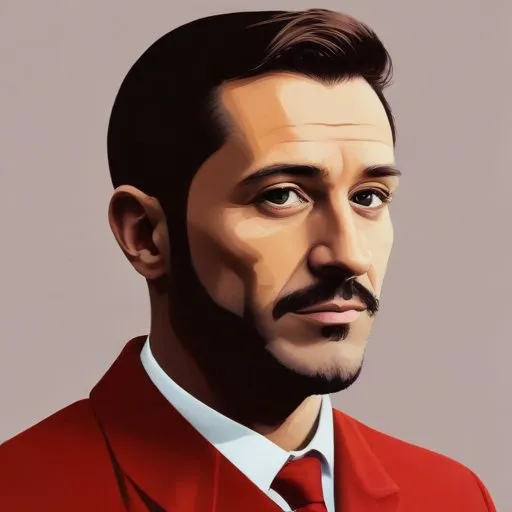
A pioneering artist who created "snare pictures" by attaching objects to a board, capturing a moment in time, and wrote about the concept of "narrative figuration".
Daniel Spoerri, a Swiss artist and writer, is renowned for his innovative snarepictures, a type of assemblage or object art that captures the essence of everyday life. His works often feature seemingly mundane objects, such as the remains of meals, fixed to a table or board, which are then displayed on a wall, inviting viewers to gaze upon the intricacies of human experience.
Born Daniel Isaac Feinstein on March 27, 1930, in Galai, Romania, Spoerri's early life was marked by turmoil. His father, Isaac Feinstein, was arrested and killed in 1941, and his mother, Lydia Spoerri, emigrated with her six children to Switzerland in 1942. Adopted by his maternal uncle, Professor Theophil Spoerri, Daniel took on his new surname and began his journey towards artistic expression.
In the 1950s, Spoerri's artistic career took off, initially in the realm of dance. He studied classical dance with Olga Preobrajenska and became the lead dancer at the State Opera of Bern, Switzerland. However, his true passion lay in the visual arts. Inspired by Surrealist masters like Jean Tinguely, Marcel Duchamp, and Man Ray, Spoerri's snarepictures began to take shape.
Spoerri's snarepictures are more than just a collection of objects; they are a window into the human experience. By fixing everyday items, such as plates, silverware, and glasses, to a table or board, he creates a snapshot of a particular moment in time. This pioneering approach has been likened to a form of "object art," where the arrangement of objects tells a story that transcends their individual significance.
In 1962, Spoerri published his groundbreaking book, Topographie Anecdote du Hasard, an anecdotal topography of chance. This literary masterpiece is a written analogue to his snarepictures, where he meticulously documents every object on his table at a particular moment, accompanied by personal recollections and anecdotes evoked by each item. This innovative approach blurs the lines between art, literature, and autobiography.
Spoerri's contributions to the art world have been profound. His snarepictures have inspired generations of artists, and his book has become a cult classic. His influence can be seen in the works of artists such as Robert Filliou, Dieter Roth, and Emmett Williams, who were associated with the Fluxus movement.
Daniel Spoerri's artistic vision has left an indelible mark on modern art. His unique approach to capturing the essence of everyday life has inspired countless artists, writers, and thinkers. As we gaze upon his snarepictures and delve into the pages of Topographie Anecdote du Hasard, we are reminded of the beauty and complexity of human experience.
Born in 1925
A Swiss painter and sculptor famous for creating whimsical, mechanized, and often humorous sculptures that critique modern technology and consumer culture. His work blends art and engineering, showcasing a fascination with the relationship between humans and machines.
95 Years Old
A pioneering female artist who created vibrant, large-scale sculptures and paintings that explored themes of femininity, power, and mythology. Her iconic "Nana" figures, colorful and playful, have become symbols of female empowerment.
96 Years Old
A German-Swiss artist renowned for his innovative and often provocative sculptures, installations, and prints that blurred the lines between art and everyday life. He's famous for using unconventional materials like rotting food and fat.
