


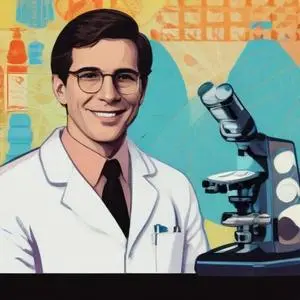
A renowned virologist and academic, he made groundbreaking discoveries on the genetic mechanisms of viruses, earning him a Nobel Prize in Physiology or Medicine in 1975. His work has significantly advanced our understanding of cancer and immunology.
David Baltimore, a renowned American biologist, is celebrated for his groundbreaking discoveries in the field of virology and cancer research, earning him the Nobel Prize in Physiology or Medicine in 1975. At the tender age of 37, he made history alongside Renato Dulbecco and Howard M. Temin for their pioneering work on the interaction between tumor viruses and the genetic material of cells, which led to the discovery of the enzyme reverse transcriptase.
Born on March 7, 1938, in New York City, David Baltimore grew up in a family with diverse religious backgrounds. His father, Richard Baltimore, was raised as an Orthodox Jew, whereas his mother, Gertrude Lipschitz, was an atheist. This eclectic upbringing instilled in him a strong sense of curiosity and open-mindedness, which would later shape his scientific endeavors. Baltimore's fascination with biology took root during his high school summer spent at the Jackson Laboratory's Summer Student Program in Bar Harbor, Maine, where he met his future collaborator, Howard Temin.
Baltimore's illustrious career spans multiple institutions, including the Massachusetts Institute of Technology (MIT), where he served as a professor of biology, and the California Institute of Technology (Caltech), where he held the position of president from 1997 to 2006. He also founded the Whitehead Institute and directed it from 1982 to 1990. Throughout his tenure, he has made significant contributions to the fields of immunology, virology, cancer research, biotechnology, and recombinant DNA research.
Baltimore's Nobel Prize-winning work centered around the discovery of reverse transcriptase, an enzyme that enables RNA to be converted into DNA. This groundbreaking finding has far-reaching implications for our understanding of the genetic material of cells and has paved the way for numerous breakthroughs in cancer research, gene therapy, and biotechnology.
David Baltimore's remarkable achievements have been recognized with numerous accolades, including:
Baltimore's pioneering work has had a profound impact on modern society, from the development of vaccines and gene therapies to our understanding of the genetic basis of cancer. His contributions have also inspired a new generation of scientists, fostering a culture of innovation and discovery in the scientific community.
Throughout his illustrious career, Baltimore has remained committed to his passion for science, while also cherishing his personal relationships and milestones. He graduated from Great Neck North High School in 1956 and went on to earn his bachelor's degree with high honors from Swarthmore College.
David Baltimore's remarkable legacy continues to inspire and shape the scientific community. His pioneering work has paved the way for breakthroughs in cancer research, gene therapy, and biotechnology, cementing his position as one of the most influential scientists of the 20th century.
Born in 1914
A pioneering virologist who discovered that certain viruses can transform normal cells into cancer cells, leading to a deeper understanding of cancer development. His work has greatly advanced cancer research and treatment.
Born in 1912
Pioneering microbiologist who discovered bacteriophages, shedding light on genetic mechanisms and earning a Nobel Prize in Physiology or Medicine in 1969. His work revolutionized our understanding of viruses and gene expression.
Born in 1850
A Nobel Prize-winning biologist who made groundbreaking discoveries in molecular biology, particularly in understanding the replication of viruses and DNA.
Born in 1916
Pioneering scientist who discovered the structure of DNA, revolutionizing our understanding of genetics and life itself.
98 Years Old
Discovered the structure of DNA, revolutionizing our understanding of genetics and earning a Nobel Prize. Pioneering work in molecular biology has far-reaching implications for medicine and beyond.
81 Years Old
Developed the polymerase chain reaction (PCR) technique, a groundbreaking method for amplifying DNA sequences, revolutionizing genetics and molecular biology research.
Born in 1902
Pioneering geneticist who discovered transposons, mobile genetic elements that jump from one location to another in a genome, revolutionizing our understanding of genetic variation and evolution.
Born in 1920
A British scientist who contributed significantly to the discovery of the structure of DNA, providing high-quality X-ray crystallography images that helped James Watson and Francis Crick develop their famous model.
