


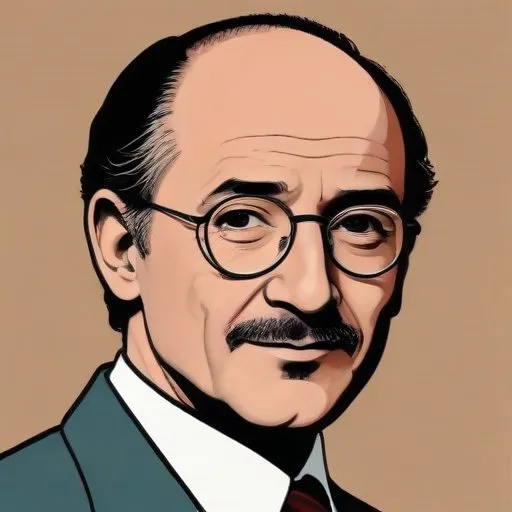
A physicist and science fiction author who explores the intersection of technology, society, and humanity through his novels and non-fiction works, often focusing on themes of transparency, accountability, and the consequences of emerging technologies.
David Brin, the prolific American science fiction author, is renowned for his thought-provoking novels that seamlessly weave together science, technology, and humanity. His groundbreaking works, such as the Uplift series, have earned him numerous awards, including the prestigious Hugo, Locus, Campbell, and Nebula Awards.
Born on October 6, 1950, in Glendale, California, David Brin grew up with a thirst for knowledge and a fascination with the mysteries of the universe. He graduated from the California Institute of Technology with a Bachelor of Science in astronomy in 1973, followed by a Master of Science in electrical engineering optics from the University of California, San Diego in 1978. Brin further solidified his academic foundation with a Doctor of Philosophy degree in astronomy from the University of California, San Diego in 1981.
Brin's postdoctoral research fellowship at the California Space Institute (1983-1986) laid the groundwork for his foray into science fiction. His debut novel, Sundiver (1980), marked the beginning of his Uplift series, which has since become a hallmark of his oeuvre. The series has not only garnered critical acclaim but also won the Hugo Award for Best Novel twice.
Other notable works by Brin include The Postman, adapted into a 1997 feature film starring Kevin Costner, and Kil'n People, a thought-provoking exploration of artificial intelligence and human consciousness.
Brin's work is characterized by a deep-seated curiosity about the intersections of science, technology, and human society. He has been vocal about the importance of embracing a collective future, where humanity can thrive in harmony with its technological advancements.
Through his writing, Brin has explored complex themes such as the ethics of artificial intelligence, the consequences of technological singularity, and the role of humanity in an increasingly mechanized world.
Brin's work has had a profound impact on the science fiction community, inspiring a new generation of authors and thinkers. His commitment to exploring the societal implications of emerging technologies has made him a sought-after consultant for corporations and government agencies.
In 2010, Brin became a fellow of the Institute for Ethics and Emerging Technologies, further solidifying his position as a leading voice in the conversation about humanity's technological future.
David Brin currently resides in San Diego County, California, with his wife and children. He is of Polish Jewish ancestry, with his grandfather having fought in the Russo-Japanese War of 1904-1905.
Brin has been an ardent supporter of various charitable initiatives, including the establishment of the Arthur C. Clarke Center for Human Imagination at UCSD, where he serves as a fellow.
David Brin's influence extends beyond the realm of science fiction, with his ideas and concepts permeating popular culture. His work has inspired countless authors, filmmakers, and thinkers, cementing his position as a visionary in the world of science fiction.
As we look to the future, Brin's contributions serve as a beacon, guiding us toward a world where humanity and technology coexist in harmony.
Born in 1920
A renowned science fiction author and biochemistry professor who wrote or edited more than 500 books and an estimated 90,000 letters and postcards throughout his lifetime.
Born in 1917
Pioneering science fiction author who wrote prophetic and imaginative novels, such as "2001: A Space Odyssey", that explored the intersection of technology and humanity.
Born in 1920
Prolific author of poetic and imaginative science fiction, exploring the human condition through fantastical worlds and characters, with works adapted into films and TV shows.
Born in 1907
Pioneering science fiction author and screenwriter who penned influential classics like "Stranger in a Strange Land" and "Starship Troopers", exploring complex social and philosophical themes.
Born in 1919
Pioneering science fiction author and journalist, known for exploring complex social and philosophical themes in his works, including the award-winning novel "Gateway".
85 Years Old
An American astrophysicist and author who explores the intersection of science and fiction, known for his Nebula Award-winning novel "Timescape" and contributions to the field of astrophysics.
81 Years Old
Pioneering science fiction author, known for exploring the intersection of technology and humanity, creating immersive worlds and predicting future trends.
74 Years Old
Award-winning science fiction author celebrated for crafting vivid, eco-conscious, and socially relevant novels that explore humanity's relationship with the environment and technology.
