


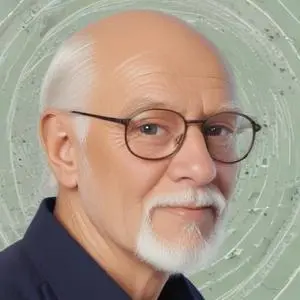
Pioneering science fiction author, known for exploring the intersection of technology and humanity, creating immersive worlds and predicting future trends.
Vernor Vinge is widely recognized as the first author to popularize the concept of the technological singularity and one of the pioneers of the fictional cyberspace. His award-winning novels and novellas have not only shaped the science fiction genre but have also inspired a new wave of thinkers and writers.
Vernor Steffen Vinge was born on October 2, 1944. He earned his Ph.D. in mathematics from the University of California, San Diego in 1971, under the supervision of Stefan E. Warschawski. This strong mathematical foundation would later influence his writing and help him to craft complex, thought-provoking narratives.
Vinge's writing career began in the 1960s, with his first short story, "Apartness," published in the British magazine New Worlds in 1965. He went on to publish numerous short stories and novels throughout the decade, exploring themes of artificial intelligence, virtual reality, and the intersection of technology and society.
In 1981, Vinge published his groundbreaking novella, "True Names," which introduced the concept of cyberspace and anticipated the rise of virtual reality. This work solidified his position as a visionary in the science fiction community and influenced a generation of writers, including William Gibson and Neal Stephenson.
Vinge's novels and novellas have received widespread critical acclaim and numerous awards, including:
Vinge's work has not only shaped the science fiction genre but has also had a profound impact on modern society. His concept of the technological singularity has inspired a new wave of thinkers and researchers, including Ray Kurzweil and Nick Bostrom.
Moreover, Vinge's exploration of virtual reality and cyberspace has influenced the development of modern technologies, such as virtual reality headsets and online virtual worlds.
Vinge has led a quiet, private life, but his work has been marked by several significant milestones, including:
Vernor Vinge's work has left an indelible mark on the science fiction genre and modern society. His pioneering concepts of the technological singularity and cyberspace have inspired generations of writers, researchers, and thinkers.
As a testament to his legacy, Vinge's work continues to influence contemporary science fiction and inspire new waves of creators and innovators.
Born in 1920
A renowned science fiction author and biochemistry professor who wrote or edited more than 500 books and an estimated 90,000 letters and postcards throughout his lifetime.
Born in 1917
Pioneering science fiction author who wrote prophetic and imaginative novels, such as "2001: A Space Odyssey", that explored the intersection of technology and humanity.
Born in 1920
Prolific author of poetic and imaginative science fiction, exploring the human condition through fantastical worlds and characters, with works adapted into films and TV shows.
Born in 1907
Pioneering science fiction author and screenwriter who penned influential classics like "Stranger in a Strange Land" and "Starship Troopers", exploring complex social and philosophical themes.
Born in 1919
Pioneering science fiction author and journalist, known for exploring complex social and philosophical themes in his works, including the award-winning novel "Gateway".
74 Years Old
Award-winning science fiction author celebrated for crafting vivid, eco-conscious, and socially relevant novels that explore humanity's relationship with the environment and technology.
75 Years Old
A renowned science fiction author, known for blending science and technology with compelling storytelling, exploring themes of artificial intelligence, consciousness, and humanity's future.
75 Years Old
A physicist and science fiction author who explores the intersection of technology, society, and humanity through his novels and non-fiction works, often focusing on themes of transparency, accountability, and the consequences of emerging technologies.
