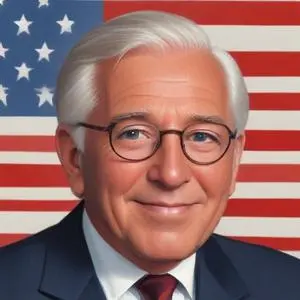
David McCullough: The Historian Who Brought the Past to Life
A Legacy of Pulitzer Prizes and Presidential Accolades
David McCullough, the renowned American historian, is best known for his meticulously researched and engagingly written historical narratives, earning him two Pulitzer Prizes and the Presidential Medal of Freedom, the United States' highest civilian award. With a body of work spanning over five decades, McCullough has left an indelible mark on the world of history, captivating readers with his vivid storytelling and meticulous attention to detail.
Early Life and Education
Born on July 7, 1933, in Pittsburgh, Pennsylvania, McCullough was raised in a family that fostered a love for history and literature. His parents, Ruth and Christian Hax McCullough, encouraged his curiosity, and his grandmother's storytelling sparked a lifelong passion for the past. McCullough's educational journey took him to Yale University, where he earned a degree in English literature and was privileged to study under esteemed faculty members, including
John O'Hara,
John Hersey, and
Robert Penn Warren.
A Career of Historical Storytelling
McCullough's writing career began with his first book,
The Johnstown Flood, published in 1968. This critically acclaimed debut marked the beginning of a remarkable journey, as he went on to author nine more books, each delving into the lives of influential figures, such as
Harry S. Truman,
John Adams,
Theodore Roosevelt, and the Wright brothers. His writing style, characterized by thorough research and engaging narrative, has been praised for making history accessible to a broad audience.
Awards and Honors
McCullough's contributions to the world of history have been recognized with numerous accolades, including:
- Two Pulitzer Prizes, for Truman (1993) and John Adams (2002)
- National Book Award for Truman (1993) and John Adams (2002)
- Presidential Medal of Freedom (2006)
Narrative Voice and Documentary Storytelling
In addition to his written work, McCullough has lent his distinctive narrative voice to numerous documentaries, including
Ken Burns'
The Civil War and the 2003 film
Seabiscuit. His 12-year tenure as the host of the PBS television documentary series
American Experience cemented his reputation as a masterful storyteller, capable of conveying the complexities of history in an engaging and accessible manner.
Legacy and Impact
David McCullough's remarkable body of work has not only enriched our understanding of American history but has also inspired a new generation of historians, writers, and documentarians. His commitment to accuracy, attention to detail, and dedication to storytelling have set a high standard for historical writing, ensuring his legacy as one of the most esteemed historians of our time.
Quote
"History is who we are and why we are the way we are." - David McCullough
FAQ
What is David McCulloughs most famous historical work?
David McCulloughs most famous historical work is 1776, a 2005 release that tells the story of the Continental Armys victory over the British during the American Revolutionary War.
What is David McCulloughs approach to historical writing?
David McCulloughs approach to historical writing is characterized by his use of engaging narratives and vivid storytelling to bring historical events to life. He is known for his meticulous research and attention to detail.
What is David McCulloughs educational background?
David McCullough studied English literature at Yale University and later earned his Masters degree in writing from Trinity College. He has also taught at several prestigious universities, including Yale and Harvard.
Has David McCullough won any awards for his historical writing?
Yes, David McCullough has won several awards for his historical writing, including two Pulitzer Prizes, the National Book Award, and the Presidential Medal of Freedom.
What is David McCulloughs perspective on American history?
David McCullough is a strong advocate for the importance of understanding and learning from American history. He believes that history has the power to inspire and educate, and that it is essential to preserving American democracy.