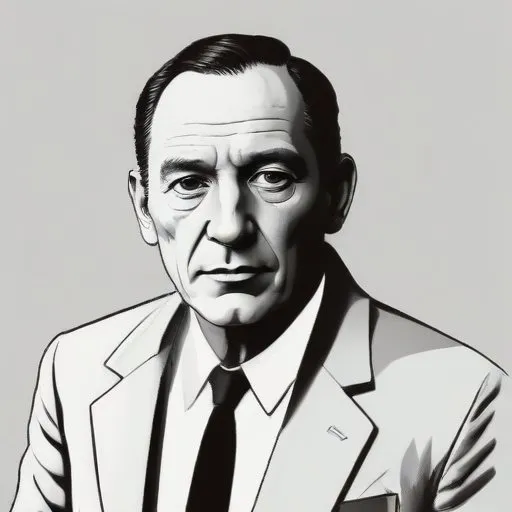
Robert Penn Warren: A Literary Giant of the 20th Century
A Trailblazer in American Literature
Robert Penn Warren, renowned as one of the most influential American poets, novelists, and literary critics of the 20th century, is celebrated for being the only person to have won Pulitzer Prizes for both fiction and poetry. With a storied career spanning over six decades, Warren left an indelible mark on American literature, shaping the literary landscape with his innovative and influential works.
Early Life and Education
Born on April 24, 1905, in Guthrie, Kentucky, Warren's family had roots in Virginia, and his mother, Anna Penn, was a descendant of Revolutionary War soldier Colonel Abram Penn. After graduating from high school at just 15, Warren's mother enrolled him in Clarksville High School in Tennessee for a year before he entered Vanderbilt University in Nashville, Tennessee, where he graduated summa cum laude, Phi Beta Kappa, and Founders Medalist in 1925.
During his time at Vanderbilt, Warren published his first poem, "Prophecy," in The Messkit, marking the beginning of his literary journey. His academic pursuits took him to the University of California, Berkeley, and later to Yale University, where he received a fellowship. In 1928, he entered New College, Oxford, as a Rhodes Scholar, earning his B.Litt. in 1930.
A Career of Literary Excellence
Warren's teaching career began at Southwestern College (now Rhodes College) in Memphis, Tennessee, in 1930. He later co-founded the literary journal
The Southern Review with Cleanth Brooks in 1935, which became a bastion for literary criticism and scholarship. Warren's novel,
All the King's Men (1946), won the Pulitzer Prize for Fiction in 1947, cementing his status as a leading literary figure.
Warren's poetic genius was recognized with two Pulitzer Prizes for Poetry, in 1958 and 1979, making him the first person to have won Pulitzer Prizes in both fiction and poetry. His poetry and novels often explored themes of identity, morality, and the American experience, showcasing his mastery of language and storytelling.
Philosophical Contributions and Beliefs
Warren's literary theory and criticism, particularly his work on the New Criticism movement, had a profound impact on American literary studies. He argued that literature should be analyzed as a self-contained entity, focusing on the text itself rather than its historical or biographical context. This approach revolutionized literary criticism and remains influential to this day.
- Warren was also a strong advocate for the importance of literature in understanding human experience, believing that it had the power to shape moral and social values.
- His commitment to social justice was reflected in his work, often tackling themes of racial tension, inequality, and personal morality.
Legacy and Impact
Robert Penn Warren's contributions to American literature are immeasurable. He inspired generations of writers, including
Flannery O'Connor,
James Dickey, and
Walker Percy, and continues to influence literary scholarship and criticism. His legacy extends beyond his own work, shaping the course of American literature and literary theory.
Personal Milestones and Key Life Events
- In 1944, Warren married Emma Brescia, with whom he had two children.
- He was awarded the Robert Frost Medal in 1967 for his lifetime contribution to poetry.
- Warren received the National Medal for Literature in 1974, honoring his contributions to American literature.
Quotes and Memorable Sayings
- "I am not afraid of storms, for I am learning how to sail my ship."
- "The past is not simply a sequence of past events but a constant, if shifting, presence in our lives."
Robert Penn Warren's remarkable life and career serve as a testament to his unwavering dedication to literature and his commitment to exploring the human experience. His works continue to captivate readers and inspire writers, ensuring his legacy as one of America's most revered literary figures.
FAQ
What were Robert Penn Warrens primary literary genres, and what were his notable works?
Robert Penn Warren was a prominent American novelist, poet, and literary critic, known for his works such as All the Kings Men, Brother to Dragons, and Band of Angels.
What were the major themes in Robert Penn Warrens literary works?
Robert Penn Warrens literary works explored themes of morality, politics, history, and the human condition, often set against the backdrop of the American South.
How did Robert Penn Warrens Kentucky upbringing influence his writing?
Robert Penn Warrens Kentucky upbringing had a significant impact on his writing, shaping his literary style and influencing his exploration of themes such as identity, morality, and the American South.
What was Robert Penn Warrens role in the development of modern American literature?
Robert Penn Warren was a key figure in modern American literature, contributing to the development of Southern literature and influencing generations of writers with his unique style and thematic explorations.
How did Robert Penn Warrens teaching career influence his writing and literary reputation?
Robert Penn Warrens teaching career had a significant impact on his writing, as he drew inspiration from his students and used his teaching experiences to inform his literary works.