


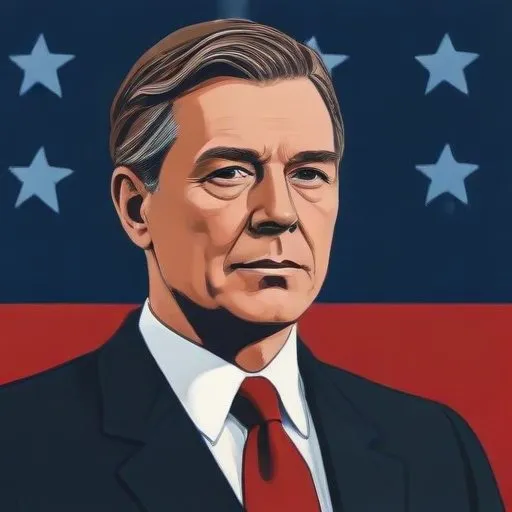
A prominent figure in the mid-19th century, he served as a US Senator and briefly as President Pro Tempore of the Senate, earning the disputed title of "President for a Day." He played a significant role in the Kansas-Nebraska Act and the Missouri Compromise.
David Rice Atchison, a mid-19th century Democratic United States Senator from Missouri, is known for his tumultuous career as President pro tempore of the United States Senate and his questionable claim to being the Acting President of the United States for a brief period. He is also infamous for his pro-slavery stance and involvement in the violent Border Ruffian movement during the Bleeding Kansas events.
Atchison was born on August 11, 1807, in Frogtown, Kentucky, to William Atchison and his wife. He attended Transylvania University in Lexington, Kentucky, where he was classmates with five future Democratic senators, including Jefferson Davis of Mississippi and Solomon Downs of Louisiana.
In 1830, Atchison moved to Liberty, Missouri, where he established a law practice and acquired a farm with enslaved African Americans. His law practice flourished, and he represented notable clients, including Joseph Smith, the founder of the Latter Day Saint Movement. Atchison's involvement with Smith's land disputes with non-Mormon settlers in Caldwell and Daviess counties solidified his reputation as a skilled lawyer.
Atchison's most enduring claim to fame is his disputed role as the Acting President of the United States. According to some of his associates, Atchison held the position for 24 hours, from Sunday, March 4, 1849, to noon on Monday, due to a gap in presidential succession. However, this claim is widely disputed by historians and scholars, who argue that it was merely a publicity stunt.
Atchison's involvement in the violent Border Ruffian movement during the Bleeding Kansas events is a dark stain on his legacy. As a prominent pro-slavery activist, he condoned and participated in violent attacks against abolitionists and free-staters. His plantation, which relied on enslaved labor, was a symbol of his commitment to the institution of slavery.
Atchison served as a major general in the Missouri State Militia during the Mormon War in 1838 and later as a Confederate brigadier general during the American Civil War under Major General Sterling Price in the Missouri Home Guard.
David Rice Atchison's legacy is marred by his pro-slavery stance, involvement in violent conflicts, and disputed claim to the presidency. While he was a prominent figure in Missouri politics, his actions and beliefs have been widely criticized by historians and scholars. Despite this, his life serves as a reminder of the complexities and contradictions of American history.
Atchison's life is a testament to the complexities of American history, where figures can be both admired and reviled for their actions and beliefs. While his legacy is controversial, it serves as a reminder of the ongoing struggle for justice and equality in the United States.
Born in 1777
A skilled orator and compromiser who played a crucial role in shaping the country's early development, particularly through his "American System" economic plan. He's also known for his numerous presidential bids and influential leadership in the Senate.
Born in 1782
A renowned lawyer and politician who served as the 14th United States Secretary of State, known for his exceptional oratory skills and influential role in shaping the country's early development.
Born in 1782
A prominent figure in American politics, serving as Vice President and advocating for states' rights, particularly in regards to slavery. He played a significant role in shaping the country's early development.
Born in 1784
The 12th President of the United States was a military hero who led the country to victory in the Mexican-American War, and later became a short-lived president. He's known for his strong leadership and sudden death in office.
Born in 1800
The 13th President of the United States, a member of the Whig party, is known for being a compromise candidate and signing the Compromise of 1850, which attempted to address the issue of slavery in new states. He's also notable for being one of the lesser-known presidents in U.S. history.
Born in 1804
The 14th President of the United States, a northern Democrat who struggled to find a compromise on slavery, ultimately signing the Kansas-Nebraska Act, which allowed new states to decide on slavery. He's often remembered for his inability to prevent the Civil War.
Born in 1791
The 15th President of the United States, a northern Democrat who remained in office during the American Civil War, is infamous for his inaction in preventing the secession of 11 southern states. He's often regarded as one of the worst presidents in US history.
Born in 1767
A fiery leader who expanded democracy and shaped the country's economy, known for his populist policies and controversial decisions, including the forced relocation of Native Americans.
