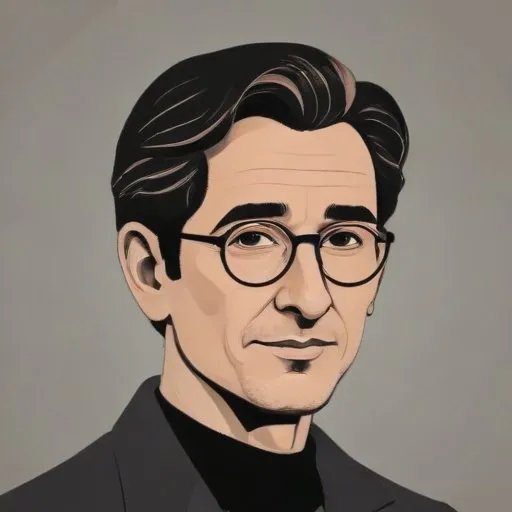
David Rosenboom: A Pioneering Composer and Interdisciplinary Artist
A Legacy of Innovation and Experimentation
David Rosenboom is renowned for his groundbreaking work in American experimental music, pushing the boundaries of composition, performance, and interdisciplinary art. As a composer, performer, and educator, Rosenboom has explored a diverse range of musical forms, languages, and technologies, earning him a reputation as a trailblazer in the music world.
Early Life and Education
Born in 1947 in Fairfield, Iowa, Rosenboom was drawn to music from a young age. He began his musical journey studying composition, performance, and electronic music at the University of Illinois at Urbana-Champaign, where he had the opportunity to learn from esteemed mentors such as Salvatore Martirano, Lejaren Hiller, and Kenneth Gaburo.
Teaching and Mentorship
Rosenboom's dedication to education has been a hallmark of his career. He has taught at various institutions, including Mills College, York University, and the Center for Creative and Performing Arts at the State University of New York in Buffalo. From 1990 to 2023, he was a faculty member at The
Herb Alpert School of Music at California Institute of the Arts, where he nurtured the talents of numerous students, including Jin Hi Kim and Gino Robair.
Compositional Contributions and Innovations
Rosenboom's compositional oeuvre is characterized by its diversity and innovation. He has explored novel techniques in scoring for ensembles, multidisciplinary composition and performance, cross-cultural collaborations, and the use of neurofeedback and compositional algorithms. One of the first composers to utilize a digital synthesizer, Rosenboom has worked extensively with Don Buchla, a pioneer in electronic music.
Notable Works and Collaborations
Rosenboom's discography is a testament to his boundless creativity. Some of his notable works include:
- Suitable For Framing (1975)
- Collaboration In Performance (1978)
- A Live Electroacoustic Retrospective (1987)
- Systems of Judgement (1991)
- Two Lines (1996), a collaboration with Anthony Braxton
- Brainwave Music (1976) and EM (2007)
- Future Travel (1981)
Personal Life and Milestones
Rosenboom was married to performance artist and vocalist Jacqueline Humbert until 2012. The couple had three children together: Daniel, Dorothea, and Lindsay. Rosenboom has also performed with Trichy Sankaran at CalArts.
Legacy and Impact
David Rosenboom's contributions to music and the arts have had a profound impact on modern society. His pioneering work in experimental music has inspired a new generation of composers and artists, and his dedication to education has nurtured countless talents. As a testament to his influence, Rosenboom's legacy continues to resonate in the music world, inspiring future generations to push the boundaries of artistic expression.
FAQ
What is David Rosenbooms musical style?
David Rosenbooms musical style is characterized by his eclectic and innovative approach, incorporating elements of classical, jazz, and electronic music.
What is David Rosenbooms compositional process?
David Rosenbooms compositional process often involves the use of unconventional instruments and techniques, as well as collaborations with other artists and musicians.
What is David Rosenbooms academic background?
David Rosenboom has a strong academic background, having studied composition and piano at the University of Illinois and later earning a Ph.D. in composition from the University of California, San Diego.
Has David Rosenboom released any notable albums?
Yes, David Rosenboom has released several notable albums, including Brainwave Music and Two Lines, which showcase his innovative and eclectic approach to composition.
What is David Rosenbooms legacy in music?
David Rosenboom is a highly respected composer and educator, known for his innovative and eclectic approach to music and his contributions to the development of new music and avant-garde composition.