


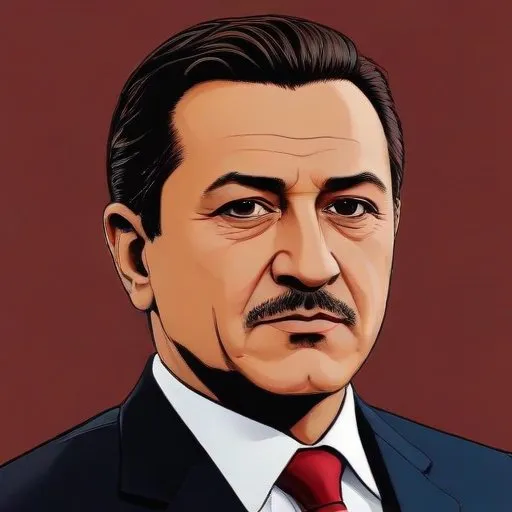
A Turkish lawyer and politician who served as Deputy Prime Minister of Turkey, known for his leadership roles in the Republican People's Party and his influence on Turkish politics.
Deniz Baykal was a Turkish politician who left an indelible mark on the country's political landscape, serving as Deputy Prime Minister and Minister of Foreign Affairs from 1995 to 1996. A stalwart of the Republican People's Party (CHP), Baykal led the party on three separate occasions and was the Leader of the Opposition from 2002 to 2010.
Baykal's political career spanned over four decades, with his first foray into politics in 1973 when he was elected to Parliament. He went on to serve in various government positions, including Minister of Finance in the CHP-MSP coalition of 1974 and Minister of Energy and Natural Resources in the third government of Bülent Ecevit from 1978 to 1979.
During the 1980 Turkish coup d'état, Baykal was briefly imprisoned before being elected to Parliament again in 1987 from the Social Democratic People's Party (SHP). He was one of the leading members of the re-established CHP in 1992 and served as the party's leader until 1995.
Baykal's leadership saw the CHP merge with the SHP in 1995, after which he was re-elected leader in September of the same year. He contested the 1995 general election and formed a coalition government with Tansu Çiller's True Path Party, serving concurrently as Deputy Prime Minister and Minister of Foreign Affairs between 1995 and 1996.
Follwing a landslide defeat in the 1999 general election, Baykal resigned as leader after the party failed to surpass the 10% election threshold. However, he made a remarkable comeback, being re-elected as leader in 2000 and leading the party to a moderate success in the 2002 general election, becoming the Leader of the Opposition.
Besides his political career, Baykal was a prolific writer, publishing several books on politics and democracy. His literary contributions have been widely acclaimed, providing valuable insights into Turkish politics and society.
Deniz Baykal's legacy is that of a dedicated public servant who worked tirelessly to promote democracy and social justice in Turkey. His unwavering commitment to his political ideals has inspired generations of Turkish politicians and citizens alike.
As the oldest MP in Parliament following the June 2015 general election, Baykal briefly served as the interim Speaker of the Grand National Assembly, capping off a remarkable career that spanned over 40 years.
Deniz Baykal's remarkable life and career serve as a testament to his unwavering dedication to public service and his unshakeable commitment to his political ideals.
72 Years Old
The 12th President of Turkey, a dominant figure in Turkish politics, known for his Islamist roots and authoritarian leadership style, shaping Turkey's modern political landscape.
76 Years Old
The 11th President of Turkey, a politician and academic who played a key role in shaping Turkey's modern politics and foreign policy, known for his efforts to strengthen Turkey's ties with the EU.
Born in 1925
A Turkish journalist, scholar, and politician who served as the 16th Prime Minister of Turkey, known for his progressive policies and literary works. He played a significant role in shaping Turkey's modern politics and culture.
80 Years Old
Served as Prime Minister of Turkey from 2002 to 2014, leading the country through a period of rapid economic growth and implementing significant political reforms. Known for his charismatic leadership and efforts to increase Turkey's global influence.
Born in 1924
A Turkish engineer-turned-politician who served as the country's 9th President, known for his efforts to modernize Turkey's economy and infrastructure. He played a key role in shaping Turkey's politics and economy during the latter half of the 20th century.
Born in 1926
The first Islamist Prime Minister of Turkey, serving from 1996 to 1997, known for his efforts to increase Islamic influence in Turkish politics and society.
