


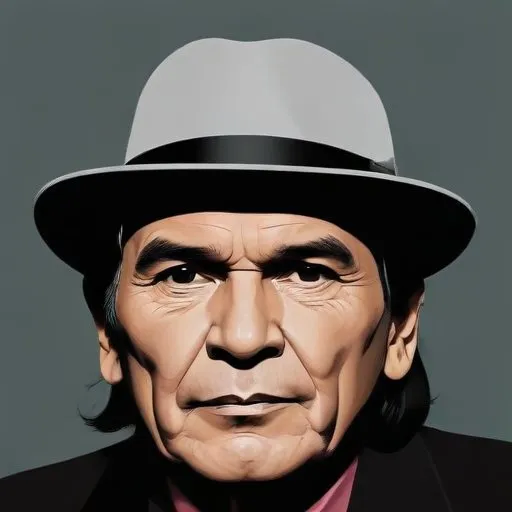
A Native American author and activist who co-founded the American Indian Movement, advocating for indigenous rights and self-determination through writing and protest.
Dennis Banks, a renowned Native American activist, teacher, and author, is best known for co-founding the American Indian Movement (AIM) in 1968, which revolutionized the fight for Native American rights and social justice. Through his tireless efforts, Banks brought national attention to the deplorable conditions faced by Native Americans, paving the way for significant government concessions and reforms.
Banks was born on April 12, 1937, on the Leech Lake Indian Reservation in northern Minnesota. His early life was marked by separation and dislocation, as he was taken from his grandparents at the age of five to attend a federal Indian boarding school. This traumatic experience had a profound impact on Banks, shaping his future activism and advocacy for Native American rights.
In 1956, Banks joined the US Air Force and was stationed in Japan, where he witnessed the Sunagawa Struggle, a protest against the construction of a US military base. Ordered to shoot at the protesters, Banks was deeply disturbed by the experience, which marked a turning point in his life. He soon went AWOL and was dishonorably discharged from the military. This event instilled in him a sense of purpose, driving him to become a vocal advocate for social justice and human rights.
In 1968, Banks co-founded the American Indian Movement (AIM) in Minneapolis, Minnesota, alongside George Mitchell and others. AIM aimed to address the pressing issues facing urban Indians, including poverty, discrimination, and neglect. Banks' charismatic leadership and unwavering dedication helped galvanize the movement, drawing national attention to the struggles of Native Americans.
Banks' protests and demonstrations garnered significant media attention, forcing the US government to confront the appalling conditions faced by Native Americans. His activism led to important concessions, including the establishment of the Native American Rights Fund and the passage of landmark legislation, such as the Indian Self-Determination and Education Assistance Act of 1975.
Dennis Banks' fearless leadership and unrelenting advocacy have left an indelible mark on Native American history. His legacy continues to inspire generations of activists, educators, and community leaders, ensuring that the struggles and triumphs of Native Americans are never forgotten. Through his remarkable life, Banks has demonstrated the transformative power of courage, conviction, and collective action.
"I'd rather die on my feet than live on my knees."
Banks' unwavering spirit and commitment to social justice have cemented his place as one of the most important Native American leaders of the 20th century. His remarkable story serves as a powerful testament to the enduring struggle for human rights, dignity, and self-determination.
86 Years Old
A Native American rights activist, actor, and musician who fought for indigenous rights and appeared in films like "The Last of the Mohicans" and "Natural Born Killers".
80 Years Old
A Native American poet, actor, and musician who used his words to advocate for Indigenous rights and challenge the status quo. His powerful spoken word performances and activism inspired a generation of Native American artists and social justice advocates.
82 Years Old
A Native American rights activist and imprisoned for the murder of two FBI agents, known for his controversial conviction and ongoing campaigns for his release.
80 Years Old
First female principal chief of the Cherokee Nation, leading her people through significant economic and infrastructure development, and advocating for tribal sovereignty and women's rights.
