


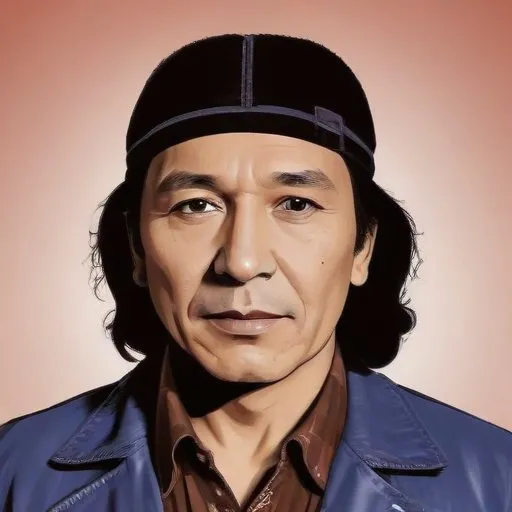
A Native American rights activist, actor, and musician who fought for indigenous rights and appeared in films like "The Last of the Mohicans" and "Natural Born Killers".
Russell Means, a renowned Oglala Lakota activist, is best known for his fearless advocacy for the rights of American Indians and oppressed First Nation peoples. As a prominent member of the American Indian Movement (AIM), he played a pivotal role in organizing events that garnered national and international attention, shedding light on the struggles faced by indigenous communities.
Born on November 10, 1939, in Porcupine, South Dakota, on the Pine Ridge Indian Reservation, Means was given the name Wabl Ohtika, meaning Brave Eagle in the Lakota language. His mother, Theodora Louise Feather, was a Yankton Dakota, and his father, Walter Hank Means, was an Oglala Lakota. Means grew up in the San Francisco Bay Area, where his family resettled in 1942, seeking to escape the poverty and problems of the reservation.
Means' early life was marked by truancy, crime, and drug use. However, he found purpose in the American Indian Movement in Minneapolis, Minnesota, which became the catalyst for his activism. He joined AIM in 1968 and quickly rose to prominence, becoming one of the organization's most vocal and determined leaders.
In addition to his activism, Means was an accomplished actor, musician, and writer. He appeared in several films, including The Last of the Mohicans and Pocahontas, and released his own music CD. Means also published his autobiography, Where White Men Fear to Tread, in 1995.
Means was a strong advocate for environmental justice, recognizing the interconnectedness of indigenous rights and ecological preservation. He believed in the importance of preserving traditional ways of life and protecting sacred lands and resources.
Means' life was marked by personal struggles and triumphs. He battled addiction and overcome numerous challenges, only to emerge as a powerful voice for indigenous rights.
Russell Means' tireless advocacy and activism have left an indelible mark on the fight for indigenous rights and environmental justice. His bravery and unwavering commitment to his people's causes have inspired generations of activists and continue to reverberate throughout the world.
Through his multifaceted career and passions, Means demonstrated the importance of protecting our planet and promoting social justice. As we move forward, his legacy serves as a powerful reminder of the importance of preserving traditional ways of life, respecting indigenous rights, and safeguarding our planet's delicate ecosystems.
89 Years Old
A Native American author and activist who co-founded the American Indian Movement, advocating for indigenous rights and self-determination through writing and protest.
80 Years Old
A Native American poet, actor, and musician who used his words to advocate for Indigenous rights and challenge the status quo. His powerful spoken word performances and activism inspired a generation of Native American artists and social justice advocates.
83 Years Old
A Native American rights activist and imprisoned for the murder of two FBI agents, known for his controversial conviction and ongoing campaigns for his release.
79 Years Old
A controversial Native American rights activist and author who sparked debate with his writings on American history and politics, particularly his essay on 9/11.
80 Years Old
First female principal chief of the Cherokee Nation, leading her people through significant economic and infrastructure development, and advocating for tribal sovereignty and women's rights.
