


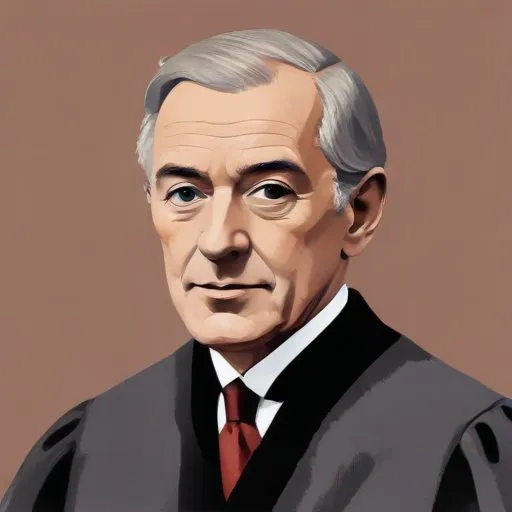
A Scottish lawyer, judge, and politician who served as Lord High Chancellor of Great Britain, playing a key role in shaping the country's legal system and judiciary. He's known for his significant reforms to the legal profession and the judiciary.
Derry Irvine, Baron Irvine of Lairg, is a Scottish lawyer and politician who is most notably recognized for serving as Lord Chancellor from 1997 to 2003, a position that earned him a prominent place in British politics. During his tenure, he played a crucial role in shaping the country's judicial system, and his legacy continues to influence the legal landscape of the UK.
Born on June 23, 1940, in Inverness, Scotland, Irvine was the son of a roofer and a waitress. He received his education at the prestigious Hutchesons' Boys' Grammar School in Glasgow, where he developed a strong foundation in debate and public speaking. His involvement in the Glasgow University Dialectic Society and Glasgow University Union led to lifelong friendships with prominent figures such as Donald Dewar and John Smith.
Irvine pursued his undergraduate studies in Scots law at the University of Glasgow and later studied English law at Christ's College, Cambridge. This dual education equipped him with a comprehensive understanding of the British legal system, which would serve him well in his future endeavors.
After teaching law at the London School of Economics, Irvine was called to the Bar in 1967 and joined chambers headed by Morris Finer. His exceptional abilities and dedication earned him the distinction of Queen's Counsel in 1978. In 1981, he founded 11 Kings Bench Walk Chambers, which he led as head of chambers. Notably, his pupil barristers included Tony Blair and Cherie Booth, who would later become significant figures in British politics.
In addition to his practice, Irvine served as a Recorder and later as a Deputy High Court Judge, showcasing his expertise in the judicial system.
Irvine's foray into politics began in the 1970s, when he contested the Hendon North seat in the 1970 general election as the Labour Party candidate. Although he was unsuccessful, he continued to serve as a legal adviser to the Party throughout the 1980s.
In 1987, he was awarded a life peerage as Baron Irvine of Lairg, of Lairg in the District of Sutherland. This marked the beginning of his tenure in the House of Lords, where he became an influential voice on legal matters.
Irvine served as Shadow Lord Chancellor from 1992 to 1997, working closely with Labour leaders John Smith, Margaret Beckett, and Tony Blair. Following Labour's election victory in 1997, Blair appointed Irvine as Lord Chancellor, a position he held until 2003.
Derry Irvine's legacy is marked by his commitment to judicial reform and his efforts to modernize the British legal system. During his tenure as Lord Chancellor, he oversaw the introduction of the Human Rights Act, the establishment of the Scottish Parliament, and the reform of the House of Lords.
His impact extends beyond the realm of politics, as he has inspired generations of lawyers and politicians. Irvine's dedication to public service and his unwavering commitment to upholding the principles of justice have earned him a permanent place in British history.
Irvine has received numerous accolades for his service, including a life peerage and the title of Baron Irvine of Lairg. He has also been recognized for his contributions to the legal profession, including his appointment as a Queen's Counsel.
Beyond his professional achievements, Irvine's personal life has been marked by significant milestones. He has maintained lifelong friendships with prominent figures, including Donald Dewar and John Smith, and has been involved in various charitable endeavors.
Throughout his illustrious career, Derry Irvine has remained committed to his core values of justice, equality, and public service. His enduring legacy continues to shape the legal landscape of the UK, inspiring future generations of lawyers, politicians, and public servants.
73 Years Old
The former Prime Minister of the United Kingdom who led the country through a transformative period, including the Iraq War, and is known for his charismatic leadership and controversial decisions.
75 Years Old
The Prime Minister of the United Kingdom from 2007 to 2010, known for his key role in shaping the country's economy and response to the 2008 global financial crisis.
83 Years Old
A former Prime Minister of the United Kingdom, he led the country from 1990 to 1997, playing a key role in shaping the nation's economy and foreign policy during a tumultuous period.
60 Years Old
The former Prime Minister of the United Kingdom who led the country from 2010 to 2016, known for his role in the Brexit referendum and austerity measures.
70 Years Old
The second female Prime Minister of the United Kingdom, leading the country through Brexit negotiations and implementing policies on national security and education. Known for her strong stance on immigration and law and order.
62 Years Old
Former Prime Minister of the United Kingdom and former Mayor of London, known for his charismatic leadership and Brexit advocacy. He led the UK's withdrawal from the European Union.
58 Years Old
A former English rugby union player who won 40 caps and later coached Leicester Tigers to multiple championships, known for his leadership and tactical acumen.
80 Years Old
A British politician who served in various cabinet positions, including Foreign Secretary, and played a key role in shaping the country's foreign policy, particularly during the Iraq War.
