


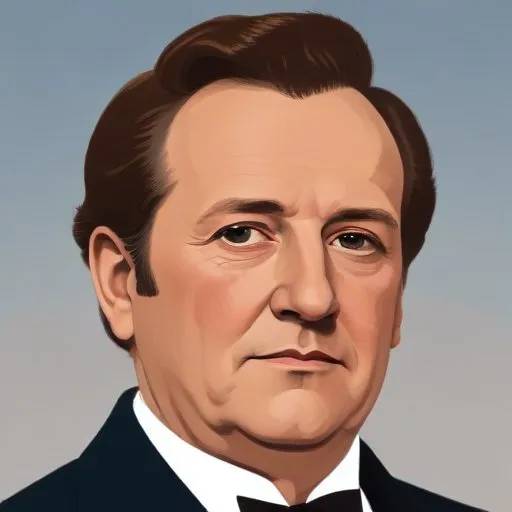
The 18th Governor of Tennessee, a prominent figure in the state's development, is most known for his role in shaping Tennessee's infrastructure and education system. He was a strong advocate for public education and oversaw the construction of roads, canals, and railroads.
Dewitt Clinton Senter is arguably best remembered for his unwavering stance against secession on the eve of the American Civil War, and for subsequently becoming the 18th Governor of Tennessee, serving from 1869 to 1871. During his tenure, he famously restored the right to vote to former Confederates, undoing many of the radical initiatives of his predecessor, William G. Brownlow.
Senter was born on March 26, 1830, in McMinn County, Tennessee, to William Tandy Senter, a renowned Methodist minister and politician, and Nancy White. His father's influence extended beyond the pulpit, as he served in the United States House of Representatives in the mid-1840s and was a delegate to Tennessee's 1834 constitutional convention. This rich legacy of public service would shape Senter's future undertakings.
As a Whig, Senter remained resolute in his opposition to secession, even as the winds of war swept through the nation. In May 1861, he voted against Tennessee's Ordinance of Secession, and later canvassed in East Tennessee to rally Unionists. His efforts culminated in his participation in the East Tennessee Convention, which sought to form a separate, Union-aligned state in East Tennessee. For his defiance, Senter was arrested and jailed by Confederate authorities in 1862, only to be released and flee to Louisville, Kentucky.
After the war, Senter was elected to the Tennessee Senate, where he was chosen as Speaker in 1867. Following the resignation of Governor William G. Brownlow in 1869, Senter became the Governor of Tennessee. During his tenure, he focused on revamping the state's government, and it was during this period that the current Tennessee State Constitution was written and enacted.
Dewitt Clinton Senter's unwavering commitment to the Union and his efforts to rebuild Tennessee after the Civil War have secured his place in the annals of American history. His legacy serves as a testament to the power of conviction and the importance of forgiveness in the face of adversity.
Born in 1767
A fiery leader who expanded democracy and shaped the country's economy, known for his populist policies and controversial decisions, including the forced relocation of Native Americans.
Born in 1795
The 11th President of the United States was a strong leader who aggressively expanded the country's territory through the annexation of Texas and the Mexican-American War, nearly doubling the size of the US. He's also known for being a strong advocate for Manifest Destiny.
Born in 1611
Developed algebraic methods and translated mathematical works, making significant contributions to number theory and linguistics.
Born in 1777
A skilled orator and compromiser who played a crucial role in shaping the country's early development, particularly through his "American System" economic plan. He's also known for his numerous presidential bids and influential leadership in the Senate.
Born in 1782
A renowned lawyer and politician who served as the 14th United States Secretary of State, known for his exceptional oratory skills and influential role in shaping the country's early development.
Born in 1782
A prominent figure in American politics, serving as Vice President and advocating for states' rights, particularly in regards to slavery. He played a significant role in shaping the country's early development.
Born in 1793
First president of the Republic of Texas, leading the fight for independence from Mexico and later becoming a US senator and governor. Known for his bravery and strong leadership during Texas's formative years.
Born in 1791
The 15th President of the United States, a northern Democrat who remained in office during the American Civil War, is infamous for his inaction in preventing the secession of 11 southern states. He's often regarded as one of the worst presidents in US history.
