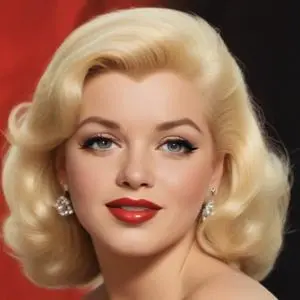
Diana Dors: The Blonde Bombshell of British Cinema
The Siren of Sex Comedy
Diana Dors, the ravishing English actress and singer, was the epitome of 1950s glamour, earning her the moniker "Britain's answer to
Marilyn Monroe." With her curvaceous figure, blonde locks, and sultry gaze, Dors was the ultimate sex symbol, captivating audiences worldwide with her provocative film performances and risqué modeling shoots.
A Turbulent Early Life
Born Diana Mary Fluck on October 23, 1931, in Swindon, Wiltshire, England, Dors' early life was marked by uncertainty. Her mother, Winifred Maud Mary Payne, confessed to not knowing whether her husband, Albert Edward Sidney Fluck, or another man was Diana's biological father. This tumultuous start did little to hinder Dors' ambitions, and she was soon enrolled in a private school, Selwood House, where she was eventually expelled.
Rise to Fame
Dors' cinematic career began in the early 1950s, with her first husband, Dennis Hamilton, crafting her image as a blonde bombshell. Hamilton's promotional efforts paid off, and Dors soon became a household name, starring in a string of sex comedies that exploited her physical assets. Her on-screen charm and off-screen antics, including lavish parties at her home, kept her in the headlines and solidified her status as a tabloid darling.
Rediscovering Talent
After her marriage to Hamilton ended in scandal, Dors began to showcase her versatility as a performer. She excelled on television, recording songs, and in cabaret, garnering a new wave of admiration from audiences and critics alike. Her wit and charm made her a sought-after guest on chat shows, and her film performances, such as in the 1955 comedy "Value for Money," revealed a depth of talent that went beyond her sex symbol status.
Cultural Significance
Dors represented a pivotal moment in British cultural history, according to film critic David Thomson. She embodied the repressed sexuality of the post-war era, a time when sexual freedom was stifled and waiting to burst forth. Her on-screen presence and off-screen exploits captured the essence of this tumultuous period, making her a cultural icon of the 1950s and 1960s.
Personal Milestones
Dors' personal life was marked by tumultuous relationships, including her marriage to Hamilton, who was later revealed to be defrauding her. She eventually found happiness with her third husband, Alan Lake, with whom she had a son, Mark. Dors also had a notable romance with zoologist and author
Desmond Morris, who would later become famous for his book "The Naked Ape."
Legacy
Diana Dors may have begun her career as a sex symbol, but she evolved into a talented performer, charming audiences with her wit, charm, and vulnerability. Her impact on British cinema and popular culture is undeniable, cementing her place as a true screen siren of the 20th century.
- Did you know? Diana Dors was expelled from school at the age of 14 for writing a saucy poem.
- In 1979, Dors was diagnosed with ovarian cancer and passed away on May 4, 1984, at the age of 52.
FAQ
What was Diana Dors film career like?
Diana Dors was a British actress who appeared in over 30 films during her career, including The Unholy Wife and Tread Softly Stranger, showcasing her versatility and range as a performer.
How did Diana Dors become a sex symbol in the 1950s?
Diana Dors striking looks and curvaceous figure earned her the nickname Britains bosomiest blonde, making her a popular pin-up girl and sex symbol of the 1950s.
What were Diana Dors notable roles in British cinema?
Diana Dors starred in several notable British films, including Yield to the Night and A Kid for Two Farthings, demonstrating her talent and range as an actress.
How did Diana Dors transition to television?
In the 1960s and 1970s, Diana Dors moved into television, appearing in popular shows such as The Saint and The Two Ronnies, cementing her status as a beloved British entertainer.
What was Diana Dors later life like?
After a successful career, Diana Dors continued to act in smaller roles and made public appearances until her passing in 1984, leaving behind a legacy as one of Britains most iconic actresses.