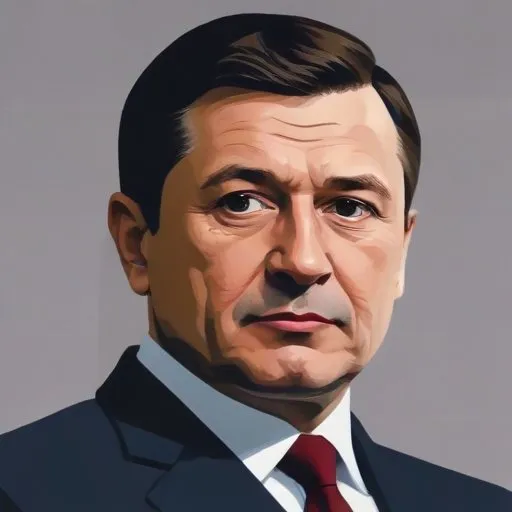
Dmitry Kozak: The Mastermind Behind Putin's Power Circle
The Cheshire Cat of Russian Politics
Dmitry Kozak, known affectionately as the "Cheshire Cat" due to his enigmatic smile, is a Russian politician who has been a key figure in
Vladimir Putin's power circle. For over two decades, Kozak has held various influential positions, earning him the reputation as one of Putin's most trusted allies.
Early Life and Career
Born on November 7, 1958, in the village of Bandurove, Ukraine, Kozak's early life was marked by adventure and service. From 1976 to 1978, he served in the special forces Spetsnaz GRU of the Soviet military's Main Intelligence Directorate GRU. After his stint in the military, Kozak studied at the Vinnitsa Polytechnic Institute before moving to Leningrad. He graduated from Leningrad State University (now St. Petersburg State University) in 1985 with a degree in law.
Rise to Power
Kozak's political career began in the 1990s, when he worked alongside Putin in the St. Petersburg city administration. This partnership would prove instrumental in shaping Kozak's future. In 2004, he served as the head of Putin's election campaign team, and later became one of the key figures in Putin's presidential team.
Key Positions and Achievements
- Regional Development Minister in the Russian cabinet (2007-2008)
- Presidential Plenipotentiary Representative in the Southern Federal District (2004-2007)
- Deputy Prime Minister of Russia (2008-2020)
- Deputy Kremlin Chief of Staff (2020-present)
Influence and Legacy
Kozak's influence on modern Russian politics cannot be overstated. He has played a crucial role in shaping Putin's policies, particularly in the areas of regional development and economic reform. His ability to navigate the complexities of Russian politics has earned him the respect of his peers and the admiration of his critics.
Personal Milestones and Key Life Events
Kozak's personal life is marked by a sense of quiet discretion, but a few notable events stand out. In 2008, he was touted as a possible candidate to succeed Putin as president, a testament to his growing influence in Russian politics.
Philosophical Contributions and Beliefs
Kozak's philosophical contributions are closely tied to his role in shaping Putin's policies. He is a staunch believer in the importance of regional development and has worked tirelessly to promote economic growth in Russia's regions.
Trivia and Fun Facts
- Kozak holds the federal state civilian service rank of 1st class Active State Councillor of the Russian Federation.
- He is of Ukrainian ethnicity, a fact that has sparked interest in his cultural heritage.
Impact on Pop Culture
While Kozak's influence on pop culture may not be immediately apparent, his role in shaping Russian politics has inspired countless articles, books, and films. His enigmatic smile and quiet confidence have captivated observers, earning him a place in the pantheon of Russian politics.
FAQ
What is Dmitry Kozaks role in Russian politics?
Dmitry Kozak is a Russian politician who has served as the Deputy Prime Minister of the Russian Federation since 2008, overseeing various portfolios, including energy, industry, and transport.
How did Dmitry Kozak rise to prominence?
Dmitry Kozak began his career in the KGB, eventually becoming a close ally of Vladimir Putin, serving as his chief of staff and later as the governor of St. Petersburg.
What are some of Dmitry Kozaks key accomplishments?
Dmitry Kozak has played a crucial role in shaping Russias energy policy, overseeing the development of major energy projects, including the Nord Stream pipeline and the Eastern Siberia-Pacific Ocean oil pipeline.
Has Dmitry Kozak been involved in any controversies?
Yes, Dmitry Kozak has faced criticism for his role in the 2014 Ukrainian crisis and has been the subject of international sanctions.
What is Dmitry Kozaks legacy in Russian politics?
Dmitry Kozaks long-term service in various high-level positions has solidified his status as a influential figure in Russian politics, known for his proximity to Vladimir Putin and his expertise in energy and economic policy.