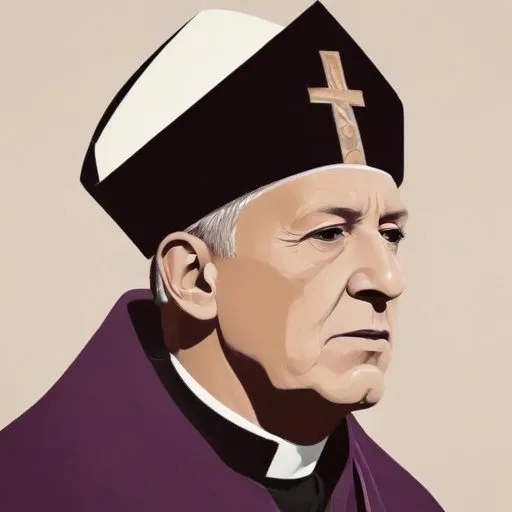
Donald Coggan: The Architect of Ecumenism and Women's Ordination
The Legacy of the 101st Archbishop of Canterbury
Donald Coggan, Baron Coggan, is revered for his pivotal role in revitalizing the Church of England during his tenure as the 101st Archbishop of Canterbury from 1974 to 1980. Throughout his ecclesiastical career, he championed dialogue with Rome, fervently supported women's ordination, and restored morale within the Anglican Communion.
Early Life and Education
Born on October 9, 1909, in Highgate, Middlesex, Donald Coggan was the youngest child of Cornish Arthur Coggan, a meat trader, and his wife, Fanny Sarah Chubb. Raised primarily by his mother, Coggan developed a strong foundation in faith and morals. During World War I, his family relocated to Burnham-on-Sea, Somerset, where he was influenced by Ashley King, an evangelist who conducted children's missions on the beach. This experience instilled in him a lifelong passion for evangelism and ecumenism.
After the war, Coggan's family returned to London, but the strains of their life led to his physical illness, rendering him unable to attend school. A neighbor taught him for four years, fostering his love for music. At the age of 14, Coggan entered Merchant Taylors School, Northwood, where he began to feel drawn to ordination. His sisters' introduction to an evangelical church further solidified his faith.
Academic Pursuits and Ordination
Coggan's academic prowess in languages earned him an open exhibition to St John's College, Cambridge, in 1928. His studious nature ultimately upgraded his exhibition to a full scholarship. At Cambridge, he delved into Latin, Greek, and Hebrew studies, laying the groundwork for his future theological pursuits. In 1931, Coggan was ordained as a priest in the Church of England.
Rise to Prominence
Donald Coggan's ecclesiastical career spanned several decades, with various appointments and promotions. He served as the Bishop of Bradford from 1956 to 1961 and then as the Archbishop of York from 1961 to 1974. His leadership and diplomacy facilitated dialogue between the Church of England and the Roman Catholic Church, ultimately leading to the historic 1966 meeting between Archbishop Michael Ramsey and
Pope Paul VI.
Archbishop of Canterbury (1974-1980)
As the 101st Archbishop of Canterbury, Coggan continued to promote ecumenism and women's ordination. He supported the ordination of women as deacons in 1977, paving the way for future generations of female clergy. His leadership also revitalized the morale of the Church of England, addressing the decline in attendance and the perceived disconnection between the Church and the laity.
Philosophical Contributions and Beliefs
Coggan's theological philosophy emphasized the importance of evangelism, ecumenism, and social justice. He believed in the Church's role as a beacon of hope and compassion, encouraging active engagement with the world. His commitment to women's ordination reflective of his conviction that the Church should be inclusive and representative of all God's people.
Influence on Modern Society
Donald Coggan's legacy extends beyond the Church of England. His unwavering commitment to ecumenism and women's ordination has inspired generations of theologians, clergy, and laity alike. His leadership style, characterized by dialogue and inclusivity, has influenced the broader Christian community, fostering greater cooperation and understanding between denominations.
Awards and Honors
In recognition of his outstanding contributions to the Church and society, Coggan was appointed a Knight Commander of the Order of the Bath (KCB) in 1977 and created a life peer as Baron Coggan, of Sissinghurst in the County of Kent, in 1980.
Personal Milestones and Key Life Events
- 1928: Entered St John's College, Cambridge
- 1931: Ordained as a priest in the Church of England
- 1956: Appointed Bishop of Bradford
- 1961: Appointed Archbishop of York
- 1974: Installed as the 101st Archbishop of Canterbury
- 1980: Retired as Archbishop of Canterbury and created a life peer
- 2000: Passed away on May 17, aged 90
Historical Context and Legacy
Donald Coggan's remarkable career spanned a period of significant change in the Church of England and the broader Christian community. His tireless efforts to promote ecumenism, women's ordination, and social justice have left an indelible mark on the Church and society. As a champion of inclusivity and cooperation, Coggan's legacy continues to inspire and guide future generations of Christian leaders.
FAQ
What was Donald Coggans role in the Church of England?
Donald Coggan was a prominent Anglican bishop who served as the Archbishop of York from 1961 to 1974 and the Archbishop of Canterbury from 1974 to 1980. He played a significant role in shaping the Church of Englands response to social and theological issues.
What was Donald Coggans approach to ecumenism?
Donald Coggan was a strong advocate for ecumenism, working to promote greater unity and cooperation between different Christian denominations. He played a key role in the Church of Englands dialogue with other churches, including the Roman Catholic Church.
How did Donald Coggans leadership shape the Church of England?
Donald Coggans leadership had a significant impact on the Church of England, promoting greater liturgical diversity, encouraging lay involvement, and addressing social issues such as poverty and inequality.
What was Donald Coggans relationship like with other Christian leaders?
Donald Coggan was respected by other Christian leaders for his commitment to ecumenism and his ability to build bridges between different Christian traditions. He maintained close relationships with leaders from other denominations, including the Roman Catholic Church.
How did Donald Coggans legacy impact the Church of England?
Donald Coggans legacy has had a lasting impact on the Church of England, shaping its approach to ecumenism, liturgy, and social issues. He remains a respected figure in Anglican circles, known for his wisdom, integrity, and commitment to Christian unity.