


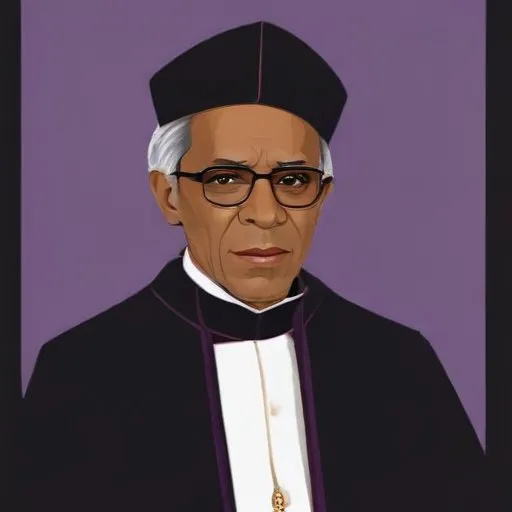
The 102nd Archbishop of Canterbury, a prominent leader of the Church of England, known for his efforts to promote unity and understanding among Christians and his role in shaping the church's stance on social issues.
Robert Runcie, the 102nd Archbishop of Canterbury, was a prominent figure in the Anglican Church, renowned for his tireless efforts to promote ecumenism and foster relations with Protestant and Catholic churches across Europe. During his tenure from 1980 to 1991, he traveled extensively, spreading his message of unity and compassion, earning him both admiration and criticism.
Born on October 2, 1921, in Birkenhead, Cheshire, Robert Runcie grew up in a middle-class, non-religious family in Great Crosby, Lancashire. He was educated at Merchant Taylors Boys School, Crosby, before attending Brasenose College, Oxford.
During World War II, Runcie served in the Scots Guards as a tank commander, earning the Military Cross for his bravery in 1945. His wartime experiences had a profound impact on his life, shaping his humanitarian outlook and commitment to promoting peace and understanding.
After the war, Runcie pursued a career in the Church, becoming the Bishop of St Albans in 1970. His leadership and vision earned him recognition, and in 1980, he was appointed the Archbishop of Canterbury, a position he held for 11 years.
Runcie's commitment to ecumenism was unwavering. He traveled extensively, engaging with leaders from various Christian denominations, seeking to build bridges and foster greater understanding. His efforts led to significant progress in inter-faith dialogue, earning him respect and admiration from across the Christian spectrum.
Runcie's tenure was not without controversy. His expression of compassion towards bereaved Argentines during the Falklands War of 1982 sparked criticism from some quarters. Additionally, his support for women's ordination generated debate within the Church.
Despite the controversies, Runcie's legacy is that of a champion of ecumenism and a champion of humanity. His commitment to promoting understanding and compassion continues to inspire generations of church leaders and laity alike. His humanitarian work and outreach to marginalized communities have left an indelible mark on the Anglican Church and beyond.
"The Church is not a museum, it's a factory. We're not here to preserve the past, but to create the future."
"Christianity is not a set of answers, it's a set of questions. It's a journey, not a destination."
Robert Runcie's remarkable life and legacy continue to inspire and challenge us today, serving as a testament to the transformative power of compassion, understanding, and unity.
76 Years Old
A former Archbishop of Canterbury and prominent theologian, known for his progressive views on social issues and his efforts to promote interfaith dialogue.
90 Years Old
A prominent leader of the Church of England, serving as Archbishop of Canterbury from 1991 to 2002, known for his efforts to modernize the church and promote interfaith dialogue.
70 Years Old
The 105th Archbishop of Canterbury, spiritual leader of the global Anglican Communion, advocating for social justice and interfaith dialogue.
Born in 1909
The 101st Archbishop of York, a prominent figure in the Church of England, known for his efforts to modernize the church and his role in the ordination of women as priests.
Born in 1916
The Prime Minister who led the UK into the European Economic Community (EEC) and navigated the country through a period of economic and industrial turmoil. He's also known for his diplomatic efforts, particularly in regards to the Cold War.
