


Pioneering excavations in the Middle East and Europe uncovered crucial evidence of early human migrations and cultural developments, shedding light on our ancient ancestors' lives.
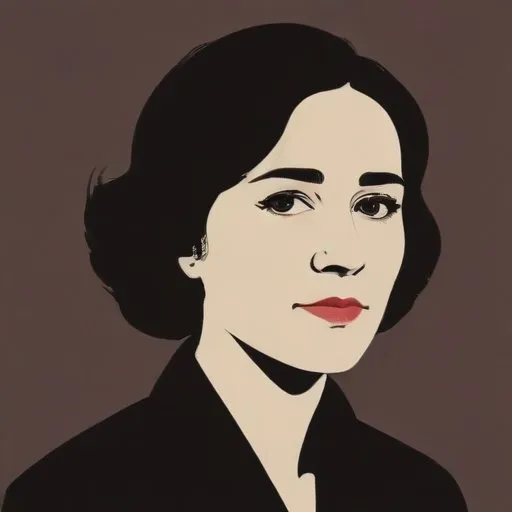
Dorothy Garrod, a renowned English archaeologist, is most famously recognized for her groundbreaking contributions to the field of Palaeolithic research. As the first woman to hold a chair at either Oxford or Cambridge, she held the esteemed position of Disney Professor of Archaeology at the University of Cambridge from 1939 to 1952.
Born on May 5, 1892, in Chandos Street, London, Dorothy Garrod was the daughter of the distinguished physician Sir Archibald Garrod and Laura Elizabeth Smith, daughter of the surgeon Sir Thomas Smith, 1st Baronet. She was educated at home, with her first teacher being Isabel Fry, who taught her alongside the daughter of Walter Jessop in Harley Street. Later, she attended Birklands School in St Albans.
Garrod entered Newnham College, Cambridge in 1913, where she read ancient and classical history before archaeology was available as a subject, completing the course in 1916. Her interest in archaeology was kindled during her travels to Malta, where her father was working as the Head of War Hospitals, and she began to take an interest in the local antiquities.
Her academic pursuits were marked by several milestones, including her appointment as the Disney Professor of Archaeology at the University of Cambridge, a position she held from 1939 to 1952. During her tenure, she conducted extensive research on the Palaeolithic period, publishing several seminal works that cemented her reputation as a pioneering archaeologist.
Garrod's most notable contributions include her excavations at the Mount Carmel caves in Palestine, which uncovered valuable insights into the lives of early humans. Her findings, published in her seminal work, "The Upper Palaeolithic Age in Britain," provided a comprehensive understanding of the Upper Palaeolithic period in Britain.
Her research also focused on the study of stone tools, which she believed held the key to understanding the cognitive abilities and social structures of early humans. Her work in this area laid the foundation for subsequent research in the field of lithic analysis.
Garrod's contributions to the field of archaeology have had a lasting impact on our understanding of human evolution and the development of early societies. Her pioneering work has paved the way for subsequent generations of archaeologists, inspiring a new wave of researchers to explore the mysteries of the Palaeolithic era.
In recognition of her outstanding contributions to the field of archaeology, Garrod was appointed a Commander of the Order of the British Empire (CBE) in 1937. She was also elected a Fellow of the British Academy (FBA) in 1934.
Garrod's personal life was marked by tragedy, having lost two brothers, Lt Alfred Noel Garrod and Lt Thomas Martin Garrod, in World War I, and her third brother, Lt Basil Rahere, to Spanish influenza. She also converted to Catholicism, although the exact date of her conversion is disputed.
Despite these personal challenges, Garrod's legacy as a pioneering archaeologist continues to inspire and influence generations of researchers. Her groundbreaking contributions to the field of Palaeolithic research have left an indelible mark on our understanding of human history, cementing her place as one of the most important archaeologists of the 20th century.
Born in 1868
Pioneering archaeologist and spy who mapped and excavated ancient Mesopotamian sites, shaping Middle Eastern politics and cultural understanding.
Born in 1853
Pioneering excavations in Egypt uncovered ancient secrets, and innovative methods established modern archaeology standards.
Born in 1874
Discovered the tomb of Pharaoh Tutankhamun in Egypt, uncovering thousands of artifacts and treasures that revealed secrets of ancient Egyptian life.
Born in 1906
Pioneering excavations in Jericho and Jerusalem uncovered ancient cities, rewriting biblical history. Her meticulous methods transformed archaeological practices.
Born in 1863
A pioneering scholar who explored ancient cultures, mythology, and witchcraft, making significant contributions to the fields of archaeology, anthropology, and folklore. Their work continues to inspire and influence modern paganism and witchcraft practices.
