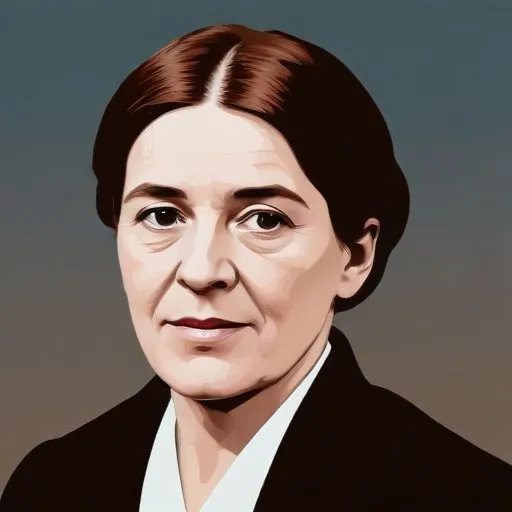
Margaret Murray: The Pioneering Egyptologist and Folklorist
A Trailblazer in Multiple Fields
Margaret Murray is renowned for being a trailblazer in multiple fields, including Egyptology, archaeology, anthropology, history, and folklorist. She is best known for being the first woman to be appointed as a lecturer in archaeology in the United Kingdom and for her groundbreaking work in the field of Egyptology.
Early Life and Education
Born on July 13, 1863, in Calcutta, British India, to a wealthy middle-class English family, Murray spent her early years between India, Britain, and Germany. Before pursuing a career in academia, she trained as a nurse and social worker.
The Pivotal Role of Flinders Petrie
In 1894, Murray began studying Egyptology at University College London (UCL), where she developed a close friendship with department head
Flinders Petrie. Petrie's guidance and encouragement played a significant role in Murray's early academic publications, and he eventually appointed her as a junior lecturer in 1898.
Excavations and Discoveries
Murray's participation in Petrie's excavations at Abydos, Egypt, in 1902-03 led to the discovery of the Osireion temple. The following season, she investigated the Saqqara cemetery, which solidified her reputation in Egyptology.
A Pioneer in Public Engagement
Recognizing the widespread public interest in Ancient Egypt, Murray wrote several books on Egyptology targeted at a general audience. She also gave public lectures at the British Museum and Manchester Museum, making her one of the first women to engage with the public on matters of archaeology.
The Unwrapping of Khnumnakht
In 1908, Murray led the unwrapping of Khnumnakht, one of the mummies recovered from the Tomb of the Two Brothers, at the Manchester Museum. This event marked the first time a woman had publicly unwrapped a mummy, cementing her status as a pioneering figure in the field.
Feminist Activism
Murray was an active participant in the first-wave feminist movement, joining the Women's Social and Political Union and dedicating considerable time to improving women's status at UCL.
The Witchcult Hypothesis
During World War I, Murray shifted her focus to researching the witchcult hypothesis, a theory proposing that the witch trials of Early Modern Christendom were an attempt to extinguish a surviving pre-Christian, pagan religion devoted to a Horned God.
Legacy and Honors
Murray served as president of the Folklore Society from 1953 to 1955 and published extensively throughout her career. Her work has left an indelible mark on the fields of Egyptology, archaeology, and folklorist, paving the way for future generations of women in academia.
Publications and Career Highlights
- The Osireion at Abydos (1904)
- The Tomb of the Two Brothers (1908)
- The Witch-Cult in Western Europe (1921)
- The God of the Witches (1931)
Awards and Honors
Murray was awarded the Silver Medal of the Royal Institute of Architects in 1907 for her work on the Tomb of the Two Brothers.
Personal Milestones
Murray's life was marked by her unwavering dedication to her work and her commitment to improving women's status in academia. She remained actively engaged in her field until her passing on November 13, 1963.
FAQ
What was Margaret Murrays area of expertise?
Margaret Murray was a British archaeologist, anthropologist, historian, and folklorist who specialized in the study of ancient cultures and mythologies.
What was Margaret Murrays most notable work?
Margaret Murrays most notable work is her book The Witch-Cult in Western Europe, which is considered a seminal work in the field of witchcraft studies.
What was Margaret Murrays approach to archaeological research?
Margaret Murrays approach to archaeological research emphasized rigorous fieldwork, careful observation, and attention to detail. She believed in immersing herself in the cultures she studied to gain a deeper understanding of their practices and traditions.
What was Margaret Murrays contribution to the study of witchcraft?
Margaret Murrays contribution to the study of witchcraft lies in her pioneering work on the witch-cult in Western Europe. She challenged prevailing views of witchcraft as a Satanic cult and instead argued that it was a survival of ancient pagan practices.
What is Margaret Murrays legacy in the field of archaeology?
Margaret Murrays legacy in the field of archaeology is significant. She helped establish the study of witchcraft as a respected field of research, and her work continues to influence archaeologists and historians around the world.