


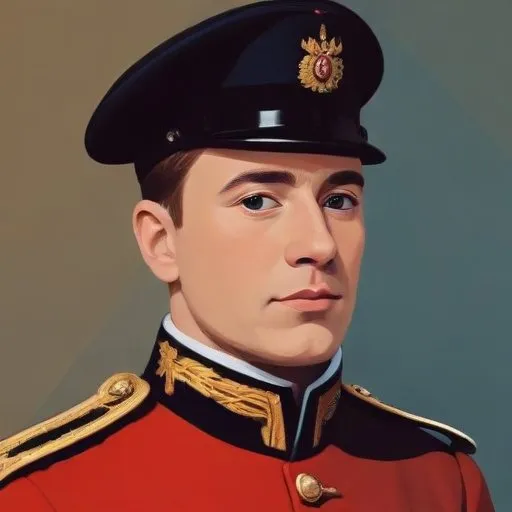
Scottish soldier, pilot, and politician who served as a wing commander in the Royal Air Force and held various political offices, including Member of Parliament and Lord High Commissioner to the General Assembly of the Church of Scotland.
Douglas Douglas-Hamilton, 14th Duke of Hamilton, is most famously known for being the first man to fly over Mount Everest, a feat that showcased his bravery, skill, and love for adventure. This Scottish nobleman and aviator left an indelible mark on the world of aviation, politics, and society, leaving behind a legacy that continues to inspire.
Born on February 3, 1903, in Pimlico, London, Douglas-Hamilton was the son of Alfred Douglas-Hamilton, 13th Duke of Hamilton, and his wife Nina (née Poore). He was educated at Eton College and Balliol College, Oxford, where he developed a passion for boxing and rowing, earning a Blue in the former and representing the university in the latter.
Before succeeding his father as the Duke of Hamilton and Keeper of Holyroodhouse, Douglas-Hamilton served as a Member of Parliament (MP) for East Renfrewshire from 1930 to 1940. During this time, he also pursued his love for flying, joining the Royal Auxiliary Air Force (RAuxAF) and quickly rising through the ranks. He became interested in flying at an early age and was commissioned as a pilot officer in the 602 City of Glasgow Squadron in 1927.
On April 3, 1933, Douglas-Hamilton achieved the unprecedented feat of flying over Mount Everest, the highest peak in the world, along with his co-pilot, Glen Kidston, and a team of experts. This daring adventure was a testament to his fearlessness, skill, and determination.
In May 1941, during World War II, German Deputy Führer Rudolf Hess made a surprise landing in Scotland, claiming to know Douglas-Hamilton. Although both men had likely met at the Berlin Olympics in 1936, Douglas-Hamilton denied any prior knowledge of Hess's mission, and an investigation by the British Parliament cleared him of any breach of security.
Douglas-Hamilton's extraordinary life was marked by his bravery, passion, and commitment to public service. He passed away on March 30, 1973, leaving behind a legacy that continues to inspire generations to come.
"The greatest adventure is what lies ahead."
Douglas-Hamilton's remarkable life and achievements serve as a testament to the power of human curiosity, courage, and perseverance. His legacy continues to inspire people around the world, reminding us that even the most seemingly impossible feats can be accomplished with determination and passion.
Born in 1871
Prolific writer of historical novels and adventure stories, also a talented landscape painter.
Born in 1865
The second monarch of the House of Windsor, reigning from 1910 to 1936, known for leading the British Empire through World War I and modernizing the monarchy.
Born in 1926
The monarch of the United Kingdom and its Commonwealth realms, serving as a unifying figurehead and symbol of national identity, while also carrying out various ceremonial and charitable duties.
Born in 1897
A British politician who served as Prime Minister from 1955 to 1957, known for his role in the Suez Crisis and his diplomatic efforts during the Cold War.
Born in 1894
A British politician who served as Prime Minister from 1957 to 1963, known for leading the country through a period of economic prosperity and decolonization.
Born in 1903
A British aristocrat who served as Prime Minister from 1963 to 1964, known for his brief tenure and aristocratic background.
Born in 1894
The 12th Prime Minister of Australia, a lawyer-turned-politician who played a crucial role in shaping the country's post-war economy and foreign policy, and is often credited with establishing the modern Australian identity.
