


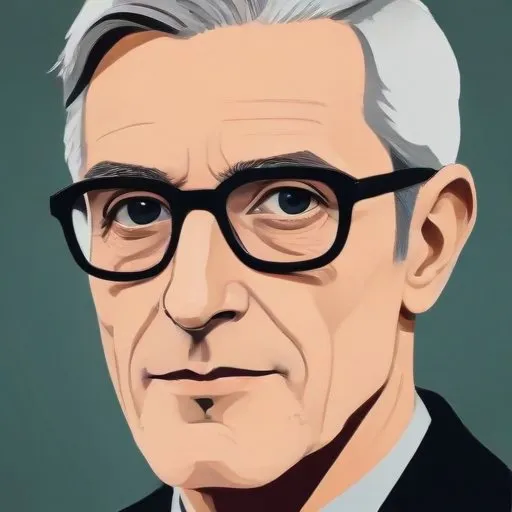
A renowned expert in biochemistry and systems biology, known for his groundbreaking research on the applications of mathematics and physics in understanding biological systems. His work has far-reaching implications for fields like medicine and biotechnology.
Douglas Bruce Kell is a renowned British biochemist and Research Professor of Systems Biology at the University of Liverpool, celebrated for his groundbreaking contributions to the fields of systems biology, synthetic biology, and computational biology. As a trailblazer in his field, Kell has dedicated his career to understanding the complex relationships between living organisms and their environments, earning him international recognition and numerous awards.
Kell was born on April 7, 1953, and spent his formative years at Hydneye House in Sussex and Bradfield College in Berkshire, where he excelled as a Top Scholar. He then pursued his higher education at St John's College, Oxford, graduating with a Bachelor of Arts degree in Biochemistry in 1975 with a Distinction in Chemical Pharmacology. Kell furthered his academic pursuits by earning a Doctor of Philosophy in 1978, focusing on the bioenergetics of Paracoccus denitrificans under the supervision of Stuart Ferguson and Philip John.
Kell's primary research interests lie in systems biology, synthetic biology, and computational biology, with a particular emphasis on understanding the intricate relationships between microbes and their environments. He has published extensively on the role of microbes as agents of supposedly non-communicable, chronic infectious diseases. His work has also centered on the development of multivariate scientific instrumentation and machine learning software, with his first paper on artificial neural networks dating back to 1992.
Kell's work reflects his deep commitment to understanding the complex, interconnected nature of biological systems. He has consistently emphasized the importance of adopting a holistic, systems-level approach to addressing the grand challenges facing humanity, such as climate change, sustainable energy, and global health.
Kell's pioneering work in systems biology has far-reaching implications for various aspects of modern society, including:
Kell has been recognized with numerous awards and honors for his outstanding contributions to the field of biochemistry, including:
Douglas Kell's tireless efforts to advance our understanding of biological systems have left an indelible mark on the scientific community. His work continues to inspire a new generation of researchers, policymakers, and innovators, shaping the course of scientific inquiry and informing strategies for a more sustainable, equitable future.
Through his remarkable contributions, Douglas Kell has cemented his position as a leading figure in the field of biochemistry, leaving a lasting legacy that will continue to inspire and benefit humanity for generations to come.
Born in 1916
Pioneering scientist who discovered the structure of DNA, revolutionizing our understanding of genetics and life itself.
98 Years Old
Discovered the structure of DNA, revolutionizing our understanding of genetics and earning a Nobel Prize. Pioneering work in molecular biology has far-reaching implications for medicine and beyond.
Born in 1920
A British scientist who contributed significantly to the discovery of the structure of DNA, providing high-quality X-ray crystallography images that helped James Watson and Francis Crick develop their famous model.
Born in 1916
A Nobel Prize-winning physicist and biologist who contributed significantly to the discovery of the structure of DNA, using X-ray crystallography to produce the first clear images of the molecule.
Born in 1901
Pioneering chemist and peace activist who won two unshared Nobel Prizes, one for chemistry and one for peace, for his groundbreaking work on the nature of the chemical bond and his tireless efforts to promote nuclear disarmament.
Born in 1914
Pioneering crystallographer who unraveled the structure of hemoglobin, revolutionizing our understanding of biological molecules. His work paved the way for major advances in medicine and biochemistry.
Born in 1917
Pioneering biochemist and crystallographer who determined the structure of myoglobin, a protein in muscle cells, and was awarded the Nobel Prize in Chemistry in 1962.
Born in 1910
A pioneering scientist who deciphered the structures of biomolecules like insulin and vitamin B12, revolutionizing our understanding of biology and medicine.
