


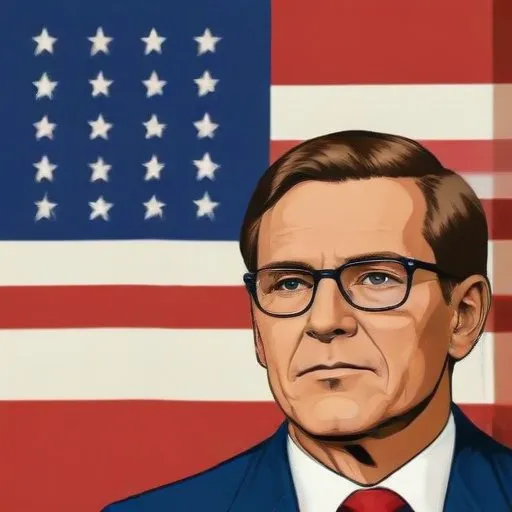
American tennis player and politician who founded the Davis Cup and served as Secretary of War during World War I, playing a crucial role in the war effort.
Dwight F. Davis is best known as the founder of the Davis Cup, an international tennis competition that has been a staple of the sport for over a century. As a tennis player, politician, and administrator, Davis left an indelible mark on the world of tennis and beyond.
In 1900, Davis developed the structure for, and donated a silver bowl to go to the winner of, a new international tennis competition designed by him and three others. This competition would later be renamed the Davis Cup in his honor. Davis was a member of the US team that won the first two competitions in 1900 and 1902, and was also the captain of the 1900 team.
Beyond his achievements in tennis, Davis was a dedicated public servant. He served as the Assistant Secretary of War from 1923 to 1925 and Secretary of War from 1925 to 1929. Davis was also educated at Washington University School of Law, although he never practiced law.
Davis was inducted into the National Tennis Hall of Fame (now known as the International Tennis Hall of Fame) in 1956 in recognition of his contributions to the sport both as a player and an administrator. He is remembered as a pioneer in the world of tennis, and his legacy continues to inspire new generations of players and administrators.
Davis was born in St. Louis, Missouri, on July 5, 1879. His grandfather, Oliver Dwight Filley, was mayor of St. Louis from 1858 to 1861, and a cousin, Chauncey Ives Filley, served as mayor of St. Louis from 1863 to 1864. Davis participated in the 1904 Summer Olympics, where he was eliminated in the second round of the singles tournament.
Overall, Dwight F. Davis was a remarkable individual who left a lasting impact on the world of tennis and beyond. His legacy continues to inspire and influence new generations of tennis players and administrators.
Born in 1858
A pioneering leader who championed progressive reforms, trust-busting, and conservation, earning a Nobel Peace Prize for mediating the Russo-Japanese War. He's also famous for his rugged outdoorsmanship and "big stick" diplomacy.
Born in 1857
The 27th President of the United States was a lawyer and jurist who served as the only person to hold the offices of President and Chief Justice of the United States. He's known for his significant contributions to the country's judicial system.
Born in 1856
The 28th President of the United States, a Nobel Peace Prize winner, and a historian who played a key role in shaping international relations and global governance after World War I. He's most known for his idealistic vision of a League of Nations and his efforts to promote peace and diplomacy.
Born in 1865
The 29th President of the United States, a journalist-turned-politician, led the country through a period of post-war prosperity and scandalous corruption. He's infamous for his administration's numerous scandals and his own extramarital affairs.
Born in 1872
The 30th President of the United States, a lawyer and politician, led the country through a period of economic prosperity and limited government intervention, earning the nickname "Silent Cal" for his frugal and humble nature. He's most known for his minimalist approach to governance and tax cuts.
Born in 1874
The 31st President of the United States was a humanitarian and politician who led the country through the Great Depression and is known for his humanitarian efforts and infrastructure development. He's also infamous for his inability to mitigate the economic crisis.
Born in 1882
Led the United States through the Great Depression and World War II, implementing a series of reforms known as the New Deal and helping to establish the country as a global superpower.
Born in 1867
A prominent figure in American politics, serving as Secretary of State and playing a key role in shaping foreign policy during World War II. He's also known for his advocacy of international cooperation and collective security.
