


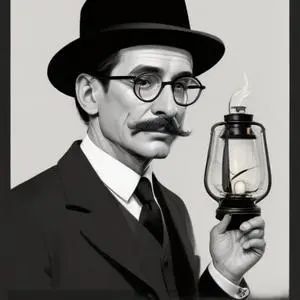
A pioneer in the railroad industry, he transformed transportation in the United States through strategic investments and innovative management practices. His philanthropic efforts also supported conservation and education initiatives.
E. H. Harriman is renowned for his pivotal role in transforming the American railroad industry, amassing a vast fortune, and leaving an indelible mark on the country's transportation system. As a financier and railroad executive, Harriman's visionary leadership and strategic acumen propelled him to the forefront of the industry, earning him the nickname "The Railroad King."
Harriman was born on February 20, 1848, in Hempstead, New York, to Orlando Harriman Sr., an Episcopal clergyman, and Cornelia Neilson. His great-grandfather, William Harriman, had emigrated from England in 1795 and established a successful business empire. Harriman's early life was marked by hard work and determination, quitting school at 14 to take a job as an errand boy on Wall Street. By 22, he was a member of the New York Stock Exchange, thanks in part to his uncle Oliver Harriman's influence.
Harriman's fascination with the railroad industry began when his father-in-law, the president of the Ogdensburg and Lake Champlain Railroad Company, introduced him to the world of upstate New York transportation. In 1881, Harriman acquired the bankrupt Lake Ontario Southern Railroad, reorganized it, and sold it to the Pennsylvania Railroad at a significant profit. This milestone marked the beginning of his career as a rebuilder of bankrupt railroads.
In 1897, Harriman became a director of the Union Pacific Railroad, and by May 1898, he was chairman of the executive committee. He held this position until his death, exerting significant control over the Union Pacific system. In 1903, he assumed the office of president of the company. Concurrently, from 1901 to 1909, Harriman served as the president of the Southern Pacific Railroad, laying the groundwork for a unified UP-SP railroad system.
Harriman's vision for a unified railroad system was realized in 1996, when the Union Pacific and Southern Pacific railroads merged. His contributions to the industry extend beyond his business acumen, as he played a crucial role in shaping America's transportation landscape. His leadership and innovations paved the way for modern railroading, earning him a permanent place in the annals of American business history.
At the time of his death, Harriman's net worth was estimated to be around $100 million, equivalent to over $2.5 billion in today's dollars. His business ventures and investments generated enormous wealth, making him one of the wealthiest individuals of his era.
Harriman was driven by a strong work ethic and a passion for innovation. He believed in the importance of strategic planning, vision, and leadership in achieving success. His commitment to rebuilding and reorganizing bankrupt railroads demonstrated his faith in the potential of the American railroad industry.
Harriman's impact on modern society extends beyond the railroad industry. His business acumen, vision, and leadership have inspired generations of entrepreneurs and executives. His contributions to the development of America's transportation infrastructure have facilitated economic growth, urbanization, and globalization.
Harriman's life and career spanned a pivotal period in American history, marked by rapid industrialization, urbanization, and technological advancements. His legacy serves as a testament to the power of innovative thinking, strategic planning, and visionary leadership in shaping the course of American business history.
Born in 1837
Founded a powerful banking dynasty and dominated corporate finance, shaping the American economy through strategic investments and mergers.
Born in 1839
Founded the Standard Oil Company, revolutionizing the oil industry and amassing vast wealth, which he later used for philanthropic efforts. He's remembered for his business acumen and generosity.
Born in 1794
Built railroad empires, revolutionizing transportation and commerce, and donated extensively to education and the arts.
Born in 1836
A ruthless and cunning financier who dominated the railroad industry in the late 19th century, known for his clever business tactics and questionable ethics.
Born in 1838
Built the Great Northern Railway, connecting the Midwest to the Pacific Northwest, revolutionizing transportation and commerce in the region.
Born in 1826
An American colonel and politician who played a key role in the development of the Massachusetts Agricultural College, later known as the University of Massachusetts Amherst, and served as its first president. He's also known for his famous phrase "Boys, be ambitious!"
