


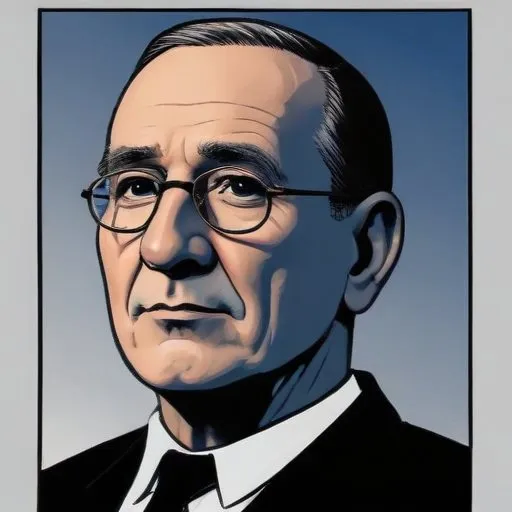
Built the Great Northern Railway, connecting the Midwest to the Pacific Northwest, revolutionizing transportation and commerce in the region.
As the chief executive officer of a vast network of railroads, James J. Hill left an indelible mark on the landscape of North America. Known as "The Empire Builder," Hill's visionary leadership and entrepreneurial spirit transformed the Upper Midwest, the northern Great Plains, and the Pacific Northwest, earning him a fortune of approximately $63 million by the time of his death in 1916.
Born on September 16, 1838, in Eramosa Township, Upper Canada (now Ontario), Hill's early life was marked by adversity. A childhood accident with a bow and arrow left him blind in the right eye, and the death of his father in 1852 forced him to abandon his formal education. However, Hill's natural talents for mathematics, land surveying, and English served him well in his future endeavors.
At the age of 18, Hill settled in St. Paul, Minnesota, where he worked as a clerk and bookkeeper for various companies. His experience in the freight and transportation business eventually led him to start his own venture, bidding on contracts and winning several during the winter months when the Mississippi River was frozen.
Hill's career was marked by several milestones, including:
Hill's business philosophy was centered around the idea of building a network of railroads that would serve the needs of the people and the region, rather than just maximizing profits. He believed in the importance of visionary leadership, strategic planning, and meticulous execution.
Hill's personal life was marked by significant events, including his marriage to Mary Theresa Mehegan in 1867 and the birth of their ten children. He was also known for his philanthropic efforts, particularly in the area of education.
Hill's legacy extends far beyond his business achievements. He played a crucial role in shaping the modern landscape of North America, facilitating the growth of industries, and connecting people across the continent. His contributions to the development of the Pacific Northwest and the Upper Midwest continue to be felt today.
Hill's life and career were shaped by the tumultuous times in which he lived. The late 19th century was an era of rapid growth and expansion in North America, and Hill's vision and leadership played a significant role in this process. Today, his legacy serves as a testament to the power of entrepreneurial spirit, strategic planning, and visionary leadership.
Did you know that Hill's former home, the James J. Hill House, is now a museum in Saint Paul, Minnesota? Or that he was known for his love of books and reading, accumulating a vast personal library during his lifetime?
Hill's remarkable life and achievements serve as a inspiration to entrepreneurs, business leaders, and anyone looking to make a lasting impact on the world.
Born in 1837
Founded a powerful banking dynasty and dominated corporate finance, shaping the American economy through strategic investments and mergers.
Born in 1848
A pioneer in the railroad industry, he transformed transportation in the United States through strategic investments and innovative management practices. His philanthropic efforts also supported conservation and education initiatives.
Born in 1794
Built railroad empires, revolutionizing transportation and commerce, and donated extensively to education and the arts.
Born in 1836
A ruthless and cunning financier who dominated the railroad industry in the late 19th century, known for his clever business tactics and questionable ethics.
Born in 1822
Built the Central Pacific Railroad, a crucial part of the First Transcontinental Railroad, revolutionizing transportation and commerce in the United States.
