


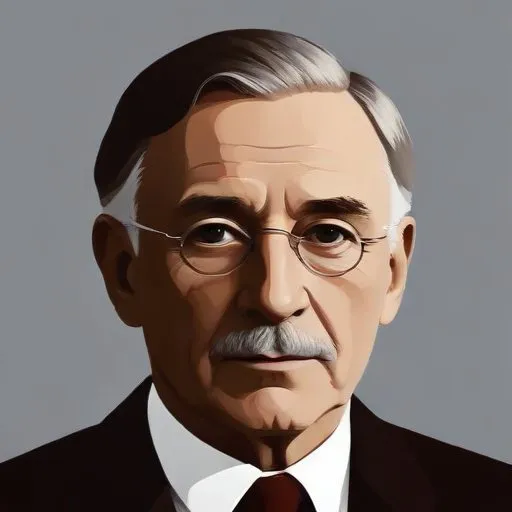
A Canadian scholar and diplomat who served as the Ambassador to Egypt and wrote extensively on Japanese history and culture, earning him international recognition.
E. Herbert Norman, a Canadian diplomat and historian, is best known for his influential book, "Japan's Emergence as a Modern State" (1940), which argued that persisting feudal class relations were responsible for government oppression and imperialistic expansion in Asia.
Born on September 1, 1909, in Karuizawa, Japan, to Canadian Methodist missionary parents, Norman was raised in a culturally rich environment that would later shape his perspectives on Japan. He studied at Victoria College, University of Toronto, before moving to Trinity College, Cambridge, from 1933 to 1936.
During his time at Trinity College, Norman came under the tutelage of John Cornford, a prominent socialist, and was exposed to left-leaning ideologies. Although his politics leaned to the left, controversy surrounds whether he became a Communist and, more significantly, a Soviet spy.
In 1936, Norman entered the graduate program in Japanese history at Harvard University, where he studied under renowned Russia-born Japanologist, Serge Elisseff. He joined the Canadian foreign service in 1939 and received his doctorate from Harvard in 1940.
Norman's diplomatic career was marked by controversy during the Red Scare of the 1950s, when he was accused of being a Communist or even a spy. Despite investigations finding no corroboration, the accusations had a profound impact on his life and legacy.
Canadian authorities defended Norman against the accusations, but the controversy surrounding him persisted. His personal life and relationships were also subject to scrutiny, with many questioning his connections to suspected Communist sympathizers.
E. Herbert Norman's untimely death on April 4, 1957, marked the end of a life dedicated to understanding and critiquing modern Japan. Despite the controversies, his work remains a significant contribution to the field of Japanese history and international relations.
Norman's work continues to influence scholars and policymakers, offering valuable insights into the complexities of Japan's emergence as a modern state. His legacy serves as a testament to the importance of critical thinking and nuanced understanding in international relations.
Despite the controversies and challenges that marked his life, E. Herbert Norman's contributions to the field of Japanese history and international relations remain significant, serving as a reminder of the importance of critical thinking and nuanced understanding in shaping our global perspectives.
Born in 1897
A Canadian leader who served as Prime Minister and won the Nobel Peace Prize for resolving the Suez Canal Crisis, known for his diplomatic efforts and peacekeeping initiatives.
Born in 1919
The charismatic leader who championed Canadian unity and implemented progressive policies, known for his iconic style and influential legacy in shaping modern Canada.
92 Years Old
The 20th Prime Minister of Canada, serving from 1993 to 2003, known for his leadership during the Quebec sovereignty movement and his role in shaping Canada's national unity. He implemented policies like the Clarity Act and the National Child Benefit.
45 Years Old
American professional ice hockey player who won two Stanley Cup championships and was a four-time NHL All-Star. Known for his rugged defensive play and physical presence on the ice.
Born in 1874
The tenth Prime Minister of Canada, serving for a record 22 years, is most known for leading the country through significant periods of economic and social change, including the Great Depression and World War II.
Born in 1882
The 12th Prime Minister of Canada, a strong leader who played a crucial role in shaping the country's post-war economy and foreign policy, and is credited with establishing universal hospital insurance and old-age pensions.
Born in 1895
The 13th Prime Minister of Canada, a champion of individual rights and freedoms, introduced the Canadian Bill of Rights, a precursor to the Charter of Rights and Freedoms. He's also known for his anti-apartheid stance and leadership during the Suez Crisis.
86 Years Old
A Canadian politician and academic who served as Minister of Foreign Affairs, known for his efforts to ban landmines and promote human security. He was a key player in the Ottawa Treaty, an international agreement banning anti-personnel mines.
