


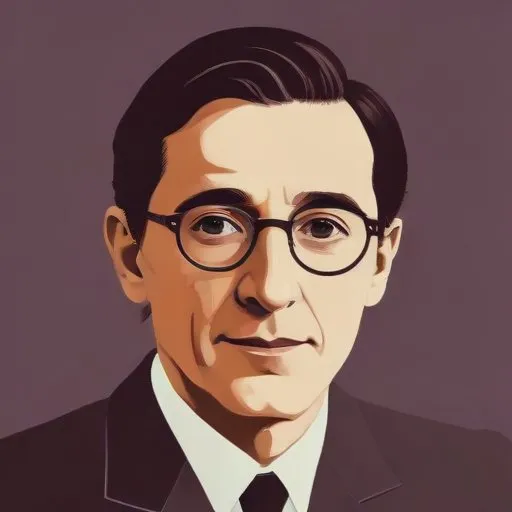
Developed innovative techniques for studying fast chemical reactions, earning a Nobel Prize in Chemistry in 1967 for his work on flash photolysis. His research laid the foundation for modern chemical kinetics.
E. J. Bowen, a British physical chemist, is renowned for his groundbreaking research in fluorescence, a phenomenon that has fascinated scientists for centuries. His seminal work, The Chemical Aspects of Light, remains an authoritative reference in the field, while his pioneering experiments have shed light on the intricate dance of molecules and light.
Edmund Ted John Bowen was born on April 29, 1898, in Worcester, England, to Edmund Riley Bowen and Lilias Bowen (née Kamester). He was the eldest of four siblings and attended the Royal Grammar School Worcester, where he developed a passion for chemistry. In 1915, he won the prestigious Brackenbury Scholarship to study chemistry at the University of Oxford.
However, his academic pursuits were soon interrupted by World War I. Bowen volunteered for training as a gunner officer and served as Second Lieutenant in the Royal Garrison Artillery. After being demobilized in 1919, he returned to Balliol College, Oxford, to resume his studies.
In 1922, Bowen became a Fellow in Chemistry of University College, Oxford, succeeding R. B. Bourdillon. This marked the beginning of his illustrious research career, during which he delved into the mysteries of fluorescence. His work in this area earned him a Fellowship of the Royal Society in 1935 and the coveted Davy Medal in 1963.
As a skilled glassblower, Bowen crafted intricate chemical apparatuses, often creating artworks in glass that reflected his artistic inclinations. Much of his research was conducted at the Balliol-Trinity Laboratories in Oxford, where he spent countless hours exploring the fascinating realm of fluorescence.
After retiring in 1965, Bowen was elected an Honorary Fellow of University College, Oxford, a testament to his 43-year association with the institution. He remained an active member of the academic community, serving as Vice-President of the Faraday Society and the Chemical Society.
Bowen's legacy extends beyond his scientific contributions. He was a devoted Worcester Old Elizabethan, serving on the committee for many years and organizing the Oxford branch of the club. The University College, Oxford, has honored his memory by naming a room after him, a fitting tribute to a scientist who illuminated the path for countless others.
Bowen's work on fluorescence has had a profound impact on our understanding of molecular interactions and the behavior of light. His research has influenced generations of scientists, inspiring new discoveries and applications in fields as diverse as biomedical imaging, materials science, and optoelectronics.
As we reflect on Bowen's life and achievements, we are reminded of the power of curiosity, dedication, and creativity. His luminous legacy continues to inspire scientists and scholars, a beacon of excellence in the pursuit of knowledge and discovery.
Born in 1897
A British chemist who pioneered the study of chemical reactions, particularly in gases, and was awarded the Nobel Prize in Chemistry in 1956 for his work on the kinetics of chemical reactions.
Born in 1918
Organic chemist and Nobel laureate who developed a new way to synthesize complex molecules, revolutionizing the field of chemistry. His work led to the creation of new medicines and materials.
Born in 1920
A British chemist and academic who was awarded the Nobel Prize in Chemistry in 1967 for his work on flash photolysis, a technique used to study fast chemical reactions. He made significant contributions to the understanding of chemical kinetics and reaction mechanisms.
97 Years Old
A Nobel Prize-winning chemist and academic who made groundbreaking contributions to the understanding of chemical reactions and molecular structures. His work has had a significant impact on the development of modern chemistry.
Born in 1886
Organic chemist and professor who pioneered the development of organic synthesis methods, leading to the discovery of numerous natural products, including alkaloids and steroids.
Born in 1920
A British scientist who contributed significantly to the discovery of the structure of DNA, providing high-quality X-ray crystallography images that helped James Watson and Francis Crick develop their famous model.
Born in 1918
Developed techniques for sequencing DNA and proteins, revolutionizing molecular biology and earning two Nobel Prizes in Chemistry.
