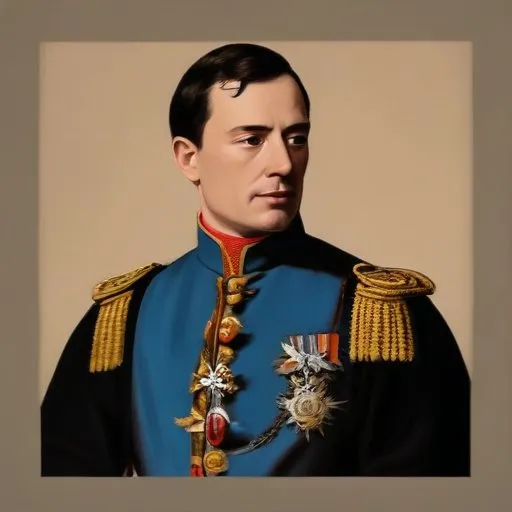
Eberhard I, Duke of Wrttemberg: The Bearded Reformer
A Life of Adventure and Reform
Eberhard I, Duke of Wrttemberg, also known as Eberhard the Bearded, is renowned for his bold endeavors, philosophical pursuits, and remarkable reforms that shaped the course of Wrttemberg's history. As the first Duke of Wrttemberg, he left an indelible mark on the region, earning his place in the annals of history.
Early Life and Ambitions
Born on December 11, 1445, at Urach, Eberhard was the son of Count Ludwig I and Mechthild of the Palatinate. He took charge of the government of Wrttemberg-Urach at a young age, initially under the guidance of Rudolph von Ehingen of Kilchberg. However, in 1459, with the assistance of Frederick I, Elector Palatine, he assumed full control of the government, becoming Count Eberhard V.
A Reckless Youth and a Turn to Wisdom
During his early years, Eberhard led a life of indulgence, neglecting his duties as a ruler. This period was marked by revelry and excess, but it also saw the creation of a fencing manual by Hans Talhoffer in 1467, now housed in the Bavarian State Library. However, in 1468, Eberhard's life took a dramatic turn when he traveled to Jerusalem and became a knight of the Order of the Holy Sepulchre. This pilgrimage had a profound impact on him, and he adopted the palm as his symbol, indicating his renewed commitment to virtue and wisdom.
Marriage, Education, and Reforms
Eberhard's marriage to Barbara, daughter of
Ludovico III Gonzaga, Marquis of Mantua, in 1474, was a significant milestone in his life. Although their only child, Barbara, died in infancy, Eberhard's focus shifted towards education and reform. He founded the University of Tbingen in 1477, and later invited the Brethren of the Common Life and the community of devotio moderna to Wrttemberg. He also established collegiate churches in Urach, Dettingen an der Erms, Herrenberg, Einsiedel near Tbingen, and Tachenhausen.
Philosophical Contributions and Beliefs
Eberhard's fascination with philosophy and education led him to invite prominent scholars to Wrttemberg. His motto, "attempto" or "I dare," reflected his bold approach to life and his willingness to challenge the status quo. Although he ordered the expulsion of Jews from Wrttemberg, he also demonstrated a commitment to Church reforms and the improvement of monasteries.
Legacy and Impact
Eberhard I, Duke of Wrttemberg, left behind a legacy of reform, education, and adventure. His bold initiatives, though sometimes controversial, helped shape the future of Wrttemberg and paved the way for his successors. As a testament to his enduring impact, his name remains synonymous with courage, wisdom, and transformation.
FAQ
Who was Eberhard I, Duke of Württemberg?
Eberhard I, Duke of Württemberg was a German nobleman who ruled the Duchy of Württemberg from 1442 to 1496. He was a member of the House of Württemberg and played a significant role in the regions politics and economy.
What were Eberhard Is achievements as a ruler?
Eberhard I was known for his wise and just rule, and he implemented several reforms to improve the economy and administration of Württemberg. He also founded the University of Tübingen and promoted education and arts in the region.
What was Eberhard Is role in the Holy Roman Empire?
Eberhard I was a loyal member of the Holy Roman Empire and served as an advisor to Emperor Frederick III. He played a key role in mediating disputes between the empire and the German states.
Did Eberhard I have any notable family members?
Eberhard I had several notable family members, including his son Eberhard II, who succeeded him as Duke of Württemberg. He also had several daughters who married into prominent noble families in Europe.
Is Eberhard I remembered for any particular legacy?
Eberhard I is remembered for his wise and just rule, his promotion of education and arts, and his role in shaping the history of Württemberg and the Holy Roman Empire.