


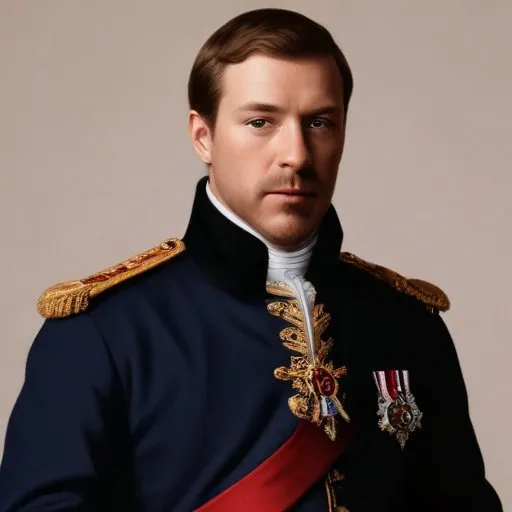
A medieval English nobleman who played a significant role in the Hundred Years' War and was a close ally of King Richard II of England. He was also a prominent military leader and fought in several battles.
Edmund Holland, 4th Earl of Kent, is remembered as a prominent figure in medieval England, known for his service as a knight, admiral, and earl, as well as his tumultuous personal life marked by scandals and illegitimate children.
Born on January 6, 1383, in Brockenhurst, Hampshire, Edmund was the second son of Thomas Holland, 2nd Earl of Kent, and Alice Fitzalan. He was a younger brother of Thomas Holland, 1st Duke of Surrey.
Edmund succeeded his childless brother as Earl of Kent on January 7, 1400. He was appointed admiral of the west and north in 1407, demonstrating his growing influence and responsibility within the kingdom.
Edmund's personal life was marked by controversy. He had an affair with Constance of York, resulting in an illegitimate daughter, Eleanor de Holland, born around 1407. Shortly after, he married Lucia Visconti, daughter of Bernab Visconti, Lord of Milan, in 1407, but the marriage was childless.
Edmund's commitment to his duties as earl and admiral was evident in his service at the battle of ledeBrhat on September 15, 1408. Tragically, he was killed in action, leaving behind no legitimate heirs, and the earldom became extinct.
Edmund Holland, 4th Earl of Kent, was buried at Bourne Abbey in Lincolnshire. His life, marked by both scandal and service, serves as a testament to the complexities of medieval politics and the lives of those who shaped it.
Edmund Holland's life, though cut short, had a lasting impact on the history of medieval England. His service as earl and admiral demonstrated his commitment to the kingdom, while his personal scandals serve as a reminder of the complexities of human nature.
Born in 1284
The king whose disastrous reign led to his eventual deposition and mysterious death, remembered for his alleged homosexual relationships and power struggles with nobles.
Born in 1340
A powerful and wealthy medieval English nobleman, known for his immense influence on English politics and his role in the Hundred Years' War. He was also a patron of the arts and a founder of Trinity College, Cambridge.
Born in 1133
King of England from 1154 to 1189, known for establishing a strong centralized government, reforming the English church, and his tumultuous relationships with Thomas Becket and his sons.
Born in 1386
Led a victorious English army in the Battle of Agincourt, a major English victory in the Hundred Years' War, and was a popular king who strengthened the English monarchy.
Born in 1367
The last king of the House of Plantagenet, deposed in a coup, known for his extravagance and tyranny, leading to his downfall and the rise of the Lancastrian dynasty.
