


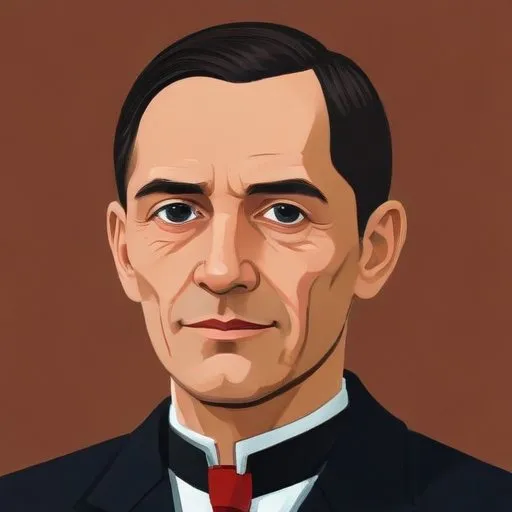
A pioneering scholar who deciphered and interpreted ancient Mesoamerican languages, myths, and cultures, shedding light on the region's rich history and symbolism.
Eduard Seler, a German anthropologist, ethnohistorian, linguist, and epigrapher, left an indelible mark on the study of pre-Columbian era cultures in the Americas. His groundbreaking research and contributions to the fields of anthropology, epigraphy, and Americanist studies have earned him a reputation as one of the most influential scholars of his time.
Born on December 5, 1849, in Kreuzberg, Berlin, Seler grew up in a family of modest means. Despite financial constraints, his parents encouraged his pursuit of education, which led him to attend the Joachimsthalsche Gymnasium in Berlin.
During the Franco-Prussian War, Seler served in the military from 1870 to 1871. After the war, he resumed his studies at the University of Berlin, where he developed a strong foundation in science and mathematics.
Seler's academic career spanned over four decades, during which he made significant contributions to the study of Mesoamerican cultures. His research focused on the ethnography, documents, and history of these cultures, particularly the Aztecs.
One of his most notable achievements was the rediscovery and analysis of the Aztec calendar system. Seler identified the existence of two calendars: a 365-day solar calendar for everyday use and a 260-day religious calendar.
He also challenged the exaggerated claims of the Spanish colonizers regarding the number of human sacrifices made by the Aztecs. Seler's work was later supported by excavations in the late 20th century, which confirmed that the numbers were grossly inflated.
Seler's personal life was marked by challenges, including poverty and poor health. However, he was fortunate to have the support of his wife, Ccilie Cecilia Seler-Sachs, who was not only his partner but also a fellow scholar and photographer. Her photographs of Aztec temples and pyramids remain valuable resources for scientists today.
After Seler's death, his wife dedicated herself to verifying his works and publishing them, ensuring that his legacy continued to inspire future generations of scholars.
Eduard Seler's contributions to anthropology, epigraphy, and Americanist studies have had a lasting impact on the field. His work has influenced numerous scholars and continues to shape our understanding of pre-Columbian cultures in the Americas.
Seler's legacy extends beyond academia, as his research has also informed popular culture and inspired artistic works. His commitment to rigorous scholarship and his passion for uncovering the secrets of ancient civilizations have inspired generations of researchers and enthusiasts alike.
While Seler's writings are characterized by their academic rigor, he also left behind a few memorable quotes that reflect his dedication to his craft:
Eduard Seler's life and work are a testament to the power of human curiosity and dedication. His contributions to our understanding of pre-Columbian cultures have opened doors to new areas of research and have inspired future generations of scholars.
In the context of his time, Seler's work was groundbreaking, and his legacy continues to shape the field of anthropology and Americanist studies. His commitment to rigorous scholarship and his passion for understanding ancient cultures have left an indelible mark on the academic community.
Born in 1805
A French diplomat and engineer who developed the Suez Canal, a crucial waterway connecting the Mediterranean Sea to the Red Sea, revolutionizing global trade and commerce.
Born in 1805
American archaeologist and explorer who uncovered the ancient Mayan civilization, revealing its sophisticated cities and hieroglyphics to the world.
Born in 1796
A renowned historian and scholar who wrote comprehensive and engaging histories of the Spanish Empire, particularly the conquests of Mexico and Peru. His works are still widely read and respected today.
Born in 1857
Pioneering archaeologist and historian who uncovered Mexico's rich cultural heritage, deciphering ancient Mesoamerican scripts and unearthing hidden treasures.
95 Years Old
A renowned cultural anthropologist who challenged Western notions of history, culture, and economics through his work on Pacific Island societies and the concept of "structuralism".
