


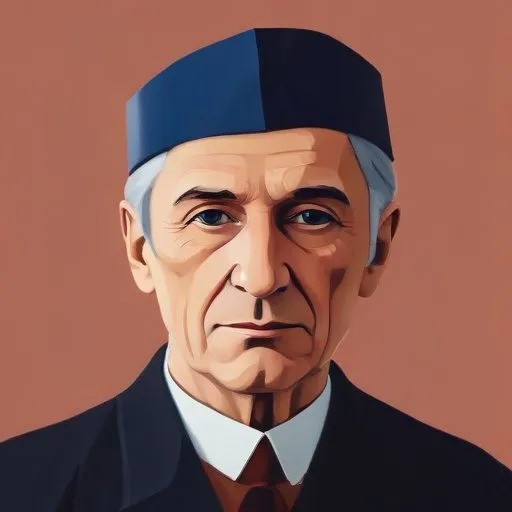
A Slovenian poet and politician who played a key role in the country's resistance movement during World War II and later became a prominent figure in Slovenian literature and politics. He's known for his poetry and essays that explored themes of freedom, morality, and social justice.
Edvard Kocbek was a renowned Slovenian poet, writer, essayist, and translator, best known for his exceptional literary works and his significant role in the Christian Socialists in the Liberation Front of the Slovene Nation and Slovene Partisans during World War II.
Kocbek was born on September 27, 1904, in the village of Sveti Jurij ob Ščavnici, Duchy of Styria, Austro-Hungarian Empire (now Slovenia). His father, Valentin Kocbek, was an organist in the local Roman Catholic church, and his mother, Matilda, came from the neighboring village of Sveti Tomaž in the Prlekija Hills.
Kocbek attended the German-language high school in Maribor, where he witnessed the takeover of the town by the Slovene volunteers led by General Rudolf Maister. He later switched to the Slovene-language high school in Ptuj, where he befriended the later editor and priest Stanko Cajnkar and dramatist Ivan Mrak. His Slovene language teacher, Anton Sovre, discovered Kocbek's literary talent and encouraged him to write and participate in the dramatic circle.
Kocbek's literary talent flourished in the 1920s and 1930s, during which he published several poetry collections, including Sông v srcu (A Song in the Heart) and Križ na smrtni postelji (The Cross on the Deathbed). His poetry is characterized by its lyrical and symbolic style, often exploring themes of love, nature, and mortality.
During World War II, Kocbek played a significant role in the Slovene Partisans, fighting against the Nazi occupation of Slovenia. His experiences during this period inspired some of his most notable works, including Zemlja (The Earth) and Kmečka republika (The Peasant Republic).
Kocbek's involvement with the Christian Socialists and Slovene Partisans led to controversy and criticism, particularly after World War II. His later years were marked by political persecution and censorship, which significantly limited his literary output.
Despite these challenges, Kocbek remained committed to his literary and political ideals, continuing to write and publish until his death on November 3, 1981.
Edvard Kocbek is remembered as one of the most prominent Slovenian poets and writers of the 20th century. His literary contributions have had a lasting impact on Slovenian literature, and his commitment to social and political justice continues to inspire generations of Slovenians.
Born in 1800
A Slovenian poet and lawyer who wrote romantic and patriotic poetry, considered the national poet of Slovenia, and is featured on the Slovenian 2-euro coin.
Born in 1876
A Slovenian literary giant, celebrated for his poignant plays and poetry that captured the essence of Slovenian identity and culture. His works continue to inspire and influence Slovenian literature to this day.
Born in 1903
Italian-Slovene author and playwright, best known for his novel "Alamut", a classic of 20th-century Slovenian literature, which explores the complexities of human nature and the power of ideology.
Born in 1904
A Slovenian poet and author who explored the intersection of modernism and futurism in his work, known for his innovative use of language and experimental style.
78 Years Old
A Slovenian literary mastermind, celebrated for crafting thought-provoking plays and novels that delve into the human condition, exploring themes of identity, morality, and social critique.
85 Years Old
A prominent poet and academic, known for his unique blend of modernist and postmodernist styles, exploring themes of identity, politics, and human condition. His works are highly regarded for their lyricism and intellectual depth.
