


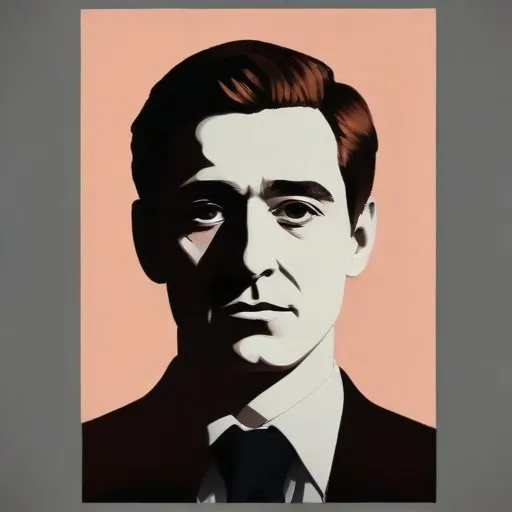
A 16th-century occultist who claimed to communicate with angels and demons, revealing cryptic messages and prophecies that fascinated European nobility and intellectuals.
Sir Edward Kelley, a Renaissance occultist and scryer, is renowned for his extraordinary claims of communicating with angels and possessing the secret of transmuting base metals into gold. His collaborations with the esteemed John Dee, a prominent figure in Queen Elizabeth I's court, catapulted Kelley to fame, shrouding him in an aura of mystique that has endured for centuries.
Although much of Kelley's early life remains shrouded in mystery, it is known that he was born on August 1, 1555, in Worcester, England. His family claimed descent from the Irish Ui Maine clan, and Kelley himself boasted of being educated in Latin and possibly Greek. Some historians believe he may have studied at Oxford under the alias Talbot, but this remains unconfirmed.
Kelley's life took a dramatic turn when he met John Dee, a mathematician, astronomer, and occultist, who would become his patron and partner in magical investigations. Dee, intrigued by Kelley's alleged ability to see spirits in a shewstone or mirror, took him under his wing, and the pair embarked on a series of experiments aimed at unlocking the secrets of alchemy and divine communication.
Kelley's most sensational claims revolved around his supposed ability to transmute base metals into gold, a feat that had captivated alchemists for centuries. He also claimed to possess the philosopher's stone, a legendary substance believed to hold the power to cure diseases, grant eternal life, and confer spiritual enlightenment. These assertions, although unverified, contributed to Kelley's enigmatic reputation and attracted the attention of European royalty.
Kelley's connections to Queen Elizabeth I's court, facilitated through his association with Dee, led to his involvement in diplomatic missions and cryptic correspondence with European monarchs. He eventually fell out of favor with Dee and fled to Europe, where he was received by Emperor Rudolf II of the Holy Roman Empire. Kelley's later life remains murky, with some accounts suggesting he was imprisoned and eventually died in 1598, while others propose more sinister circumstances surrounding his demise.
Kelley's flamboyant biography, replete with tales of mysticism, alchemy, and royal intrigue, has captivated historians and the general public alike. His legend has been embellished by folklore, with stories of his alleged ability to conjure spirits and predict the future becoming the stuff of myth and legend. Despite the controversy surrounding his life, Kelley remains an intriguing figure, symbolizing the fascination with the occult and the unknown that characterized the Renaissance era.
Kelley's work, although often shrouded in mystery, has influenced generations of occultists, alchemists, and esoteric thinkers. His legacy extends beyond the Renaissance, inspiring works of fiction, art, and literature that continue to captivate audiences today. As a symbol of the human quest for knowledge and power, Kelley remains an enigmatic figure, beckoning us to explore the mysteries of the unknown.
73 Years Old
A multi-talented artist known for his eclectic music style, which blends punk, folk, and country elements, and his poetic lyrics that often explore themes of love, death, and social commentary.
Born in 1574
An English explorer and cartographer who mapped the New World and created innovative navigational tools, contributing significantly to the development of modern cartography.
Born in 1531
Notorious for his brutal methods, this English torturer was responsible for extracting confessions from Catholics and Puritans during the reign of Queen Elizabeth I. His cruel techniques sparked widespread outrage and calls for reform.
Born in 1551
Renowned for meticulously documenting England's antiquities and historical sites, this 16th-century scholar authored Britannia, a seminal work that shaped the country's understanding of its past.
