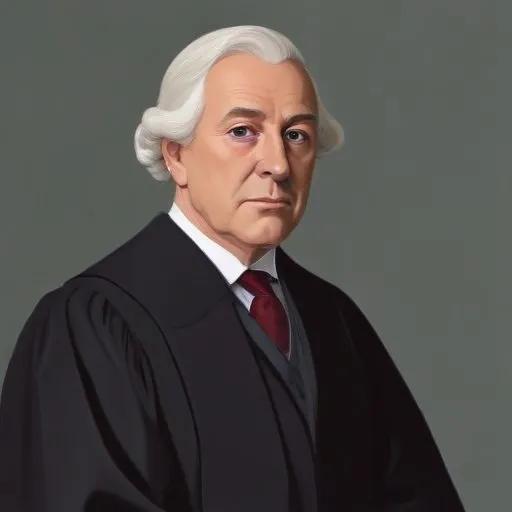
The Unyielding Lord Chief Justice: Edward Law, 1st Baron Ellenborough
A Legal Luminary of 18th Century England
Edward Law, 1st Baron Ellenborough, was a renowned English judge, politician, and Attorney General, who left an indelible mark on the English legal system through his astute judgments and unyielding dedication to justice. As Lord Chief Justice of the King's Bench, he presided over some of the most significant trials of his time, earning him a reputation as a fearless and impartial arbiter of the law.
Early Life and Education
Born on November 16, 1750, in Great Salkeld, Cumberland, Law was the son of Edmund Law, who later became Bishop of Carlisle, and Mary Christian, daughter of John Christian of Ewanrigg, Cumberland. Law's early education took place at the Charterhouse, followed by Peterhouse, Cambridge, where he excelled academically, passing as third wrangler and subsequently earning a fellowship at Trinity.
Rise to Prominence
Law chose to pursue a career in law, initially serving as a special pleader under the bar before being called to the bar in 1780. He quickly established himself as a formidable advocate on the northern circuit, building a lucrative practice and earning a reputation for his exceptional legal acumen. In 1787, Law was appointed as principal counsel for
Warren Hastings in the celebrated impeachment trial before the House of Lords, where his remarkable defense skills were universally recognized. This milestone marked the beginning of his ascent to prominence, leading to his appointment as King's Counsel in the same year.
A Career Marked by Distinction
Law's political career began as a Whig, but he eventually shifted his allegiance to support Pitt, influenced by the French Revolution. In 1801, he was appointed Attorney General and subsequently returned to the House of Commons as Member of Parliament for Newtown in the Isle of Wight. He was knighted in the same year and, in 1802, succeeded Lord Kenyon as Lord Chief Justice of the King's Bench. This prestigious appointment was accompanied by his elevation to the peerage, as Baron Ellenborough, of Ellenborough, in the County of Cumberland.
Notable Achievements and Legacy
As Lord Chief Justice, Law presided over several notable cases, including the trial of Captain William Lord Paget in 1809, where he demonstrated his unwavering commitment to upholding the law, even in the face of royal pressure. His judgments were marked by their clarity, simplicity, and emphasis on the importance of precedent. Law's contributions to English law have been immense, and his legacy continues to influence the legal system to this day.
Personal Milestones and Honors
- Law was elected a Fellow of the Society of Antiquaries of London in 1798.
- He was knighted in 1801.
- He was created Baron Ellenborough, of Ellenborough, in the County of Cumberland, in 1802.
Conclusion
Edward Law, 1st Baron Ellenborough, was a towering figure in 18th-century English law and politics. Through his unwavering dedication to justice and his remarkable legal acumen, he left an enduring legacy that continues to shape the English legal system. His remarkable career serves as a testament to the power of hard work, intellectual rigor, and a steadfast commitment to principle.
FAQ
What was Edward Laws role in British politics?
Edward Law, 1st Baron Ellenborough, was a prominent British lawyer, judge, and politician who played a significant role in shaping British politics during the late 18th and early 19th centuries.
What were Edward Laws contributions to law reform?
Edward Law was a leading figure in law reform who played a key role in shaping the British legal system. He was a strong advocate for judicial reform and played a key role in the passage of several important laws.
What is Edward Laws legacy in British history?
Edward Laws contributions to British history are still felt today. He was a true statesman who played a key role in shaping the course of British politics and law.
How did Edward Law influence British foreign policy?
Edward Law played a significant role in shaping British foreign policy during a period of great upheaval. He was a strong advocate for British interests and played a key role in shaping the countrys relationships with other nations.
What is Edward Laws legacy in modern law?
Edward Laws contributions to law are still felt today. He was a true innovator who helped to shape the modern British legal system, and his legacy continues to influence legal thinking and practice.