


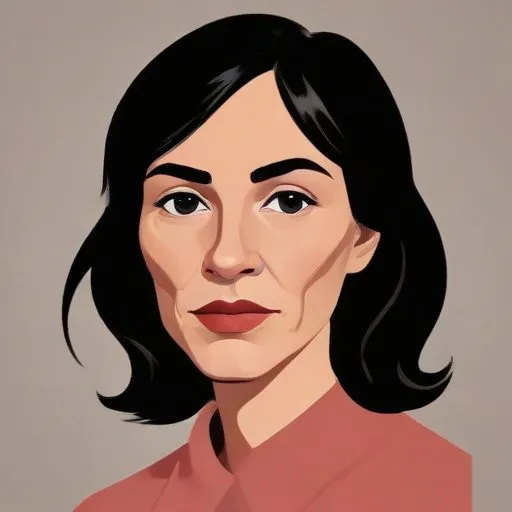
A pioneering abstract expressionist painter and educator, known for vibrant portraits of celebrities and politicians, including JFK. Her artistic style blended action painting with figurative representation.
Elaine de Kooning was a renowned American artist, known for her bold and expressive paintings that blended Abstract Expressionism with Figurative Expressionism. As a prolific writer, she was also an editorial associate for Art News magazine, providing insightful critiques and commentary on the art world of the post-World War II era.
Born Elaine Marie Catherine Fried on March 12, 1918, in Flatbush, New York, she was the eldest of four children to Mary Ellen O'Brien, an Irish Catholic, and Charles Frank Fried, a Protestant of Jewish descent. Her mother, Mary Ellen, played a significant role in nurturing Elaine's artistic talents, taking her to museums at the tender age of five and encouraging her to draw what she saw.
Elaine's childhood room was decorated with painting reproductions, which sparked her early interest in art. She began drawing and selling portraits of her schoolmates in grade school, showcasing her budding talent. After graduating from Erasmus Hall High School in Brooklyn, Elaine briefly studied math at Hunter College in New York City, where she befriended a group of abstract and Social Realist painters.
In 1937, Elaine attended the Leonardo da Vinci Art School and later studied at the American Artists School, both in New York City. During this period, she worked as an art school model to support herself financially. It was at the American Artists School that she met her future husband, Willem de Kooning, a renowned abstract painter, in 1938.
Elaine de Kooning's writing career was marked by her astute observations and critiques of the art world. As an editorial associate for Art News magazine, she wrote extensively on contemporary art, providing valuable insights into the creative processes of her contemporaries. Her writing not only showcased her knowledge of art history but also her ability to distill complex ideas into engaging, accessible language.
Elaine de Kooning's artistic style was characterized by bold brushstrokes, vibrant colors, and a blend of abstract and figurative elements. Her paintings often explored the human form, capturing the essence of her subjects with remarkable expressiveness. Her work was exhibited in various galleries, including the prestigious Sidney Janis Gallery in New York City.
Elaine de Kooning's contributions to the art world extend beyond her own creative output. She played a significant role in promoting the work of her contemporaries, including her husband Willem de Kooning, and other prominent artists of the Abstract Expressionist movement.
Elaine de Kooning's life was marked by both personal and professional milestones. Her marriage to Willem de Kooning in 1943 was a significant turning point in her life, and their relationship was marked by a deep mutual respect and admiration for each other's artistic talents.
Elaine de Kooning's legacy extends beyond her own artistic achievements. She paved the way for future generations of female artists, writers, and critics, demonstrating that women could excel in a male-dominated art world. Her contributions to the Abstract Expressionist movement, both as an artist and writer, remain a testament to her innovative spirit and dedication to her craft.
Elaine de Kooning's words of wisdom continue to inspire artists, writers, and art enthusiasts alike:
Elaine de Kooning's life and work were deeply intertwined with the cultural and artistic movements of the post-World War II era. Her contributions to the Abstract Expressionist movement, along with those of her contemporaries, helped shape the artistic landscape of the 1940s and 1950s.
Elaine de Kooning's legacy continues to inspire artists, writers, and art enthusiasts today, serving as a testament to the power of creative expression and the importance of preserving our cultural heritage.
Throughout her career, Elaine de Kooning received numerous awards and honors for her contributions to the art world, including the prestigious Logan Medal of the Arts in 1963.
Elaine de Kooning was an active participant in various artistic organizations and initiatives, including the Artists' Club of New York, which provided a platform for artists to share their work and exchange ideas.
Her charitable work extended beyond the art world, as she supported various social causes, including the Civil Rights Movement and the fight against poverty.
Born in 1904
A pioneering abstract expressionist, he revolutionized modern art with bold, expressive brushstrokes and vibrant colors, creating dynamic, emotive pieces that continue to inspire.
Born in 1912
Pioneering abstract expressionist artist who splattered and dripped paint to create dynamic, emotive works that redefined modern art. Known for chaotic, intricate pieces that evoke raw emotion.
Born in 1903
A pioneer of abstract expressionism, creating bold, rectangular color fields that evoke emotions and spark introspection. His works are a testament to the power of art to transcend language and culture.
Born in 1905
A pioneer of Abstract Expressionism, creating bold, color-field paintings that evoke emotions and spirituality. His iconic "zip" paintings feature vibrant, vertical stripes that seem to pulse with energy.
Born in 1904
A pioneering abstract expressionist, creating large-scale, gestural paintings that explored the human experience and the American West. Known for his bold, expressive brushstrokes and vibrant color palette.
Born in 1925
A pioneer of pop art, combining found objects and images to create innovative, thought-provoking works that blurred the lines between art and everyday life.
96 Years Old
A pioneer of pop art, creating enigmatic works that explore the relationship between perception, reality, and meaning, often using common images like flags and targets.
Born in 1910
A prominent figure in the abstract expressionist movement, known for bold, expressive brushstrokes and vibrant colors that evoked intense emotions.
