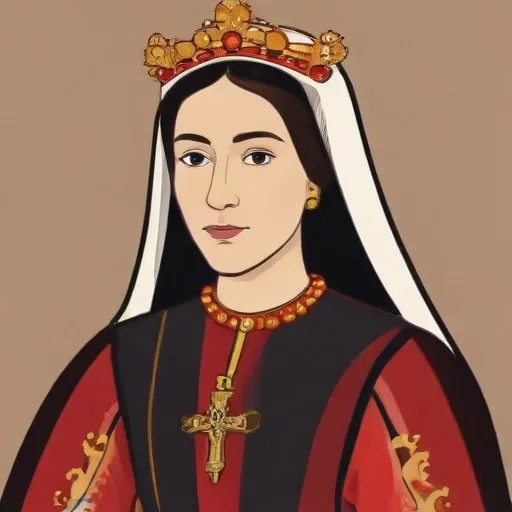
Eleanor of Aragon, Queen of Portugal: A Life of Regal Ambition and Turbulent Fate
A Queen of Unwavering Determination
Eleanor of Aragon, Queen of Portugal, is remembered for her unwavering determination to assert her authority as a female regent in a predominantly patriarchal society. Her remarkable life, marked by both triumph and tragedy, serves as a testament to her unrelenting spirit and her unshakeable commitment to her royal duties.
Early Life and Marriage
Born on May 2, 1402, Eleanor was the daughter of
Ferdinand I of Aragon and Eleanor of Alburquerque. Her brother, Alfonso V of Aragon, arranged her marriage to the future King Edward of Portugal, which took place on September 22, 1428. This union resulted in nine children, with five surviving into adulthood. Upon her husband's ascension to the throne, Eleanor became Queen of Portugal in 1433.
Regency and Turmoil
Following King Edward's death on September 9, 1438, Eleanor was appointed regent of Portugal in his will, a decision supported by the Portuguese Cortes. However, her foreign roots and gender sparked unrest among the people, who preferred the late king's brother, Infante
Peter, Duke of Coimbra. The subsequent riot in Lisbon was eventually suppressed by her brother, Count John of Barcelona, later King John II of Aragon.
A Struggle for Power
Eleanor's regency was met with opposition from Infante Peter, who enjoyed the support of a faction of the nobility and the common people. Despite initial attempts to negotiate a compromise, the situation deteriorated, and Eleanor's own nobility supporters began to waver. Her poor health and grief over the loss of her daughter, Philippa, led to her gradual withdrawal from state affairs, further fueling public discontent. Ultimately, the Cortes appointed Infante Peter as the sole regent, forcing Eleanor to flee to Castile in December 1440, accompanied by her infant daughter, Joan.
Exile and Tragedy
Dependent on charity and longing to be reunited with her children, Eleanor's life in Castile was marked by unhappiness and hardship. In 1444, she applied to return to Portugal, but tragically succumbed to illness at Toledo on February 19, 1445.
Legacy and Impact
Eleanor of Aragon's life serves as a poignant reminder of the obstacles faced by women in positions of power during the medieval era. Her unwavering commitment to her royal duties, despite overwhelming adversity, has earned her a place in the annals of Portuguese history. While her regency was marked by turmoil, her legacy is one of resilience and determination, inspiring generations to come.
Personal Milestones and Key Life Events
- May 2, 1402: Eleanor of Aragon was born
- September 22, 1428: Married King Edward of Portugal
- 1433: Became Queen of Portugal
- September 9, 1438: King Edward's death; Eleanor appointed regent
- December 1440: Fled to Castile with infant daughter Joan
- February 19, 1445: Died at Toledo, Castile
Historical Context and Comparative Analysis
Eleanor's life and reign are set against the backdrop of the Iberian Peninsula's complex web of royal alliances and power struggles. Her experience as a female regent, caught between the competing interests of the Portuguese nobility and her own Aragonese heritage, serves as a compelling counterpoint to the lives of her contemporaries, such as
Isabella of Portugal, Duchess of Burgundy. While differing in many ways, these women shared a common fate, forging paths in a predominantly male-dominated world.
FAQ
Who was Eleanor of Aragon, Queen of Portugal?
Eleanor of Aragon was a queen consort of Portugal, married to King Edward I of Portugal. She was a member of the royal house of Aragon and played an important role in Portuguese politics during the 15th century.
What was Eleanor of Aragons role in Portuguese politics?
Eleanor of Aragon played a significant role in Portuguese politics, often serving as regent for her son, King Afonso V. She was known for her diplomatic skills and her ability to navigate the complex web of royal alliances in Europe.
How did Eleanor of Aragon maintain power in Portugal?
Eleanor of Aragon maintained power in Portugal by forming alliances with powerful nobles and clergy, as well as by using her influence over her son, King Afonso V. She was also known for her intelligence and strategic thinking.
What was Eleanor of Aragons relationship like with her son?
Eleanor of Aragon had a close relationship with her son, King Afonso V, whom she often advised and influenced. She played a significant role in his education and upbringing, shaping him into a capable leader.
How did Eleanor of Aragons death impact Portugal?
Eleanor of Aragons death in 1455 had a significant impact on Portugal, leading to a period of instability and power struggles. Her legacy as a skilled politician and strategist continued to influence Portuguese politics for centuries to come.