


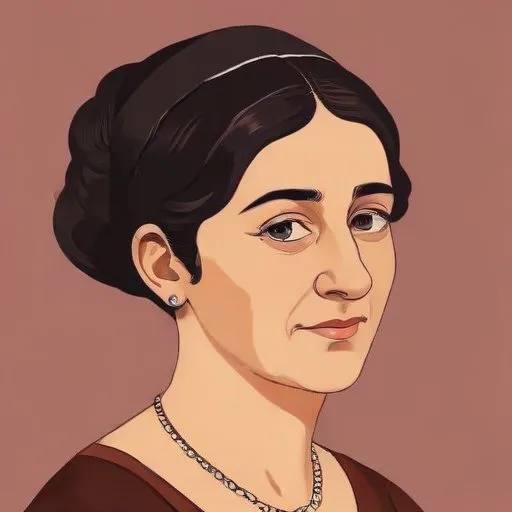
A 17th-century mathematician and philosopher who made history as the first woman to receive a doctorate in philosophy from the University of Padua, paving the way for future generations of women in academia.
In 1678, Elena Cornaro Piscopia became one of the first women to receive an academic degree from a university, and the first to receive a Doctor of Philosophy degree, shattering the glass ceiling of academia and paving the way for future generations of women scholars. This remarkable achievement cemented her place in history as a trailblazing philosopher, musician, and polymath.
Born on June 5, 1646, in the Palazzo Loredan, Venice, Republic of Venice, Elena was the third child of Gianbattista Cornaro Piscopia and his mistress Zanetta Boni. Despite her illegitimate birth, Elena's father, a prominent noble, ensured she received an exceptional education, recognizing her prodigious talent from an early age.
In 1664, Elena's father became the Procuratore di San Marco de supra, the treasurer of St Mark's Cathedral, a position that granted him significant influence and prestige. As a result, Elena became a prominent figure in the Marriage of the Sea celebration, despite her illegitimate birth. Her father's attempts to arrange betrothals for her were met with resistance, as Elena was determined to pursue her own path in life.
Under the guidance of distinguished instructors, Elena mastered Latin, Greek, French, and Spanish by the age of seven. She went on to become an expert musician, composing music and mastering various instruments, including the harpsichord, clavichord, harp, and violin. Her intellectual curiosity led her to explore physics, astronomy, and philosophy, laying the foundation for her future academic achievements.
On June 25, 1678, Elena Cornaro Piscopia received her Doctor of Philosophy degree from the University of Padua, a milestone that marked a significant turning point in the history of academia. This achievement not only recognized her intellectual prowess but also paved the way for future generations of women scholars.
Elena Cornaro Piscopia's trailblazing achievement has inspired countless women to pursue careers in academia and philosophy. Her legacy continues to resonate, encouraging future generations to challenge conventional norms and push the boundaries of human knowledge.
Elena's philosophical contributions were deeply rooted in her fascination with the natural world and human experience. Her writings and teachings reflected a deep understanding of Aristotelian philosophy, which she skillfully adapted to her own intellectual pursuits.
"The pursuit of knowledge is a lifelong journey, and one that requires courage, perseverance, and dedication."
"The human mind is capable of achieving greatness, but it is our collective responsibility to nurture and cultivate it."
Elena Cornaro Piscopia's remarkable life and achievements serve as a testament to the power of human determination and intellectual curiosity. Her legacy continues to inspire and empower women around the world, solidifying her place as a pioneering figure in the history of philosophy and academia.
Born in 1564
Pioneering astronomer, physicist, and mathematician who played a major role in the Scientific Revolution, making key discoveries that challenged Aristotelian views and laid the foundation for modern science.
Born in 1745
Italian physicist who invented the first electrical battery, revolutionizing the field of electricity and paving the way for countless technological advancements.
Born in 1608
Developed the mercury barometer, a device that measures atmospheric pressure, and made significant contributions to the study of vacuums and fluids.
