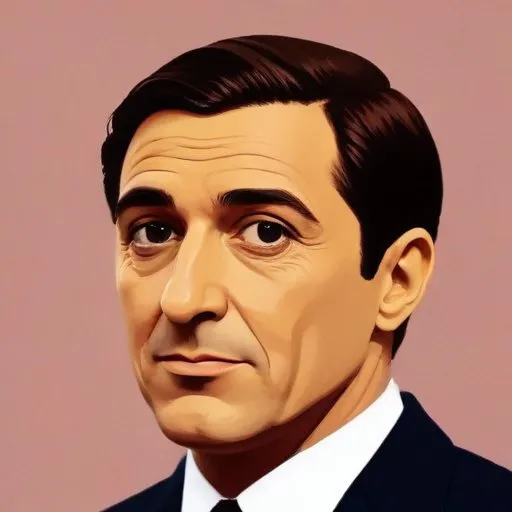
Elio Petri

Elio Petri

Elio Petri was born on January 29th, 1929

Full Name: Elio Petri
Nationality: Italian
Profession: Director, Screenwriter
Notable Work: Investigation of a Citizen Above Suspicion
Awards: Academy Award, Palme dOr
Birth Year: 1929
Death Year: 1982
Genre: Drama, Thriller

Acclaimed filmmaker behind socially conscious, visually striking movies that critiqued Italian society and politics, earning him international recognition and numerous awards.

Written by: Sofia Garcia Sofia Garcia

Elio Petri: The Maverick Director of Italian Cinema

The King of Social Satire

Elio Petri was a renowned Italian film and theatre director, screenwriter, and film critic, celebrated for his biting social commentary and scathing critique of the societal norms of his time. He is best known for his landmark film, Investigation of a Citizen Above Suspicion, which won the 1971 Academy Award for Best Foreign Language Film, cementing his status as a pioneer of Italian New Wave cinema.

Early Life and Influences

Born on January 29, 1929, in Rome, Italy, Petri grew up in a tumultuous era marked by World War II and the subsequent rise of the Italian Communist Party. As a young man, he was drawn to the party's ideology and joined the youth organization in 1944. However, the Hungarian Revolution of 1956 led to his disillusionment and eventual departure from the party.

During this period, Petri developed a passion for cinema, which would become the hallmark of his career. He began writing articles on films for various publications, including L'Unità and Gioventù nuova, and soon found himself gravitating towards the neorealist movement. His introduction to Giuseppe De Santis, a prominent neorealist director, would prove instrumental in shaping his artistic vision.

Rise to Prominence

Petri's collaboration with De Santis led to his involvement in several projects, including Rome 1100 (1952) and A Husband for Anna (1953). He also worked as an assistant director and cowriter on De Santis' films, such as La garçonnière (1960). This apprenticeship laid the groundwork for Petri's eventual transition to director.

Breakthrough and Critical Acclaim

In 1961, Petri made his feature film debut with The Assassin, a scathing critique of the bourgeoisie. This marked the beginning of his fruitful collaboration with screenwriter Tonino Guerra, with whom he would go on to create some of his most iconic works. The 1960s and 1970s saw Petri's star rise, with films like The 10th Victim (1965), We Still Kill the Old Way (1967), and A Quiet Place in the Country (1968) solidifying his reputation as a master of social satire.

Awards and Accolades

Legacy and Impact

Elio Petri's films continue to influence contemporary cinema, inspiring directors like Paolo Sorrentino and Matteo Garrone. His unflinching critique of societal norms, his biting humor, and his innovative storytelling have left an indelible mark on the world of cinema.

As the Museum of Modern Art aptly described, Petri was "one of the preeminent political and social satirists of 1960s and early 1970s Italian cinema." His legacy serves as a testament to the power of cinema to challenge, provoke, and inspire.

Remembering Elio Petri

Elio Petri passed away on November 10, 1982, leaving behind a body of work that continues to captivate audiences worldwide. His films remain a powerful commentary on the human condition, a testament to his unwavering commitment to artistic expression, and a celebration of the transformative power of cinema.
Timeline
1929
Born in Rome, Italy
Elio Petri was born on January 29, 1929, in Rome, Italy, to a family of modest means.
1953
Published Rumbo alla carne
Petri published his first novel, Rumbo alla carne, which explored themes of social realism.
1961
Directed The Assassin
Petri directed his first film, The Assassin, which received critical acclaim at the Venice Film Festival.
1970
Directed Investigation of a Citizen Above Suspicion
Petri directed Investigation of a Citizen Above Suspicion, which won the Academy Award for Best Foreign Language Film.
1982
Passing Away
Elio Petri passed away on November 10, 1982, in Rome, Italy, leaving behind a legacy of cinematic achievements.
Elio Petri

Elio Petri Quiz

Elio Petri's films are known for their

Score: 0/5
FAQ
What is Elio Petris most famous film?
Elio Petris most famous film is probably Investigation of a Citizen Above Suspicion, which won the Academy Award for Best Foreign Language Film in 1971.
What was Elio Petris directing style?
Elio Petris directing style was known for its social commentary, satire, and abstract, avant-garde approach, often critiquing modern industrial society and the bourgeoisie.
What was Elio Petris role in Italian Neorealism?
Elio Petri was a key figure in Italian Neorealism, a film movement that focused on the lives of ordinary people and the social and political issues of post-war Italy.
What inspired Elio Petris filmmaking?
Elio Petris filmmaking was inspired by his own experiences growing up in Rome during World War II, as well as his interest in politics, philosophy, and social justice.
What was Elio Petris legacy in cinema?
Elio Petris legacy in cinema is significant, as he helped shape the Italian New Wave and influenced generations of filmmakers, including Martin Scorsese and Francis Ford Coppola.

Related People:

Federico Fellini

Born in 1920

Visionary filmmaker behind surreal, poetic, and deeply personal cinematic masterpieces that blur the lines between reality and fantasy.

Michelangelo Antonioni

Born in 1912

A pioneering filmmaker who explored the human condition through visually stunning and psychologically complex movies, often focusing on alienation and social isolation.

Vittorio De Sica

Born in 1901

A renowned filmmaker and actor, known for directing poignant, neorealist classics like "Bicycle Thieves" and "Umberto D.", which still influence world cinema today.

Luchino Visconti

Born in 1906

Acclaimed Italian filmmaker renowned for lavish, visually stunning productions that often explored themes of social class, morality, and the human condition. His cinematic masterpieces continue to influence filmmakers today.

Pier Paolo Pasolini

Born in 1922

A provocative and influential artist who explored the intersection of politics, religion, and sexuality through his films, which often featured vivid imagery and unflinching social commentary.

François Truffaut

94 Years Old

A pioneering filmmaker of the French New Wave, known for directing iconic films like "Jules and Jim" and "The 400 Blows", which redefined cinematic storytelling.

Jean-Luc Godard

95 Years Old

A pioneer of French New Wave cinema, known for experimental and provocative films that challenged traditional narrative structures and explored themes of politics, philosophy, and social commentary.

Martin Scorsese

83 Years Old

Acclaimed filmmaker behind gritty, intense, and visually stunning movies that often explore themes of redemption, faith, and the human condition, with a distinctive directing style that blends violence and artistry.