


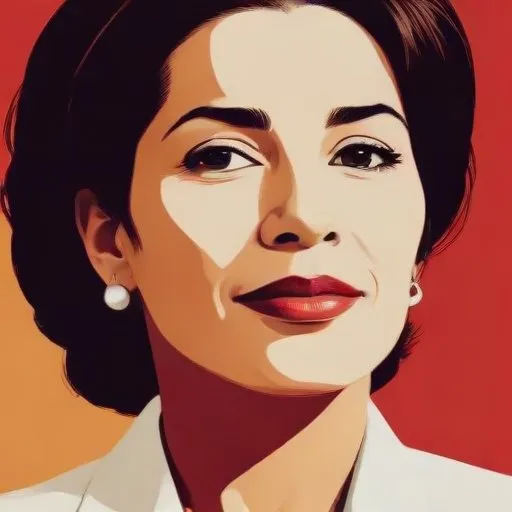
The former First Lady of Cuba, married to Fulgencio Batista, played a significant role in Cuban politics and society during the 1940s and 1950s, known for her philanthropic work and lavish lifestyle.
Elisa Godnez Gmez de Batista was the First Lady of Cuba from 1940 to 1944, distinguished as the wife of Cuban President-turned-Dictator Fulgencio Batista. Her life was marked by luxury, politics, and scandal, making her a fascinating figure in Cuban history.
Born on December 2, 1904, in the small village of Vereda Nueva, Havana Province, Elisa was one of nine children to Salustiano Godnez y Crdoba and Concepcin Gmez y Acosta. Her humble beginnings contrasted sharply with the opulent life she would later lead as the First Lady of Cuba.
In 1933, Elisa married Fulgencio Batista, who would soon rise to become the President of Cuba. The couple had three children: Rubn, Mirta, and Elisa Aleida. As the First Lady, Elisa played an integral role in Batista's political career, often hosting lavish parties and events at the Presidential Palace.
Elisa's life was marked by significant milestones, including her divorce from Batista in 1945 and her subsequent marriage to Mximo Rodrguez, a former member of the Cuban Congress. The couple emigrated to the United States in 1959, settling in Miami, Florida, where Elisa would reside until her death in 1993.
Elisa's impact on Cuban society was twofold. As the First Lady, she brought a level of sophistication and glamour to the Presidential Palace, hosting renowned international figures and showcasing Cuban culture. However, her association with Batista's authoritarian regime has also been criticized, with some viewing her as a symbol of the ruling elite's excesses.
Elisa Godnez Gmez de Batista's life serves as a window into Cuba's complex and tumultuous history. Her marriage to Batista provides a unique perspective on the man who shaped Cuba's destiny, and her experiences as First Lady offer a glimpse into the lavish lifestyles of the ruling class during that era.
One notable aspect of Elisa's life is her connection to her grandson, Raoul G. Cantero III, who would go on to become a Justice of the Florida Supreme Court from 2002 to 2008. This familial link serves as a testament to the enduring legacy of Elisa and her family in Cuban-American politics.
Elisa Godnez Gmez de Batista's life was a fascinating blend of politics, luxury, and scandal. As the First Lady of Cuba, she played a significant role in shaping the country's history, and her legacy continues to captivate and inspire generations to come.
Born in 1926
The Cuban revolutionary who led the country from 1959 to 2008, implementing socialist policies and defying US opposition, becoming an iconic figure in modern history.
95 Years Old
The Cuban revolutionary leader who served as President of Cuba from 2008 to 2018, known for implementing economic reforms and improving relations with the US. He played a key role in shaping Cuba's socialist government and economy.
Born in 1901
The authoritarian leader who ruled Cuba from 1933 to 1944 and again from 1952 to 1959, known for his corrupt and oppressive regime, which sparked the Cuban Revolution.
