


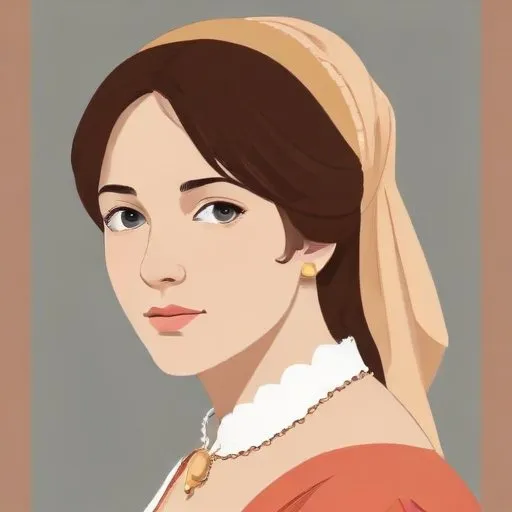
A princess of the House of Lorraine who married into the royal family of Sardinia and became queen, known for her strong character and diplomatic skills. She played a key role in maintaining peace and stability in the region during a tumultuous period.
Elisabeth Therese of Lorraine, born on October 15, 1711, was the Queen of Sardinia, a title she held as the wife of Charles Emmanuel III of Sardinia. She is remembered for her unique blend of royal lineage, spiritual devotion, and tragic fate, which ultimately led to her untimely demise.
As the seventh daughter and eleventh child of Leopold, Duke of Lorraine, and Elisabeth Charlotte d'Orléans, Elisabeth Therese was born into a life of nobility at the Château de Lunéville in Lorraine. She held the style of Highness and the rank of foreign princess in France, a testament to her family's esteemed position.
As a young princess, Elisabeth Therese was exposed to the intricacies of royal politics, particularly during the coronation of Louis XV in 1722, where she, her mother, and sisters Anne Charlotte and Marie Louise attended the French royal court. It was during this time that her grandmother, Princess Palatine, fondly regarded her and her sisters as charming and attractive, with Anne Charlotte being deemed the most beautiful.
In the spring of 1725, Elisabeth Therese's mother, Elisabeth Charlotte, began negotiations to marry her to the young King Louis XV, who was then fifteen and unmarried. However, these plans were met with opposition from the king's prime minister, the Duke of Bourbon, who arranged for the king to marry an obscure Polish princess instead. This decision was influenced by the Duke's belief that marriages between kings of France and princesses of Lorraine always resulted in strife.
In 1734, Elisabeth Therese became the coadjutor bishop of Remiremont Abbey, a position that reflected her deep spiritual devotion. This appointment not only demonstrated her commitment to her faith but also highlighted her unique position as a female leader in a male-dominated institution.
Elisabeth Therese eventually married Charles Emmanuel III of Sardinia, and the union resulted in her becoming the Queen of Sardinia. However, her life was cut short when she died from puerperal fever after childbirth in 1741, leaving behind a legacy of devotion and tragedy.
although Elisabeth Therese's life was marked by tragedy, her contributions to the spiritual and royal realms continue to resonate. Her unique blend of royal lineage and spiritual devotion serves as a testament to her unwavering commitment to her faith and her role as a leader. Her story serves as a poignant reminder of the complex and often tumultuous nature of royal politics in the 18th century.
Elisabeth Therese of Lorraine's life was a complex tapestry of royal politics, spiritual devotion, and personal tragedy. Despite the brevity of her life, her legacy continues to captivate and inspire, serving as a testament to the enduring power of faith and resilience in the face of adversity.
Born in 1677
The last king of Poland before the country's partitions, he's known for his diplomatic skills and attempts to reform the Polish-Lithuanian Commonwealth. He's also famous for being the father-in-law of Louis XV of France.
Born in 1710
The monarch who ruled France from 1715 to 1774, known as the "Sun King's" great-grandson, and remembered for his extravagance, absolutism, and the decline of the French monarchy.
Born in 1887
Last Emperor of Austria-Hungary, ruling from 1916 to 1918, and known for his attempts to reform the empire and end World War I.
