


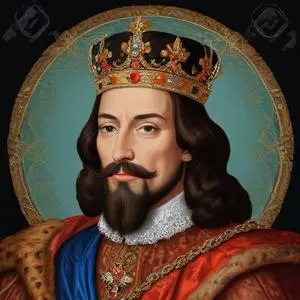
Last Emperor of Austria-Hungary, ruling from 1916 to 1918, and known for his attempts to reform the empire and end World War I.
Charles I of Austria, also known as Karl I, was the last emperor of Austria-Hungary, reigning from 1916 to 1918. Despite his brief tenure, Charles is remembered for his valiant efforts to end World War I and preserve the tottering Habsburg monarchy.
Born on August 17, 1887, Charles was the son of Archduke Otto of Austria and Princess Maria Josepha of Saxony. Following the assassination of Archduke Franz Ferdinand in 1914, Charles became heir presumptive to the throne. Upon the death of Emperor Franz Joseph in 1916, Charles succeeded to the thrones of Austria, Hungary, and Croatia.
Charles's reign was marked by his secret negotiations with the Allies to end World War I peacefully. Despite his efforts, he was ultimately unsuccessful, and the war dragged on. Charles also championed Austro-Slavism, a movement aimed at preserving the empire by granting greater autonomy to its Slavic populations.
As the war drew to a close, Austria-Hungary began to disintegrate. Czechoslovakia and the State of Slovenes, Croats, and Serbs declared independence, and Hungary broke its monarchic ties to Austria. Charles's attempts to preserve the empire failed, and he was forced to renounce his participation in government affairs in 1918.
Charles went into exile in Switzerland, where he spent the remainder of his life attempting to restore the monarchy. He made two failed attempts to reclaim the Hungarian throne in 1921, opposed by Hungary's Calvinist regent, Admiral Miklós Horthy.
Charles I of Austria died on April 1, 1922, at the age of 34. He was beatified by Pope John Paul II in 2004, earning the title "Blessed Karl of Austria." Charles's legacy is that of a well-intentioned but ultimately unsuccessful leader, whose efforts to preserve the Austro-Hungarian Empire were thwarted by the forces of history.
Charles I of Austria reigned during a tumultuous period in European history, marked by war, revolution, and the collapse of empires. His attempts to preserve the Austro-Hungarian monarchy, though ultimately unsuccessful, demonstrate his commitment to the ideals of duty and service. Today, Charles is remembered as a symbol of a bygone era, a monarch who fought to preserve the dying embers of a once-great empire.
Charles I of Austria's legacy extends beyond his brief reign. His commitment to duty and service serves as an inspiration to leaders and individuals alike. Moreover, his attempts to end World War I peacefully highlight the importance of diplomacy and international cooperation in preventing conflict.
Born in 1830
The longest-reigning ruler of Austria-Hungary, presiding over a vast empire that spanned across Central Europe, and remembered for his role in shaping European history through diplomacy and war.
Born in 1892
The last Empress of the Austro-Hungarian Empire, a symbol of a bygone era, known for her courage and dedication to her husband and family during World War I. She was a unifying figure, beloved by her people.
Born in 1912
The last Crown Prince of Austria-Hungary was the heir to the throne of the former Austro-Hungarian Empire, and is known for his efforts to promote European unity and cooperation. He was a prominent politician and writer who played a key role in shaping European politics after World War II.
Born in 1856
A Croatian-Austrian field marshal who played a crucial role in the Austro-Hungarian Army during World War I, leading troops to several victories and earning recognition for his military prowess. He's also known for his efforts to modernize the army and implement new tactics.
Born in 1852
Austrian-Hungarian field marshal who served as Chief of the General Staff during World War I, playing a key role in the war's outbreak and course. He's known for his hawkish stance and aggressive military strategies.
Born in 1865
A German general and politician who played a crucial role in World War I, masterminding the 1918 Spring Offensive and later promoting Nazi ideology.
Born in 1847
A German field marshal and politician who served as the 2nd President of Germany during the Weimar Republic, playing a crucial role in the rise of the Nazi Party. He's infamous for appointing Adolf Hitler as Chancellor of Germany in 1933.
