


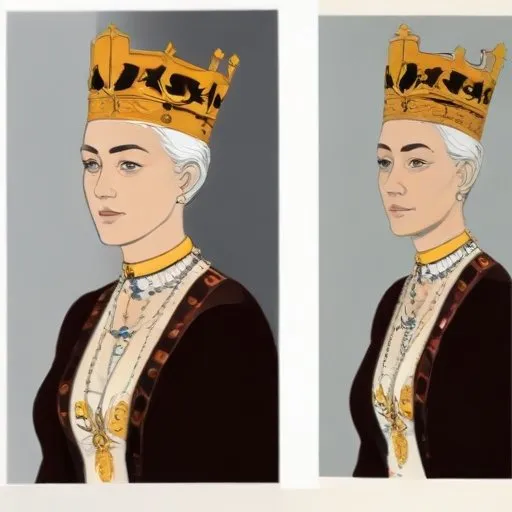
The last Empress of the Austro-Hungarian Empire, a symbol of a bygone era, known for her courage and dedication to her husband and family during World War I. She was a unifying figure, beloved by her people.
Zita of Bourbon-Parma is renowned as the wife of Charles I, the last monarch of Austria-Hungary, and subsequently, the last Empress of Austria and Queen of Hungary. Born into the House of Bourbon-Parma, she emerged as a symbol of unity for the exiled dynasty, dedicating her life to her family, faith, and the preservation of the Habsburg legacy.
Zita was born on May 9, 1892, at the Villa Pianore in Lucca, Italy, as the 17th child of Robert I, Duke of Parma, and his second wife, Infanta Maria Antonia of Portugal. She was named after a 13th-century Italian saint who had lived in Tuscany. In 1911, she married Archduke Charles of Austria, who would eventually become the Emperor of Austria and King of Hungary.
Following the assassination of Archduke Franz Ferdinand of Austria in 1914, Charles became the heir presumptive to Emperor Franz Joseph I of Austria. After the Emperor's death in 1916, Charles ascended to the throne, with Zita by his side as Empress. During World War I, the Habsburg Empire disintegrated, and the monarchy was eventually abolished in 1918.
After the war, Charles and Zita were exiled to Switzerland and later to Madeira, where Charles died in 1922 at the age of 34. Zita was just 29 years old when she became a widow, and she dedicated the rest of her life to raising their eight children and preserving the Habsburg legacy.
Zita was a devout Catholic and played a significant role in promoting the faith and supporting charitable causes. She was declared a Servant of God by Pope Benedict XVI in recognition of her virtues and devotion. Throughout her life, she remained committed to her family, her faith, and the preservation of the Habsburg heritage.
Zita of Bourbon-Parma's legacy extends beyond her role as the last Empress of Austria and Queen of Hungary. She served as a symbol of unity for the exiled Habsburg dynasty, and her devotion to her family and faith has inspired generations. Her life is a testament to the power of dedication, duty, and devotion in the face of adversity.
“I will not abandon this place, which is a part of my husband's inheritance.” - Zita of Bourbon-Parma, upon being asked to leave Austria after the abolition of the monarchy.
Zita of Bourbon-Parma's life spanned a period of significant change and upheaval in European history. Her dedication to her family, faith, and duty has left a lasting impact on the Habsburg legacy, and her story serves as a testament to the power of devotion and service in the face of adversity.
Born in 1830
The longest-reigning ruler of Austria-Hungary, presiding over a vast empire that spanned across Central Europe, and remembered for his role in shaping European history through diplomacy and war.
Born in 1887
Last Emperor of Austria-Hungary, ruling from 1916 to 1918, and known for his attempts to reform the empire and end World War I.
Born in 1912
The last Crown Prince of Austria-Hungary was the heir to the throne of the former Austro-Hungarian Empire, and is known for his efforts to promote European unity and cooperation. He was a prominent politician and writer who played a key role in shaping European politics after World War II.
65 Years Old
The current head of the former ruling dynasty of Austria-Hungary, he is a politician and advocate for European unity and human rights, known for his efforts to promote democracy and reconciliation.
Born in 1837
A fashion icon and free spirit, known for her exquisite beauty, rebellious nature, and tragic fate.
Born in 1863
Heir to the Austro-Hungarian throne whose assassination in Sarajevo sparked World War I. A symbol of imperial power and a catalyst for global conflict.
