


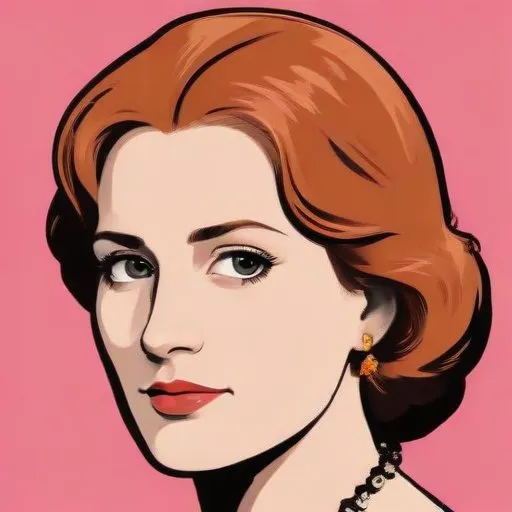
A German princess who lived in France, known for her witty letters and sharp tongue, which provide valuable insights into the royal courts of 17th and 18th century Europe.
Known for her unbridled wit, sharp tongue, and unwavering honesty, Elizabeth Charlotte, Princess Palatine, was a force to be reckoned with in 17th-century Europe. As a member of the House of Wittelsbach, she navigated the complex web of royal politics with ease, earning her the reputation as one of the most iconic and unconventional princesses of her time.
Born on May 27, 1652, in Heidelberg, Germany, Elizabeth Charlotte was the daughter of Charles I Louis, Elector Palatine, and Charlotte of Hesse-Kassel. Her early life was marked by luxury and privilege, but fate had other plans. When her father was defeated in the Thirty Years' War, Elizabeth Charlotte was forced into exile in France, where she would spend most of her life.
Elizabeth Charlotte's writings and letters reveal a deeply philosophical and introspective individual. She was a voracious reader, devouring the works of René Descartes, John Locke, and other prominent thinkers of her time. Her own writings demonstrate a strong feminist streak, as she advocated for women's education and equal rights.
Elizabeth Charlotte's unapologetic approach to life and politics paved the way for future generations of women to challenge traditional gender roles. Her advocacy for women's education and equality remains a testament to her groundbreaking spirit.
"When I am dead, someone will find in my papers a few remarks which will put the court of France in a most ridiculous light."
Elizabeth Charlotte's life was marked by the turmoil of the Thirty Years' War and the subsequent rise of the French monarchy. Her legacy extends beyond the palace walls, leaving an indelible mark on European history. Her writings and letters provide a unique window into the intrigue and politics of 17th-century Europe.
Her friendship with the Duchess of Maintenon, Louis XIV's mistress, remains a fascinating aspect of Elizabeth Charlotte's life. The two women, bound by their shared position as outsiders within the royal family, formed a lasting bond that transcended palace politics.
Elizabeth Charlotte's groundbreaking spirit, philosophical contributions, and unwavering dedication to her values continue to inspire generations of women and men alike. Her legacy serves as a testament to the power of unconventional thinking and the importance of staying true to oneself, even in the face of adversity.
Born in 1710
The monarch who ruled France from 1715 to 1774, known as the "Sun King's" great-grandson, and remembered for his extravagance, absolutism, and the decline of the French monarchy.
Born in 1640
Younger brother of King Louis XIV, known for his military prowess and cultural patronage, particularly in the arts.
Born in 1716
The Enlightened Despot who reformed Spain, promoting education, arts, and economic growth, and is credited with modernizing Madrid.
Born in 1650
The Prince of Orange, King of England, Scotland, and Ireland, led the Glorious Revolution, overthrowing the Catholic King James II, and ruled with his wife Mary II, establishing a Protestant monarchy. He's also known for his military victories in Ireland and Europe.
Born in 1516
The first queen to rule England in her own right, Bloody Mary tried to restore Catholicism, earning her notorious reputation for burning hundreds of Protestants at the stake.
