


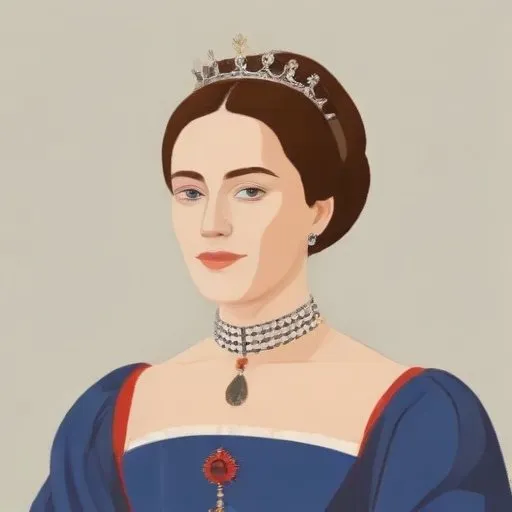
Daughter of King Christian III of Denmark, she played a crucial role in shaping the Lutheran Reformation in Brandenburg through her marriage to Elector John George of Brandenburg.
Elizabeth of Denmark, Electress of Brandenburg, is renowned for her unwavering commitment to Protestantism, despite the tumultuous circumstances that surrounded her. Born on June 24, 1485, to King Hans of Denmark, Norway, and Sweden, and Christina of Saxony, Elizabeth's life was marked by a complex interplay of royal alliances, marital obligations, and theological convictions.
In 1502, Elizabeth married Joachim I Nestor, Elector of Brandenburg, in a double wedding that bonded her family to the powerful House of Hohenzollern. For nearly two decades, the couple coexisted harmoniously, but their relationship deteriorated when Elizabeth adopted Protestantism in 1523, after attending a sermon by Martin Luther. Her husband, a staunch Catholic, grew increasingly hostile towards her new faith, sparking a bitter conflict that would shape the course of their lives.
Elizabeth's defiance of her husband's religious beliefs led to a dramatic fallout. In 1527, she publicly received Protestant communion, a bold act of defiance that prompted Joachim to consult a clerical council about divorcing, executing, or isolating her. Undaunted, Elizabeth fled to the court of her uncle, John, Elector of Saxony, where she found refuge and support from Protestant monarchs, including her brother, Christian II of Denmark.
Elizabeth's courageous stance in the face of adversity has inspired generations of women to assert their independence and stand firm in their convictions. Her example has resonated throughout history, echoing the struggles of countless individuals who have faced persecution for their beliefs.
Elizabeth's adoption of Protestantism was not merely a rebellion against her husband's authority, but a deeply personal conviction that stemmed from her exposure to Luther's teachings. Her willingness to risk alienation and even danger to uphold her faith underscores the depth of her commitment to the principles of Protestantism.
Elizabeth's story unfolds against the backdrop of the Protestant Reformation, a tumultuous period in European history marked by religious upheaval and conflict. Her unusual bravery in the face of opposition has cemented her place as a champion of religious liberty and a testament to the power of individual conviction.
Elizabeth's defiance of her husband's authority and her unwavering commitment to Protestantism set her apart from her contemporaries, who often prioritized dynastic alliances over personal convictions. Her determination to assert her independence has drawn parallels with other strong women of the era, such as Anne Boleyn, who similarly challenged the status quo in her pursuit of religious reform.
Elizabeth's close relationship with her brother, Christian II of Denmark, played a significant role in her early life. She was also known for her attendance at key events, including her brother's wedding and the reception of her mother at court.
Elizabeth's bold stance in defense of Protestantism has left an indelible mark on the history of Christianity. Her actions have inspired countless individuals to stand firm in their convictions, even in the face of adversity, and have reinforced the importance of religious liberty in modern society.
While Elizabeth's life was marked by turmoil and conflict, her most enduring legacy lies in her unwavering commitment to Protestantism. Her bravery in the face of opposition has inspired generations of reformers and has earned her a place among the most courageous women of the Protestant Reformation.
Born in 1572
A 17th-century German ruler who united Protestant states and played a key role in the Thirty Years' War, known for his diplomatic and military skills. He strengthened the Hohenzollern dynasty, paving the way for Prussia's rise to power.
Born in 1666
A German princess who was imprisoned in a castle for over 30 years after being accused of infidelity, and her tragic life inspired numerous literary and artistic works.
Born in 1670
A powerful Polish king who transformed his country into a major European power through military conquests and cultural achievements, earning him the nickname "the Strong".
Born in 1657
King of Prussia from 1701 to 1713, crowned himself king, and established Berlin as his capital, transforming Prussia into a major power. He's known for his cultural and economic reforms.
Born in 1657
King of Prussia from 1701 to 1713, crowned himself king, and established Berlin as his capital, transforming Prussia into a major power. He's known for his cultural and economic reforms.
