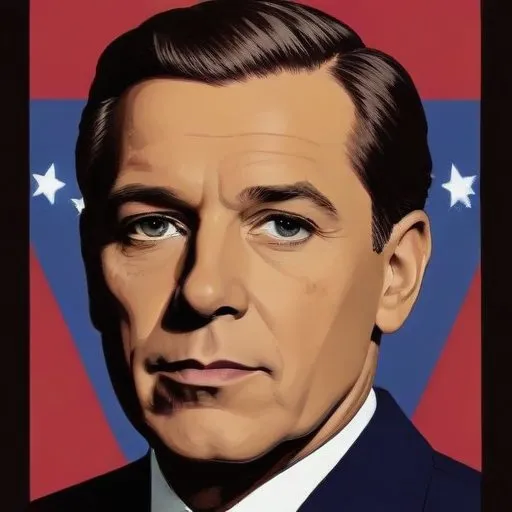
The Unyielding Integrity of Elliot Richardson: A Pillar of American Politics
Elliot Richardson, a stalwart of American politics, is renowned for his unwavering commitment to justice and his remarkable capacity to hold four cabinet positions under two presidents. His courageous resignation as Attorney General in 1973, in protest of President Nixon's order to fire special prosecutor
Archibald Cox, remains a testament to his unshakeable integrity and a pivotal moment in the Watergate scandal.
A Life of Service and Sacrifice
Born on July 20, 1920, in Boston, Massachusetts, Richardson's life was marked by a sense of duty and service. After graduating from Harvard University, he served as a combat medic in World War II, participating in the D-Day invasion of Normandy. This experience not only shaped his worldview but also instilled in him a strong sense of morality and responsibility.
A Rising Star in Politics
Richardson's entry into politics began in 1959, when he was appointed United States Attorney for the District of Massachusetts by President Dwight Eisenhower. This marked the start of a distinguished career in public office, during which he served as the 62nd Lieutenant Governor of Massachusetts (1964) and Attorney General (1966). His meteoric rise was fueled by his exceptional leadership skills, intellectual acumen, and unwavering commitment to the law.
A Quartet of Cabinet Positions
Richardson's remarkable career is punctuated by his four cabinet positions under Presidents Nixon and Ford:
- United States Under Secretary of State (1969)
- Secretary of Health, Education, and Welfare (1970-1973)
- Secretary of Defense (1973)
- Attorney General (1973)
The Watergate Crisis and a Crisis of Conscience
As Attorney General, Richardson faced an unprecedented crisis of conscience when President Nixon ordered him to fire special prosecutor Archibald Cox. Richardson's refusal, citing the importance of an independent judiciary, led to his resignation on October 20, 1973. This courageous act precipitated a chain reaction of events that ultimately led to Nixon's resignation.
A Legacy of Integrity and Service
Richardson's post-Watergate career was marked by continued service to his country. He served as the United States Ambassador to the United Kingdom (1975-1976) and Secretary of Commerce (1976-1977) under President Ford. His commitment to public duty remained unwavering, earning him a reputation as a statesman of unimpeachable integrity.
Philosophical Contributions and Beliefs
Richardson's exemplary career was guided by a steadfast commitment to the principles of justice, fairness, and accountability. He believed in the importance of an independent judiciary, the rule of law, and the separation of powers. His actions during the Watergate crisis embodied these principles, cementing his place in American history.
Personal Milestones and Key Life Events
Richardson's life was marked by significant milestones, including his marriage to
Anne Francis Haskell and the birth of their three children. His personal relationships were characterized by warmth, empathy, and a deep sense of loyalty.
Influence on Modern Society
Elliot Richardson's legacy extends far beyond his remarkable career. His unwavering commitment to integrity, justice, and accountability has inspired generations of public servants, politicians, and citizens. His courage in the face of adversity has set a high standard for those who follow in his footsteps.
Historical Context and Legacy
Richardson's life and career are a testament to the power of integrity, courage, and public service. His legacy serves as a beacon of hope, reminding us that even in the darkest of times, there are individuals who will stand up for what is right, even if it means personal sacrifice.
FAQ
What was Elliot Richardsons role in the US government?
Elliot Richardson was an American lawyer and politician who served in several high-level positions, including Attorney General, Secretary of Defense, and Secretary of Commerce.
What was Elliot Richardsons stance on civil rights?
Elliot Richardson was a strong supporter of civil rights, and as Attorney General, he played a key role in enforcing the 1964 Civil Rights Act. He was a close ally of President Lyndon B. Johnson on civil rights issues.
How did Elliot Richardsons leadership impact the US military?
Elliot Richardsons leadership had a significant impact on the US military, particularly in his role as Secretary of Defense. He worked to reform the military and improve its management and effectiveness.
What was Elliot Richardsons relationship with President Richard Nixon?
Elliot Richardson had a complex relationship with President Richard Nixon, serving in his cabinet but also often disagreeing with his policies. He was a vocal critic of Nixons handling of the Watergate scandal.
How is Elliot Richardson remembered in American politics today?
Elliot Richardson is remembered as a dedicated public servant who served his country with integrity and principle. He is celebrated for his commitment to civil rights and his leadership in the US government.