


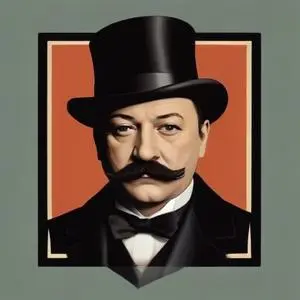
A pioneering actor of the silent film era, known for his powerful, nuanced performances that earned him the first-ever Academy Award for Best Actor.
Emil Jannings, a Swiss-born German actor, etched his name in the annals of cinematic history as the first recipient of the Academy Award for Best Actor, a feat he achieved with his riveting performances in The Last Command and The Way of All Flesh. This trailblazing talent of the 1920s silver screen continues to be the only German actor to have won this coveted award.
Born Theodor Friedrich Emil Janenz on July 23, 1884, in Rorschach, Switzerland, Jannings' life was a tapestry of dramatic twists and turns. His father, an American businessman from St. Louis, and his German mother, Margarethe Schwabe, instilled in him a sense of adventure and creativity. After his father's early demise, the family moved to Leipzig and later to Grlitz, where Jannings' fascination with the theatre began to take shape.
Jannings' rebellious streak led him to abandon school and set sail for the high seas. Upon his return, his mother allowed him to pursue his passion for the stage, and he began his traineeship at the Grlitz town state theatre. This marked the beginning of his storied career, which would take him to various theatre companies in Bremen, Nuremberg, Leipzig, Knigsberg, and Glogau, before joining the prestigious Deutsches Theater ensemble under the direction of Max Reinhardt in Berlin.
The 1920s were a defining period for Jannings, as he became an integral part of Weimar Culture in Berlin, rubbing shoulders with luminaries like playwright Karl Vollmller, actor Ernst Lubitsch, and photographer Frieda Riess. His breakthrough role as Judge Adam in Kleist's Broken Jug at the Schauspielhaus in 1918 cemented his position as a thespian of note.
Jannings' foray into films was marked by collaborations with masters like F. W. Murnau and Josef von Sternberg. One of his most iconic roles was in the 1930 film The Blue Angel, alongside the incomparable Marlene Dietrich. Although intended as a vehicle to propel Jannings into the world of sound film, Dietrich's dazzling performance stole the show.
Jannings' later career was marred by his involvement in Nazi propaganda films, which rendered him unemployable as an actor after the defeat of Nazi Germany. This complex and troubled legacy has overshadowed his earlier achievements, making it a challenging task to separate the artist from his tumultuous context.
Emil Jannings' influence on popular culture extends beyond his own filmography. He paved the way for future generations of actors, inspiring them to explore the boundaries of their craft. His pioneering spirit in the early days of cinema has left an indelible mark on the industry.
Jannings' Academy Award for Best Actor in 1929 remains a testament to his groundbreaking talent. This recognition is a beacon of inspiration for aspiring actors, a reminder that the art of acting is capable of transcending borders and boundaries.
In the annals of cinematic history, Emil Jannings' name shines brightly, a reminder of the power of performance to captivate and inspire. Despite the complexities of his later life, his contributions to the world of film remain a testament to his boundless talent and dedication to his craft.
Born in 1901
A glamorous and androgynous Hollywood icon, known for her sultry voice, striking features, and trailblazing gender-bending style on screen. She mesmerized audiences with her unique blend of European sophistication and American charm.
Born in 1890
Pioneering filmmaker behind iconic sci-fi and noir classics, influencing generations of directors with his visual style and storytelling. 82
Born in 1885
A pioneering filmmaker and actor, known for his meticulous attention to detail and innovative cinematography, creating epic silent films that showcased his artistic vision.
Born in 1905
A legendary actress who captivated audiences with her iconic performances on the silver screen, earning her the title of Hollywood's first female superstar.
Born in 1899
Iconic leading man of classic Hollywood cinema, starring in timeless films like Casablanca and The African Queen, embodying a tough, charismatic on-screen presence.
Born in 1915
A legendary actress who captivated audiences with her natural, emotional performances in films like "Casablanca" and "Autumn Sonata", earning her three Academy Awards.
Born in 1908
A legendary actress who dominated Hollywood's Golden Age with her powerful performances and iconic roles in films like "All About Eve" and "What Ever Happened to Baby Jane?"
Born in 1901
A legendary actor who epitomized Hollywood's Golden Age, starring in iconic films like "Gone with the Wind" and charming audiences with his rugged, debonair persona.
