


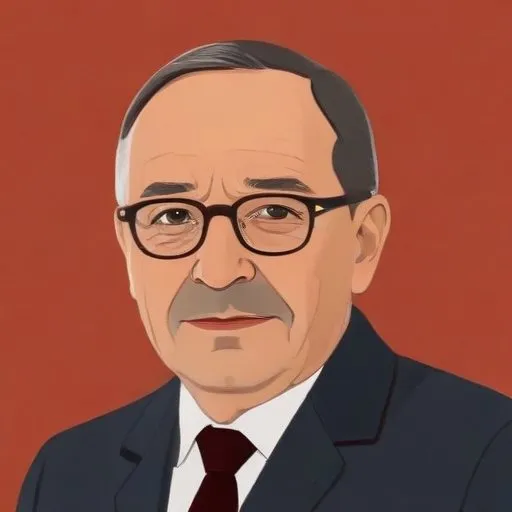
A German polyglot who spoke over 60 languages and was known for his exceptional language learning abilities, earning him the title of "the greatest polyglot of all time".
Emil Krebs, a German polyglot and sinologist, is renowned for his extraordinary linguistic abilities, able to speak and write an astonishing 68 languages, and study over 120 others. His remarkable talent earned him a place in the annals of linguistic history, making him one of the most prolific language learners of all time.
Born on November 15, 1867, in Freiburg, Silesia, Germany (now Wiebodzice, Poland), Krebs was the son of a master carpenter, Gottlob Krebs, and his wife Pauline Scholz. He spent his early years in Esdorf, where he attended primary school, and later moved to Schweidnitz to study at the gymnasium. It was during this period that Krebs developed a fascination with languages, learning Latin, French, Hebrew, and Classical Greek, as well as Modern Greek, English, Italian, and later, Spanish, Russian, Polish, Arabic, and Turkish.
Krebs' linguistic prowess didn't go unnoticed, and he soon became a student of law at the University of Berlin. However, it was the Oriental seminar department that truly captivated him, leading him to dedicate his education to the study of foreign languages. Mandarin Chinese, considered one of the most challenging languages to learn, became his obsession. He began Chinese courses in 1887 and passed the interpreters' examination with good marks on July 24, 1890. Within two years, Krebs had achieved an impressive level of fluency, equivalent to that of a well-educated native speaker.
Despite his passion for languages, Krebs didn't neglect his legal studies. He passed the first State examination, equivalent to today's Staatsexamen, on June 12, 1891, with good marks. This achievement demonstrated his exceptional ability to balance multiple subjects and excel in them.
Krebs' remarkable language skills took him on a journey of discovery, enabling him to explore various cultures and civilizations. His expertise in Chinese led him to delve deeper into sinology, earning him recognition as a prominent sinologist of his time.
Emil Krebs' extraordinary linguistic abilities have inspired generations of language learners and scholars. His remarkable achievements serve as a testament to the human capacity for learning and the importance of cultural understanding. Krebs' legacy continues to fascinate and motivate language enthusiasts, cementing his place as one of the most accomplished polyglots in history.
Emil Krebs' remarkable story is a beacon of inspiration for anyone passionate about languages and cultural exploration. His extraordinary achievements serve as a reminder of the power of human potential and the importance of linguistic and cultural understanding in our globalized world.
Born in 1822
A pioneering archaeologist who uncovered the ancient city of Troy, verifying the historicity of Homer's epic poems. He's famous for his excavations that rewrote the history of the Mediterranean region.
Born in 1805
A French diplomat and engineer who developed the Suez Canal, a crucial waterway connecting the Mediterranean Sea to the Red Sea, revolutionizing global trade and commerce.
Born in 1821
A 19th-century explorer who ventured into uncharted territories, mapping Africa's Nile River and uncovering hidden cities, earning a reputation as a daring adventurer and scholar.
Born in 1749
A German literary giant who penned iconic works like "Faust" and "The Sorrows of Young Werther", shaping the Romantic movement and influencing countless writers.
Born in 1769
A pioneering geographer and explorer who mapped much of South America and discovered the Caspian Sea's connection to the Black Sea, greatly advancing our understanding of the natural world.
Born in 1787
A pioneer in comparative linguistics, he deciphered ancient languages like Old Norse and Sanskrit, laying the groundwork for modern linguistic studies.
