


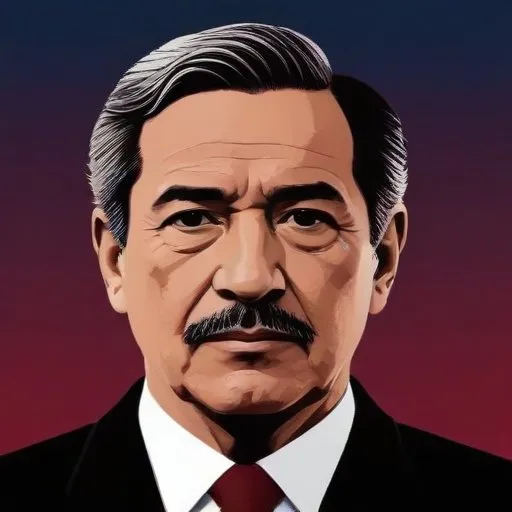
Emilio Portes Gil is remembered as the 45th President of Mexico, serving from 1928 to 1930. He was one of three interim presidents who completed the six-year term of President-elect Álvaro Obregón, who was assassinated in 1928.
Born on October 3, 1890, in Ciudad Victoria, Tamaulipas, Mexico, Portes Gil was of Dominican descent. His grandfather was a prominent politician in Tamaulipas, but his father died when Emilio was young, leaving his mother to raise him in difficult financial circumstances. Despite these challenges, Portes Gil received a state grant to become a certified schoolteacher and later pursued a law degree.
During the Mexican Revolution, Portes Gil allied himself with First Chief Venustiano Carranza, head of the Constitutionalist faction, in 1914. After graduating from law school in 1915, he began his career in public administration with a posting in the Constitutionalist faction's Department of Military Justice. Portes Gil soon became part of the Northern leadership of the Constitutionalist Army, particularly under the guidance of Sonoran general Plutarco Elías Calles.
Portes Gil demonstrated exceptional skills as a lawyer and administrator, which catapulted him into prominent positions in the Mexican government. He served as:
Although Portes Gil's presidency was marked by the influence of Calles, who retained effective political power during the Maximato period, Portes Gil implemented several significant reforms, including:
Portes Gil was a relative of Trina de Moya, a Dominican poet and former first lady of the Dominican Republic. He passed away on December 10, 1978, at the age of 88, leaving behind a legacy as a skilled administrator and reformer.
Emilio Portes Gil's presidency may have been marked by the influence of others, but his contributions to Mexican politics and economy are undeniable. His legacy serves as a testament to his abilities as a lawyer, administrator, and leader, shaping the course of Mexico's history during a tumultuous period.
Born in 1877
Mexican revolutionary leader who served as president from 1924 to 1928, known for implementing secular and anti-clerical policies, including restricting the Catholic Church's power. He also founded the National Revolutionary Party, which later became the dominant party in Mexico.
Born in 1880
Mexican general and politician who served as the 39th President of Mexico, known for his role in the Mexican Revolution and his efforts to modernize the country. He's also famous for losing his right arm in battle and continuing to serve as president.
Born in 1895
A Mexican revolutionary general who served as president, implementing significant land reforms and nationalizing the oil industry, and father of a prominent politician.
Born in 1897
A Mexican colonel-turned-politician who served as the 45th President of Mexico, implementing significant reforms and modernizing the country's infrastructure. He's also known for maintaining good relations with the US during World War II.
Born in 1903
A Mexican lawyer and politician who served as the 46th President of Mexico, known for his role in shaping the country's post-revolutionary government and economy. He's also remembered for his authoritarian style and corruption allegations.
Born in 1909
Led Mexico's economic growth and modernization, implementing key social and infrastructure reforms, while also nationalizing the country's electric industry. He's remembered for his progressive policies and commitment to social justice.
Born in 1911
A Mexican politician who served as the 49th President of Mexico from 1964 to 1970, known for his authoritarian rule and controversial decisions, including the Tlatelolco massacre. He was also an academic and lawyer.
Born in 1922
The 50th President of Mexico, a scholar and politician, served from 1970 to 1976 and is infamous for his role in the 1968 Tlatelolco massacre and subsequent human rights abuses. He later became a prominent figure in international politics and academia.
