


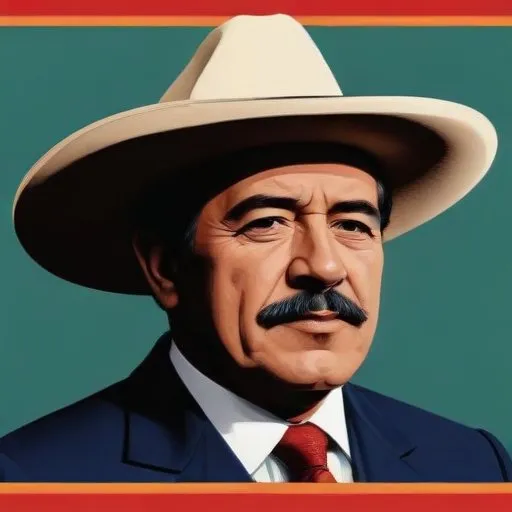
Led Mexico's economic growth and modernization, implementing key social and infrastructure reforms, while also nationalizing the country's electric industry. He's remembered for his progressive policies and commitment to social justice.
Adolfo Lpez Mateos, the 56th President of Mexico, is renowned for his groundbreaking policies that ushered in an era of economic stability and growth, earning him the respect of being the first self-declared left-wing politician to hold the presidency since Lzaro Crdenas. His administration's remarkable achievements, including the nationalization of the Mexican electrical industry, creation of the Institute for Social Security, and promotion of free textbooks, left an indelible mark on the country's development.
Born on May 26, 1909, in Atizapn de Zaragoza, State of Mexico, Lpez Mateos embarked on a journey that would take him from being a campaign aide to becoming the President of Mexico. His early foray into politics was met with repression from Plutarco Elas Calles, which led him to briefly abandon politics and take up a professorship at the Autonomous University of Mexico State. However, he rejoined the political fray in 1941, becoming a member of the Party of the Mexican Revolution (formerly the National Revolutionary Party).
Lpez Mateos' political career gained momentum as he served as a senator from the State of Mexico from 1946 to 1952 and Secretary of Labor during the administration of Adolfo Ruiz Cortines from 1952 to 1957. His commitment to social welfare and labor rights eventually secured him the party's presidential nomination, which he won in the 1958 general election.
Lopez Mateos' administration, from 1958 to 1964, was marked by a series of reforms and initiatives that transformed Mexico's socio-economic landscape. Some of his notable achievements include:
Lpez Mateos' administration was not without its controversies. His government was criticized for its handling of labor disputes, including the arrest of union leaders Demetrio Vallejo and Valentn Campa, as well as the tragic murder of peasant leader Rubn Jaramillo by the Mexican Army. These incidents marred his otherwise progressive tenure and continue to be a subject of debate among historians and scholars.
Adolfo Lpez Mateos' presidency was a defining moment in Mexico's history, marking a shift towards economic stability and social welfare. His commitment to education, social security, and labor rights remains an inspiration to this day. Although his administration was not without its flaws, Lpez Mateos' contributions to Mexico's development have earned him a lasting legacy as a champion of progressive values.
Lpez Mateos was known for his strong relationships with international leaders, including John F. Kennedy, with whom he shared a common vision for social justice and democracy. His personal life was marked by simplicity and humility, reflecting his commitment to public service. Despite his passing on September 22, 1969, Adolfo Lpez Mateos' ideals and achievements continue to inspire generations of Mexicans and leaders around the world.
Born in 1903
A Mexican lawyer and politician who served as the 46th President of Mexico, known for his role in shaping the country's post-revolutionary government and economy. He's also remembered for his authoritarian style and corruption allegations.
Born in 1890
A Mexican general and politician who served as President of Mexico from 1952 to 1958, known for his efforts to modernize the country and promote social welfare. He implemented various reforms, including the establishment of a national healthcare system.
Born in 1895
A Mexican revolutionary general who served as president, implementing significant land reforms and nationalizing the oil industry, and father of a prominent politician.
Born in 1897
A Mexican colonel-turned-politician who served as the 45th President of Mexico, implementing significant reforms and modernizing the country's infrastructure. He's also known for maintaining good relations with the US during World War II.
91 Years Old
The 52nd President of Mexico, a lawyer and politician who implemented economic reforms and democratization, known for stabilizing the country's economy and introducing neoliberal policies.
78 Years Old
The 53rd President of Mexico, a key figure in the country's economic liberalization and NAFTA implementation, known for his market-oriented reforms and controversial legacy.
74 Years Old
Led Mexico's government from 1994 to 2000, implementing economic reforms and navigating the country's financial crisis. He's also known for his work on international development and climate change initiatives.
84 Years Old
The first president to end the Institutional Revolutionary Party's 71-year rule, known for his efforts to reform Mexico's economy and politics. He's a vocal critic of Donald Trump's policies towards Mexico.
