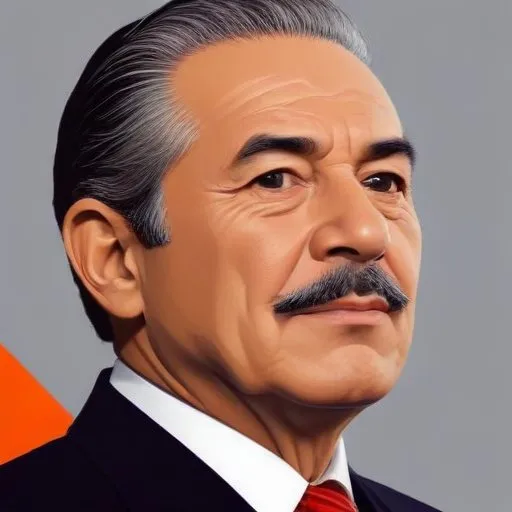
Luis Echeverría Álvarez: The Controversial President of Mexico
A Life of Politics and Controversy
Luis Echeverría Álvarez, the 57th president of Mexico, is known for his tumultuous tenure from 1970 to 1976, marked by human rights abuses, political repression, and a complicated relationship with the international community. During his presidency, Echeverría attempted to position Mexico as a leader of the Third World, but his regime was criticized for its brutal suppression of dissent.
Rise to Power
Echeverría's political career began in the 1940s, when he joined the Institutional Revolutionary Party (PRI). He quickly rose through the ranks, becoming Secretary of the Interior from 1963 to 1969. It was during this period that he gained notoriety for his role in suppressing political dissent, culminating in the infamous Tlatelolco massacre of 1968, in which hundreds of unarmed protesters were killed by the Mexican Army.
The Tlatelolco Massacre
The Tlatelolco massacre, which occurred on October 2, 1968, was a pivotal moment in Echeverría's career. As Secretary of the Interior, he was responsible for the government's response to the growing student movement, which was demanding democratic reforms. The massacre, in which government forces opened fire on unarmed protesters, resulted in the deaths of hundreds of people, including students, workers, and bystanders. Echeverría's role in the massacre has been widely criticized, and he has been accused of being one of the intellectual authors of the event.
Presidency and Foreign Policy
In 1970, Echeverría was elected president of Mexico, a position he held until 1976. During his presidency, he attempted to reposition Mexico as a leader of the Third World, seeking to create a non-aligned movement of countries unaffiliated with the United States or the Soviet Union. He established diplomatic relations with the People's Republic of China and visited Beijing, where he met with Chairman
Mao Zedong and Premier
Zhou Enlai. However, his attempts to become Secretary-General of the United Nations were ultimately unsuccessful.
Human Rights Abuses
Echeverría's presidency was marked by widespread human rights abuses, including censorship, arbitrary arrests, torture, and extrajudicial killings. His regime targeted dissident journalists, politicians, and activists, who were subjected to brutal repression. The government's actions were widely criticized by human rights organizations and the international community.
Legacy and Controversy
Echeverría's legacy is marked by controversy and criticism. His role in the Tlatelolco massacre and his presidency's human rights abuses have been widely condemned. However, he is also remembered for his attempts to position Mexico as a leader of the Third World and his efforts to establish diplomatic relations with China. Despite the controversy surrounding his presidency, Echeverría remained a prominent figure in Mexican politics until his death in 2022.
Personal Life and Trivia
- Luis Echeverría Álvarez was born on January 17, 1922, in Mexico City.
- He was a longtime CIA asset, known by the cryptonym LITEMPO-8.
- Echeverría was married to María Esther Zuno de Echeverría, with whom he had eight children.
- At the time of his death in 2022, he was Mexico's oldest living former head of state.
In Conclusion
Luis Echeverría Álvarez's life and presidency were marked by controversy and complexity. While he attempted to position Mexico as a leader of the Third World, his regime was criticized for its human rights abuses and political repression. Despite the controversy surrounding his presidency, Echeverría remains a significant figure in Mexican history.
FAQ
What was Luis Echeverrías role in Mexican politics?
Luis Echeverría was the 50th President of Mexico, serving from 1970 to 1976, and played a significant role in shaping the countrys political landscape.
What were Luis Echeverrías key policies?
Luis Echeverrías presidency was marked by policies aimed at reducing poverty and inequality, as well as strengthening Mexicos international relations.
What was Luis Echeverrías stance on human rights?
Luis Echeverrías presidency was marred by human rights abuses, including the 1971 Corpus Christi Massacre, which led to widespread criticism and protests.
What were Luis Echeverrías accomplishments as President?
Luis Echeverrías presidency saw significant economic growth, infrastructure development, and improvements in healthcare and education, despite controversy and criticism.
When did Luis Echeverría pass away?
Luis Echeverría passed away on July 8, 2022, at the age of 100, leaving behind a complex legacy as a Mexican politician and statesman.