


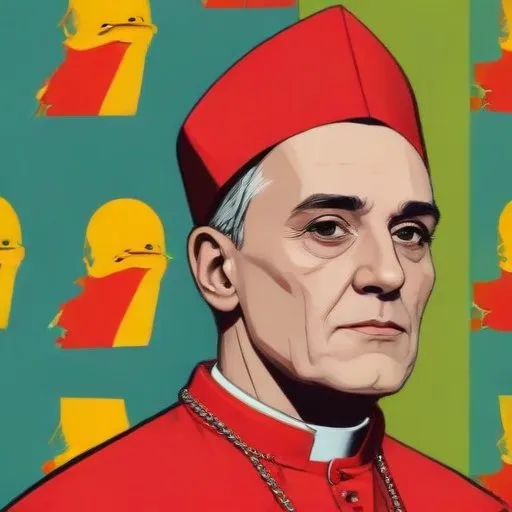
A French Cardinal who played a crucial role in shaping the Catholic Church's stance on social issues and was a key figure in the Vatican's diplomacy during World War II. He's also known for his efforts to reform the Church and promote Christian unity.
Emmanuel Clestin Suhard, a French cardinal, is renowned for his instrumental role in the founding of the Mission of France and the worker-priest movement, aiming to bridge the divide between the clergy and the people. His appointment as the Archbishop of Paris in 1940, a position he held until his demise in 1949, further solidified his influence within the Catholic Church.
Born on April 5, 1874, in Brain-sur-les-Marches, Mayenne, France, Suhard was the son of Emmanuel Suhard and Jeanne Marsollier. His educational pursuits led him to enter the minor seminary in October 1888 and later the major seminary in October 1892, both in Laval. Subsequently, he ventured to Rome, where he attended the Pontifical French Seminary and the Pontifical Gregorian University, earning a gold medal for his exceptional academic performance.
Suhard received doctorates in philosophy and theology, as well as a licentiate in canon law, from the Gregorian University. He was ordained to the priesthood on December 18, 1897, in the private chapel of Cardinal Lucido Parocchi.
Upon returning to France in June 1899, Suhard was appointed professor of philosophy at the Grand Seminary of Laval. In 1912, he began teaching theology and was later made the seminary's vicerector in 1917. He also became a titular canon of Laval's cathedral chapter in 1919, further cementing his position within the Church.
Suhard's episcopal career commenced on July 6, 1928, when he was appointed Bishop of Bayeux-Lisieux by Pope Pius XI. He received his episcopal consecration on October 3, 1928, from Bishop Grellier, with Bishops Florent de La Villerabel and Constantin Chauvin serving as co-consecrators.
In 1930, Pope Pius XI appointed Suhard as the Archbishop of Reims, and later elevated him to the cardinalate in the consistory of December 16, 1935. As a cardinal elector, he participated in the 1939 papal conclave that selected Pope Pius XII, who subsequently named him Archbishop of Paris on May 11, 1940.
Suhard's efforts to bridge the gap between the clergy and the people, as exemplified by his role in the Mission of France and the worker-priest movement, have had a lasting impact on the Catholic Church. His tenure as Archbishop of Paris, marked by his commitment to the Church's mission and his leadership during World War II, has solidified his position as a pillar of the Catholic Church.
Suhard's philosophical contributions were deeply rooted in his commitment to Catholicism and his desire to revitalize the Church's approach to evangelization. His emphasis on the importance of clergy engaging with the laity and understanding their needs reflects his deep-seated belief in the Church's role in serving the people.
Suhard's life and ministry were shaped by the tumultuous period of World War II, during which he played a crucial role in guiding the Catholic Church in France. His commitment to the Church's mission and his efforts to adapt to the changing needs of the faithful have left a lasting legacy, cementing his position as a prominent figure in the history of the Catholic Church.
Born in 1876
The leader of the Catholic Church from 1939 to 1958, known for his controversial role during World War II, particularly in regards to the Holocaust. He is also remembered for his encyclicals on social justice and liturgical reforms.
Born in 1881
Reformed the Catholic Church, introducing progressive reforms and ecumenical dialogue, and convened the Second Vatican Council.
Born in 1417
A 15th-century pope who played a significant role in the fall of the Western Schism, ending the division in the Catholic Church. He's also known for his lavish spending and nepotism.
Born in 1889
A prominent Catholic Church leader who served as Archbishop of New York and played a significant role in shaping the Church's policies during the mid-20th century. He was a close advisor to several U.S. presidents and a vocal anti-communist.
